
Aswan Tour Guide Tips | How to Hire the Right Guide in Aswan in 2026
Learn how to hire the right Aswan Tour Guide. Compare prices, verify licenses, and book a private guide A ...
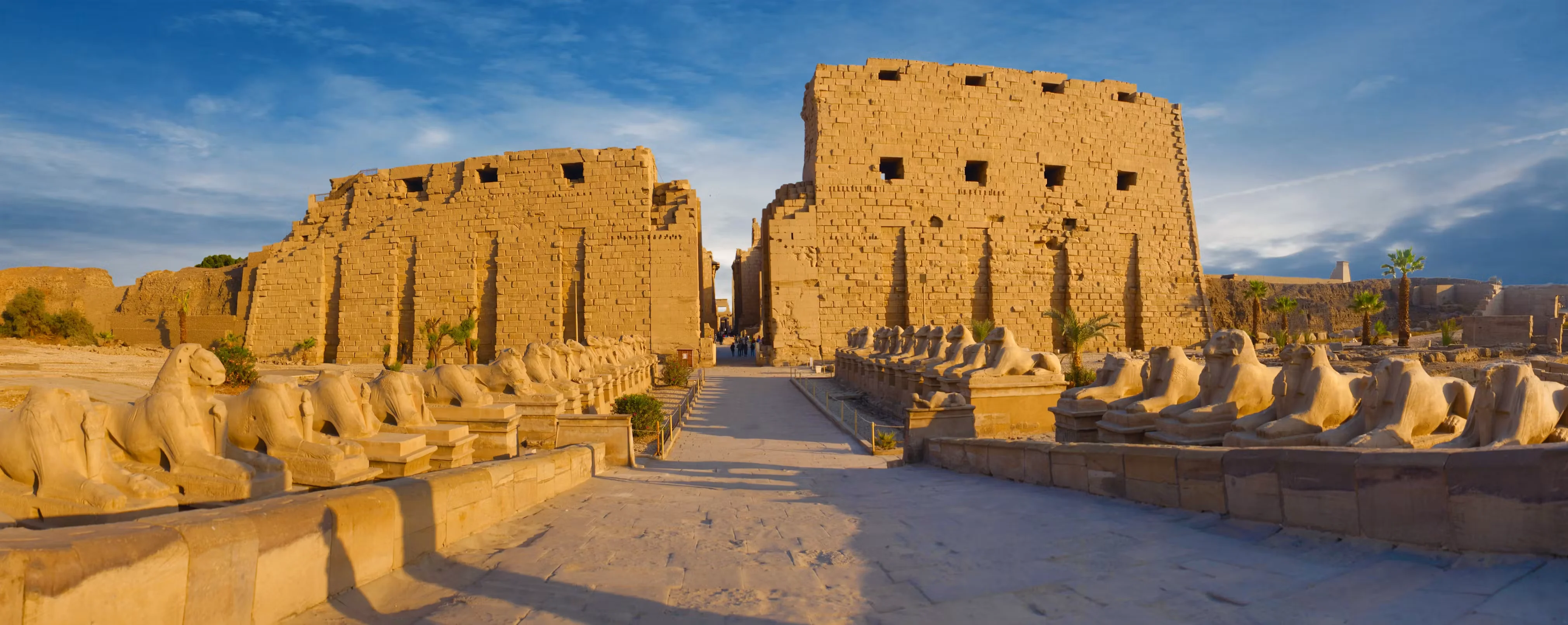
The Karnak Temple Complex is the largest ancient religious site ever built — a vast open-air museum of pylons, obelisks, and the legendary Hypostyle Hall. This complete guide covers its 2,000-year history, must-see attractions, practical visitor information, and insider tips to help you plan an unforgettable visit to the Karnak temple in Luxor.
The Karnak Temple Complex is the largest ancient religious site ever constructed — a vast open-air museum spread across more than 100 hectares (247 acres) on the east bank of the Nile River in Luxor, Egypt. Known to the ancient Egyptians as Ipet-Sut, meaning "The Most Select of Places," this extraordinary Karnak temple was the primary religious center of ancient Egypt for over 2,000 years.
Unlike most Egyptian temples built by a single pharaoh, the Karnak temple grew organically over nearly two millennia, with approximately 30 successive pharaohs adding pylons, courts, obelisks, chapels, and halls. The result is an architectural encyclopedia of Egyptian history — a place where you can trace the ambitions, styles, and stories of dozens of rulers in a single visit.
The Karnak complex was primarily dedicated to the Theban triad: Amun-Ra (the king of the gods), his consort Mut (the mother goddess), and their son Khonsu (the moon god). It was the wealthiest and most powerful religious institution in ancient Egypt, controlling vast agricultural lands and employing tens of thousands of priests, craftsmen, and servants at its peak.
Today, the Karnak Temple Complex is a UNESCO World Heritage Site and remains one of Egypt's most visited and revered attractions. To explore this magnificent site with an expert guide, you can book your tour through Tour Guides Egypt , which offers specialized visits to the Karnak temple and other Luxor landmarks.
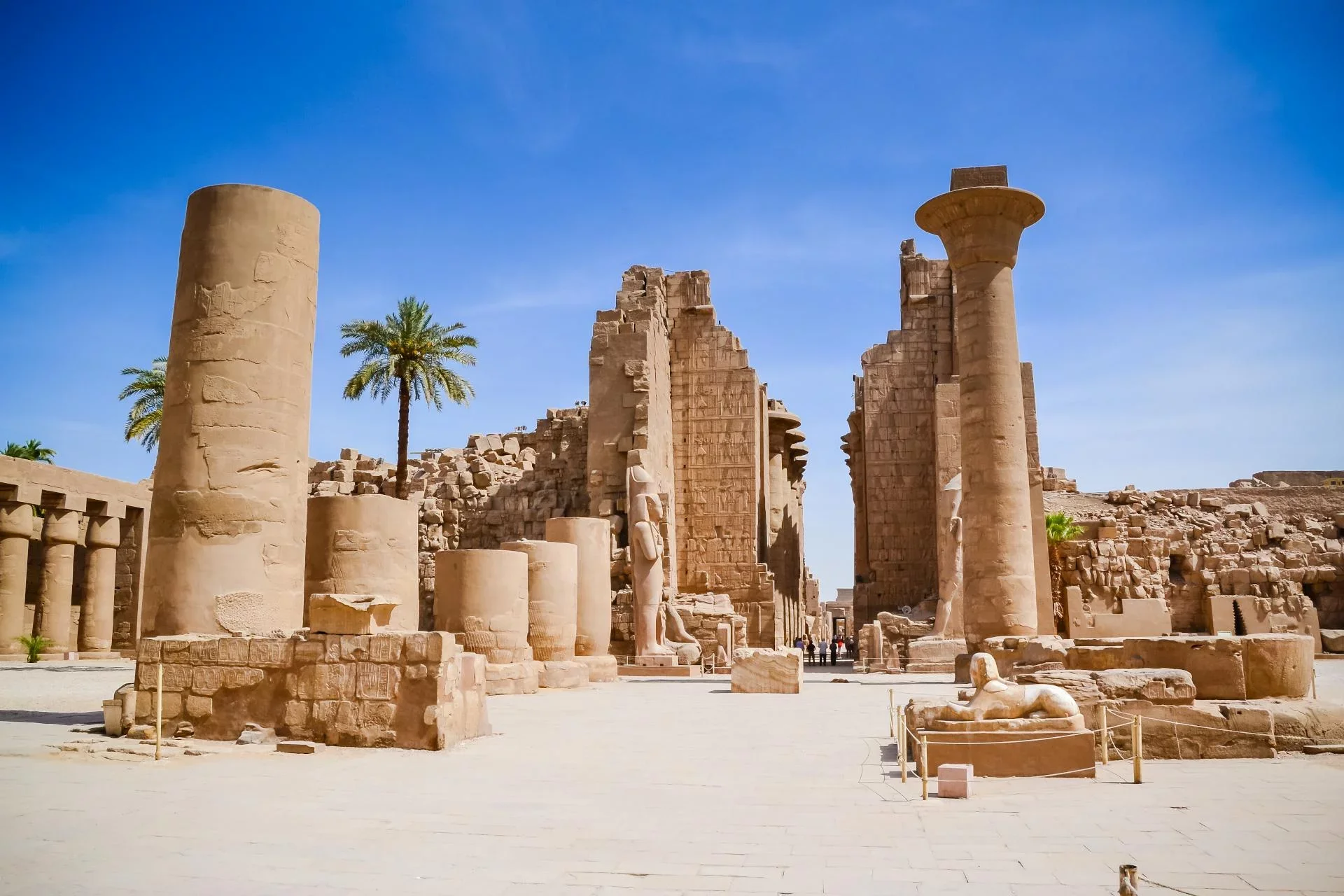
The earliest known religious structures at the Karnak temple site date to the Middle Kingdom period, around 1971 BCE, during the reign of Senusret I. Senusret I built a small alabaster chapel — known today as the White Chapel — which was later dismantled by subsequent pharaohs and used as fill material inside a new pylon. Remarkably, the blocks were preserved and later reassembled; today, the White Chapel stands in the Karnak Open Air Museum as one of the finest examples of Middle Kingdom artistry.
The site Senusret I chose was already considered sacred. Ancient tradition held that the original mound of creation — the spot where the god Amun arose from the primordial waters at the beginning of time — was located here. Building a temple at Karnak was therefore not merely an act of devotion but a statement that the pharaoh controlled the physical center of the universe.
The Karnak Temple Complex reached its greatest splendor during the New Kingdom (c. 1550–1070 BCE), when Egypt was at the height of its imperial power. Nearly every pharaoh of this era left his or her mark on the Karnak complex:
During the Amarna Period, Akhenaten built a series of temples to the Aten at Karnak. After his death, these were demolished, and the 36,000 sandstone blocks (talatat) were used as fill in later pylons — inadvertently preserving them for modern scholars to reconstruct.
Construction at Karnak continued through the Ptolemaic Period (305–30 BCE) and even into the Roman era, with some additions as late as the 4th century AD. The Karnak Temple Complex remained in continuous use from the Middle Kingdom until the Christian era — a span of roughly 2,000 years.
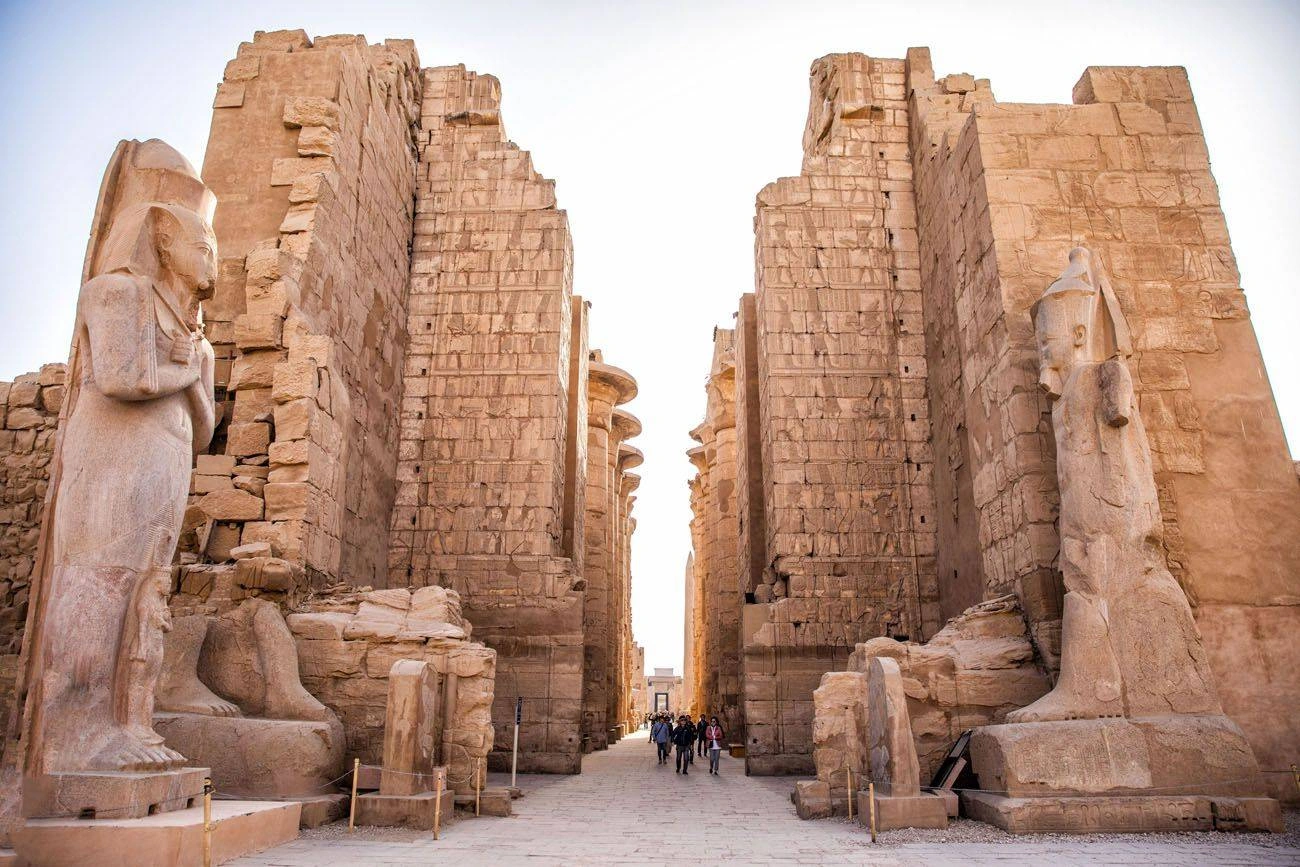
The Karnak complex is not a single temple but a collection of temples, chapels, pylons, and other structures. It consists of three main precincts:
The Great Temple of Amun is built on an east–west axis, mirroring the sun god's trajectory through the sky. Uniquely, it also possesses a north–south axis that orients it toward Luxor Temple — connected by the famous Avenue of Sphinxes.
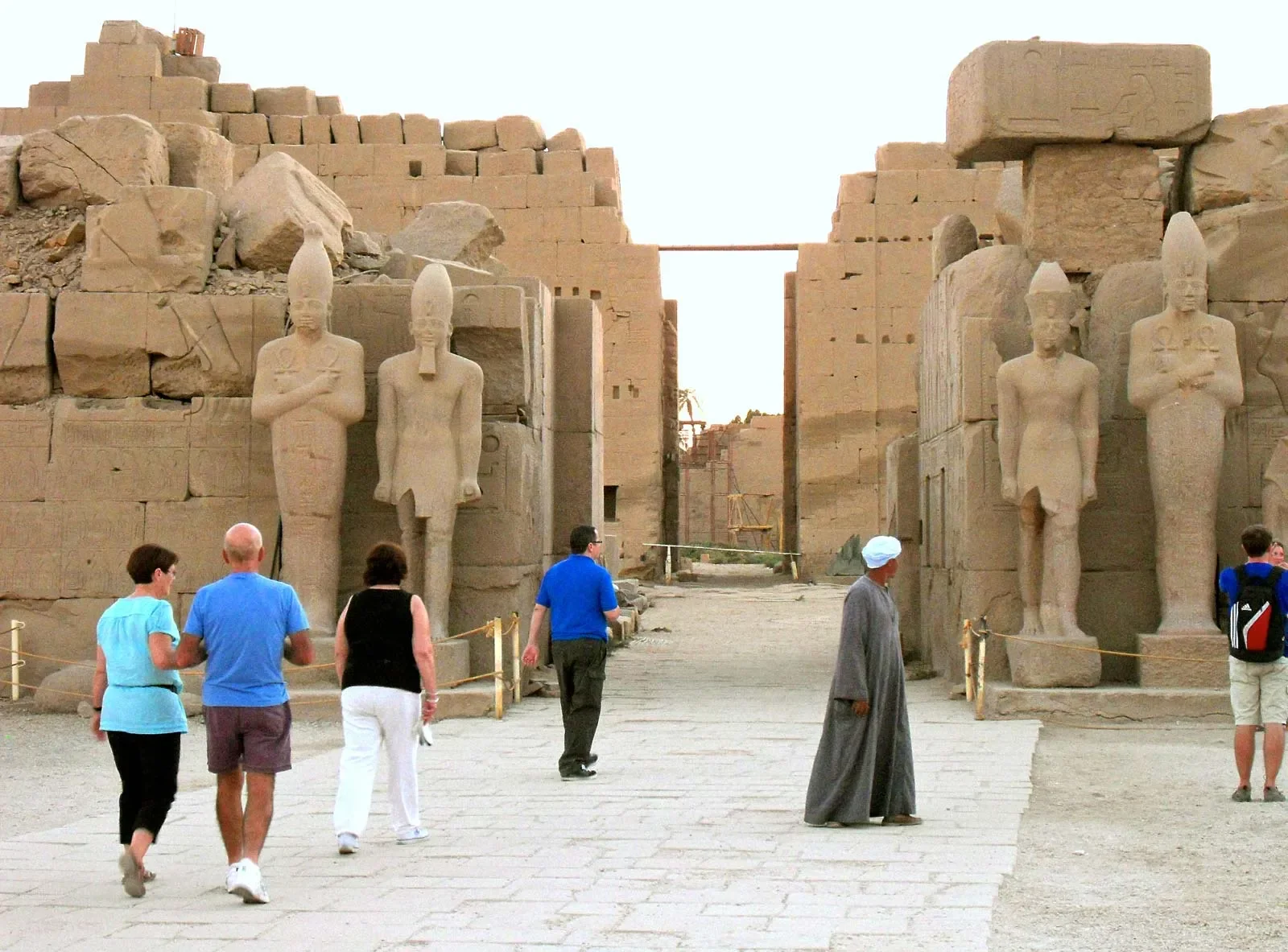
The main entrance is through the First Pylon on the western side — a massive, unfinished gateway that still stands 43 meters (141 feet) high. From here, the general rule is that the farther east you go into the Karnak temple, the older the structures become. The site contains no fewer than 10 pylons in total, numbered for convenience.
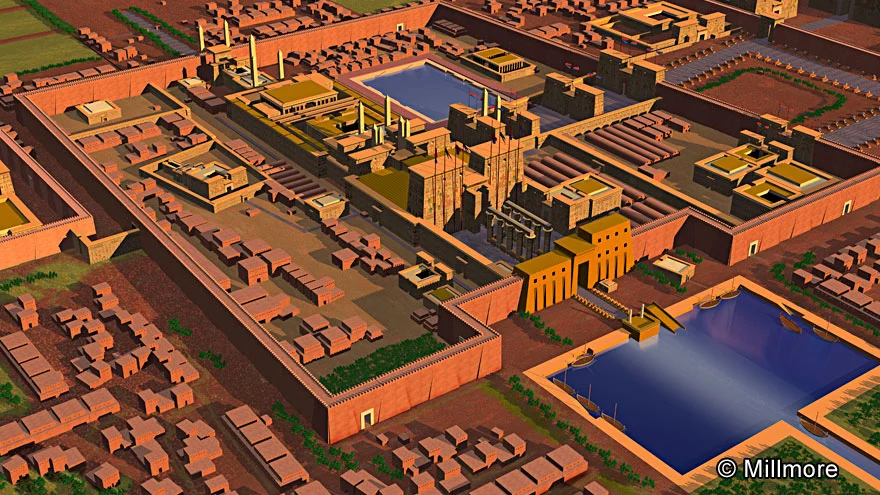
The Great Hypostyle Hall is the single most impressive space within the entire Karnak Temple Complex — and arguably one of the most breathtaking architectural achievements in human history.
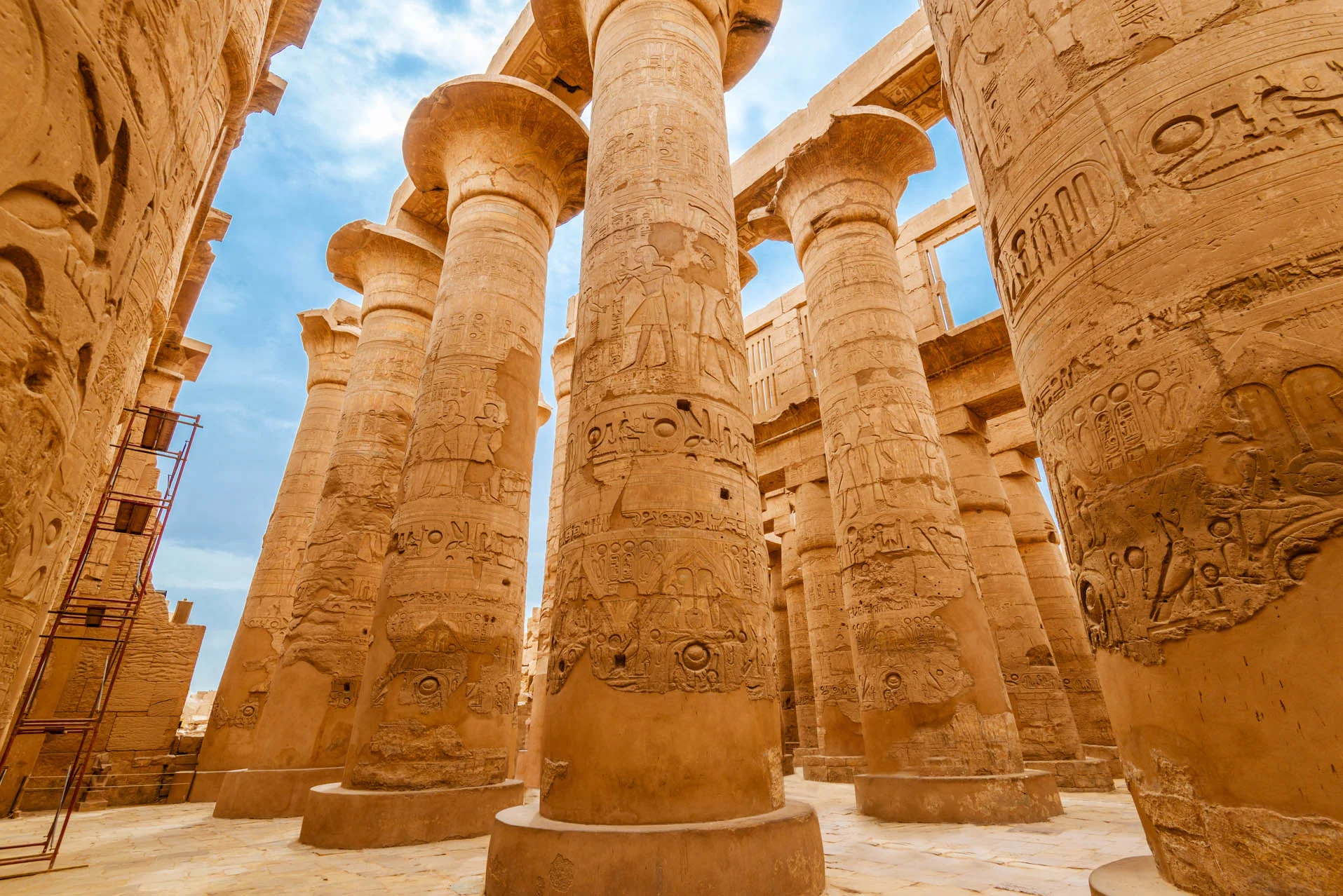
Covering approximately 5,000 square meters (nearly an acre), the hall contains 134 massive sandstone columns arranged in 16 rows. The central 12 columns stand 21 meters (69 feet) tall — more than twice the height of a typical modern building floor — with capitals 3.6 meters in diameter. The remaining 122 columns along the sides are smaller, with closed papyrus capitals.
The hall was planned by Amenhotep III, built primarily by Seti I, and completed by Ramesses II. Traces of the original painted decoration — red, blue, yellow, and green — still survive on the upper sections of the columns. The northern walls feature remarkable bas-reliefs of Seti I's battles in Syria and Lebanon, while the southern walls depict Ramesses II's famous Battle of Kadesh.
The effect of walking through this "forest of stone" is overwhelming — precisely the sensation the ancient Egyptians designed this space to produce. Early morning or late afternoon light creates dramatic shadows that make the columns appear even more monumental.
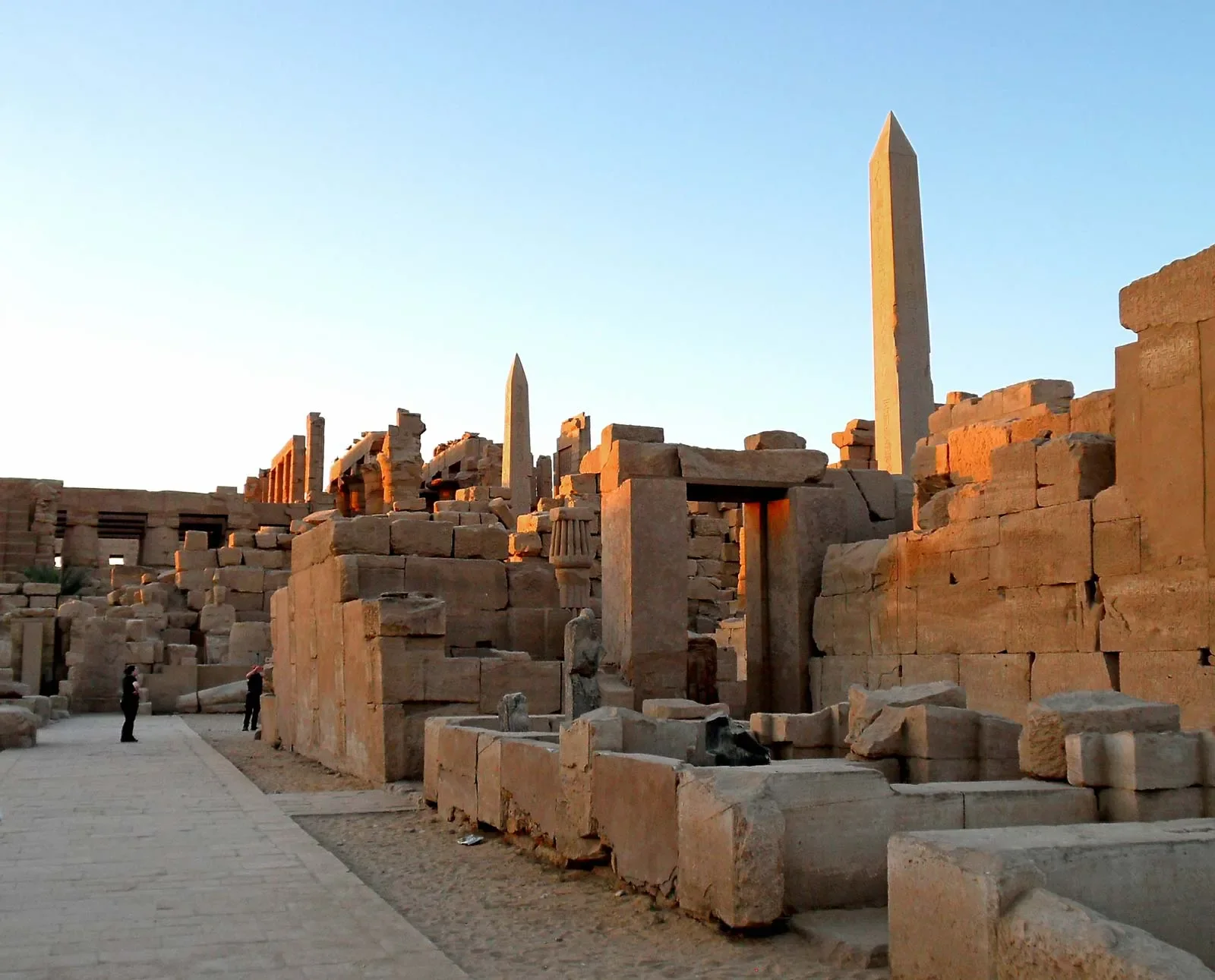
The Karnak temple contains four ancient obelisks visible within the complex. The most famous is the Obelisk of Queen Hatshepsut, which stands nearly 30 meters (98 feet) tall. Carved from a single piece of pink granite transported from Aswan — over 800 kilometers (500 miles) away — it is the tallest surviving obelisk in Egypt. Its inscriptions glorify the reign of one of ancient Egypt's most remarkable female pharaohs. A second obelisk erected by Hatshepsut toppled centuries ago and now lies near the Sacred Lake.
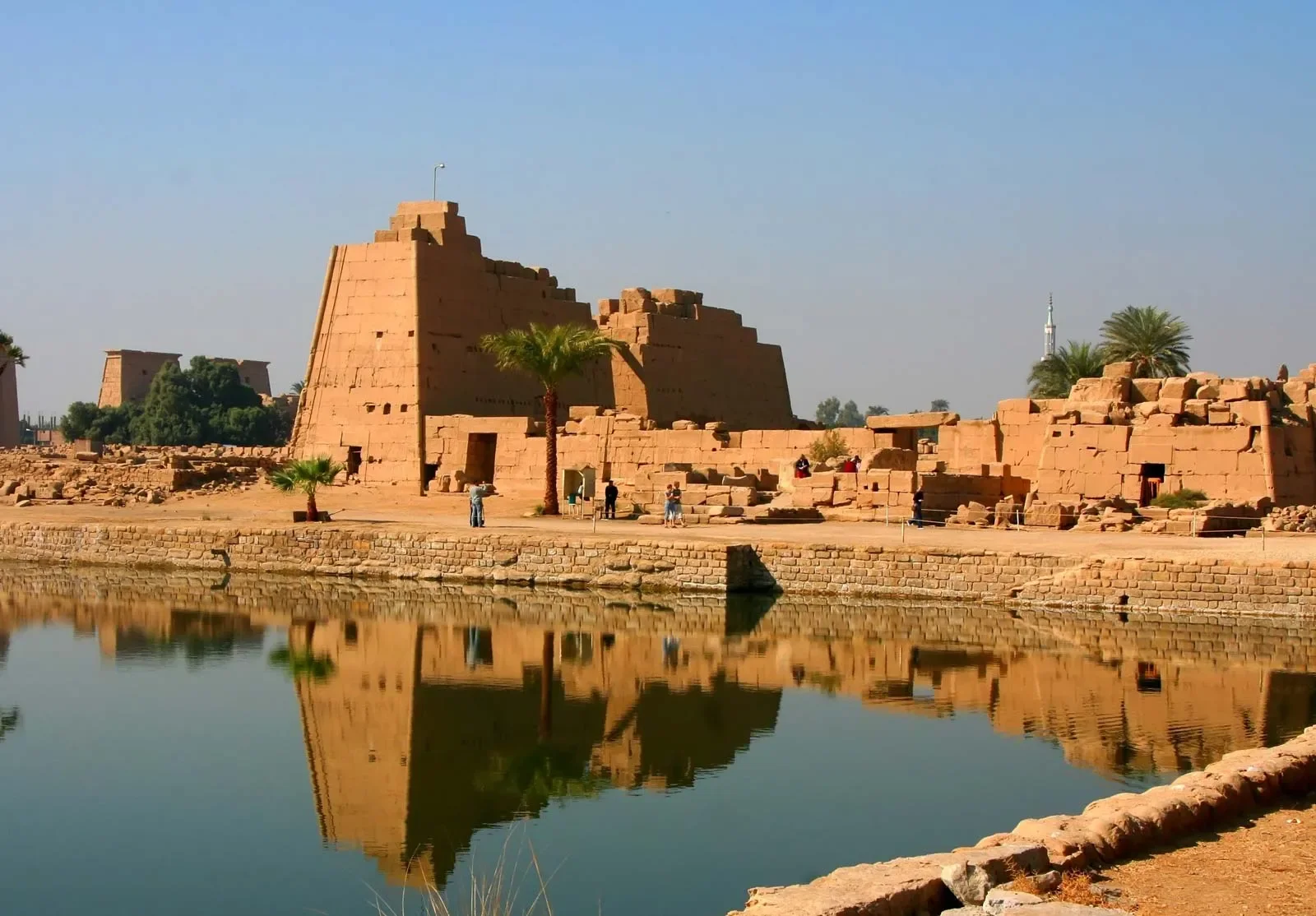
The Sacred Lake at Karnak is a massive artificial lake measuring approximately 120 by 77 meters (394 by 253 feet). It was used by priests for ritual purification — they bathed four times daily to maintain the spiritual purity required for temple rituals. The lake remains one of the most peaceful spots within the Karnak complex and offers excellent photo opportunities.
The Avenue of Sphinxes (also known as Rams Road) is a 2.7-kilometer (1.7-mile) processional route lined with ram-headed sphinxes that once connected the Karnak Temple Complex to Luxor Temple. It was used for the annual Opet Festival procession, one of the most important celebrations in the ancient Egyptian calendar. The avenue was fully reopened in 2021 after 70 years of excavation and restoration. Walking along this ancient road gives you a sense of the scale and grandeur of Theban religious life.
While the Precinct of Amun-Ra is the primary focus of most visits, the Karnak complex also includes:
The Open Air Museum within the Karnak Temple Complex contains a fascinating collection of reconstructed structures, including the White Chapel of Senusret I and the Red Chapel of Hatshepsut. These small but exquisitely decorated buildings offer a more intimate glimpse into ancient Egyptian artistry than the massive temples surrounding them.
The Sound and Light Show at Karnak is a spectacular nighttime experience that brings the history and mythology of ancient Egypt to life. As night falls, the temple is illuminated by colorful lights while a narrated voice tells the story of Thebes, the pharaohs, and the gods. The show begins in the First Court, moves through the Hypostyle Hall (magnificently lit), and concludes at the Sacred Lake. Shows typically run at 6:30 PM, 7:45 PM, 9:00 PM, and 10:15 PM in winter, and later in summer.
The Karnak Temple Complex is located on the east bank of the Nile River, approximately 3 kilometers (1.75 miles) north of central Luxor. It's easily accessible by:
Luxor International Airport is about 8 kilometers (5 miles) from the Karnak temple, with regular flights from Cairo and international connections.
The Karnak temple is open daily:
The Sound and Light Show runs in the evening with multiple showtimes varying by season.
Entry to the Karnak Temple Complex costs approximately:
Note that prices are subject to change — check official sources before your visit.
The best time to visit the Karnak temple for comfortable weather is during the cooler months from October to April, when daytime temperatures range between 20°C (68°F) and 30°C (86°F). Summer months (June–August) can see temperatures soar above 40°C (104°F), making extended outdoor exploration physically demanding.
Within any season, the best time of day to visit the Karnak complex is early morning (within the first hour after opening at 6:00 AM) or late afternoon. Benefits of an early visit include:
Sunset also offers spectacular golden light, though note that due to the high walls, dusk arrives 30–45 minutes earlier inside the complex than outside.
Based on visitor experiences and expert recommendations, here are essential tips for getting the most from your visit to the Karnak temple:
The Karnak Temple Complex offers some of the most spectacular photography opportunities in all of Egypt. Here are tips to capture the best images:
The Karnak Temple Complex is so vast and layered with history that visiting without a guide means missing most of its significance. A knowledgeable guide can:
For the best experience, consider booking a private tour with an Egyptologist guide who can tailor the visit to your interests. Tour Guides Egypt offers expert-led tours of the Karnak Temple Complex and other Luxor attractions. You can also explore our dedicated Karnak Temple tour packages through our website, where you'll find options for half-day and full-day visits that include transportation, entry fees, and expert guidance.
Reach out to us via [WhatsApp] for instant support — our team is ready to answer your questions about visiting the Karnak Temple Complex, ticket prices, guided tours, and more.
The Karnak Temple Complex is a once-in-a-lifetime experience — one of the crown jewels of Egypt and a testament to the ambition, artistry, and devotion of ancient Egyptian civilization. Its scale, beauty, and historical importance make it an absolute must-visit for anyone traveling to Luxor.
Tour Guides Egypt offers expertly curated tours of the Karnak temple and other Luxor attractions. Our local Egyptologist guides bring the stones to life, revealing the stories, symbolism, and secrets that most visitors miss. Whether you're interested in a half-day tour of the Karnak complex, a full-day East Bank exploration, or a multi-day Luxor itinerary, we can tailor the experience to your interests and schedule.
Visit our Karnak Temple tours page to explore available packages and book your adventure. We offer flexible options for solo travelers, couples, families, and groups, with private and small-group experiences available.
Contact us directly via [WhatsApp] for instant support — our team is ready to help you plan the perfect visit to the Karnak Temple Complex, answer your questions, and customize your itinerary.
Q: What is the Karnak Temple Complex?
A: The Karnak Temple Complex is the largest ancient religious site ever built, located in Luxor, Egypt. It is a vast collection of temples, pylons, obelisks, and chapels constructed by approximately 30 pharaohs over more than 2,000 years.
Q: Where is the Karnak temple located?
A: The Karnak temple is located on the east bank of the Nile River, about 3 kilometers (1.75 miles) north of central Luxor in Upper Egypt.
Q: What is the best time to visit the Karnak temple?
A: The best time to visit the Karnak temple is during the cooler months from October to April. Within any day, early morning (at opening time, 6:00 AM) offers the best combination of comfortable temperatures, good lighting, and smaller crowds.
Q: How much time should I spend at the Karnak Temple Complex?
A: Plan to spend at least 3–4 hours exploring the Karnak complex. Two hours is simply not enough to do justice to this enormous site.
Q: How much are tickets to the Karnak temple?
A: Entry to the Karnak temple costs approximately 450 EGP (about $9 USD) for foreign adults, with 50% discounts for students.
Q: What are the opening hours of the Karnak Temple Complex?
A: The Karnak Temple Complex is open daily from 6:00 AM to 5:30 PM in winter (October–April) and 6:00 AM to 6:00 PM in summer (May–September).
Q: Is the Karnak temple wheelchair accessible?
A: Yes, the Karnak temple is largely wheelchair accessible, though some paths and surfaces are uneven or bumpy.
Q: What is the Great Hypostyle Hall?
A: The Great Hypostyle Hall is the most famous feature of the Karnak Temple Complex — a vast hall containing 134 massive sandstone columns, some reaching 21 meters (69 feet) in height.
Q: What is the Sound and Light Show at Karnak?
A: The Sound and Light Show is an evening experience at Karnak where the temple is illuminated with colored lights while a narrated story brings ancient Egyptian history to life.
Q: Can I visit the Karnak temple at night?
A: Yes, through the Sound and Light Show, which offers a unique nighttime experience of the Karnak complex.
Q: What should I wear to visit the Karnak temple?
A: Wear comfortable walking shoes, lightweight and breathable clothing, and bring sun protection (hat, sunglasses, sunscreen). Much of the site is in full sun.
Q: Is it worth hiring a guide for the Karnak Temple Complex?
A: Absolutely. The Karnak temple is so vast and rich in symbolism that a guide significantly enhances your understanding and appreciation of the site. You can book expert guides through Tour Guides Egypt .

Learn how to hire the right Aswan Tour Guide. Compare prices, verify licenses, and book a private guide A ...

Luxor Egypt tour guides 2026 — English guides from $70/day, other languages from $100/day. How to choose ...

Pompey's Pillar Alexandria 2026 — history, ticket prices, opening hours, and visitor tips. Complete guide ...
Get Updates & More
@ Copy 2026 Tour Guides Egypt , All rights reserved