
Pompey's Pillar | Guide to Alexandria's Last Ancient Monument - Pompey's Pillar
Pompey's Pillar Alexandria 2026 — history, ticket prices, opening hours, and visitor tips. Complete guide ...
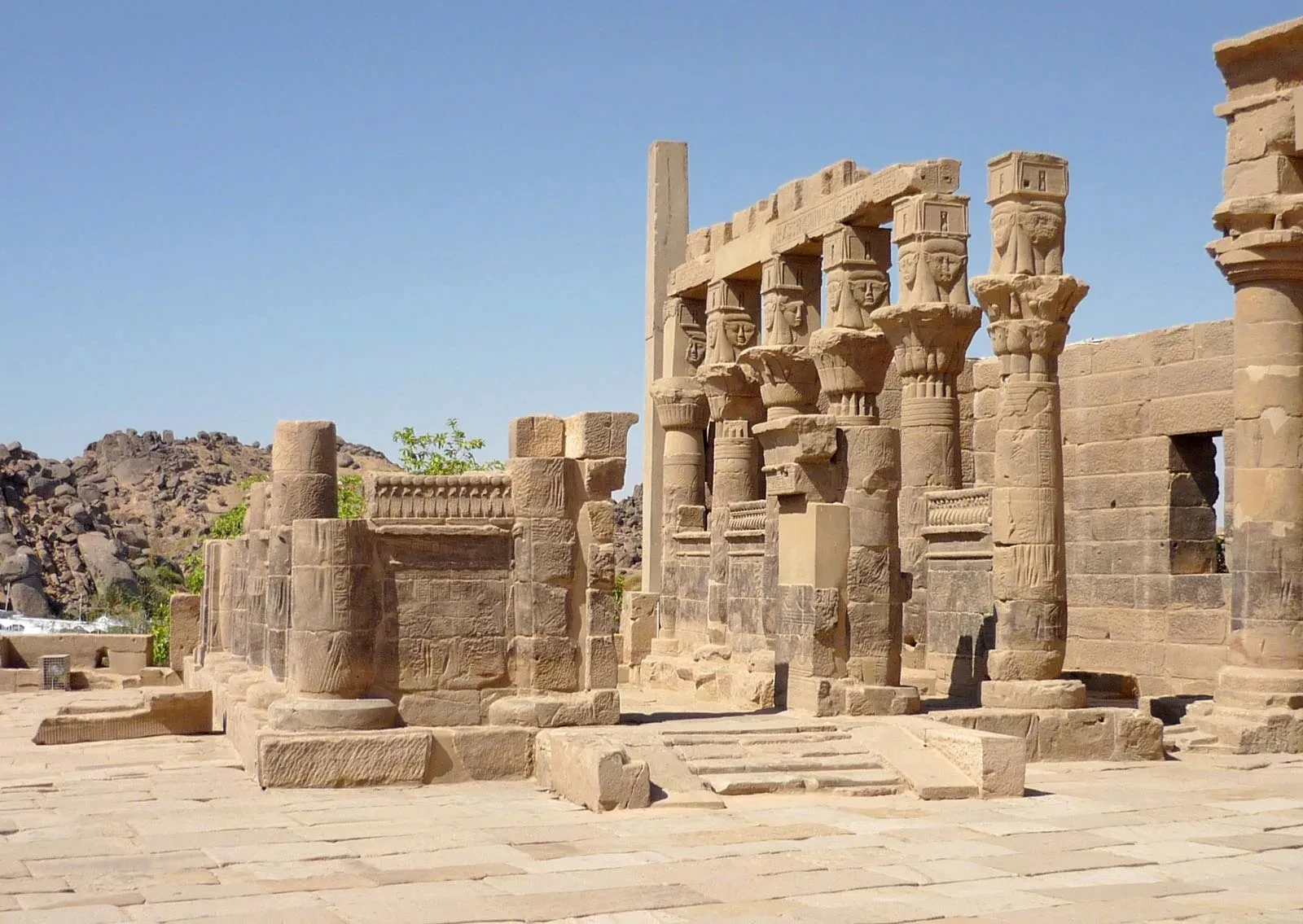
Rising from its island sanctuary on the Nile, the Philae Temple Aswan is one of Egypt's most enchanting ancient sites. Dedicated to the goddess Isis, this Temple of Philae Egypt was rescued from flooding in a legendary UNESCO operation. This complete guide covers the Philae Temple Agypt history, ticket prices, boat transfers, the Sound and Light Show, and how to visit the Temple of Philae Aswan — the last active temple of the ancient Egyptian religion.
.webp)
The Philae Temple Aswan is one of the most beautiful and romantic ancient temples in Egypt. Dedicated to the goddess Isis — the patroness of motherhood, family, and magic — this Temple of Philae Egypt sits on Agilkia Island, a small island in the Nile near Aswan. Known in ancient times as Pilak or P-aaleq, meaning "the end" or "the remote place," it marked the southern frontier of Egypt and the boundary between Egypt and Nubia.
Unlike many Egyptian temples built by a single pharaoh, the Philae Temple Agypt complex grew over centuries. The earliest structures date to the reign of Taharqa (690–664 BC) of the 25th Dynasty, but the main temple was built during the Ptolemaic period (c. 380–362 BC) and continued to be expanded by later Ptolemaic and Roman rulers. The result is a temple that blends Egyptian, Greek, and Roman influences — a testament to the enduring power of the goddess Isis across cultures and centuries.
For travellers exploring Aswan attractions, the Temple of Philae Aswan is an essential stop. It is included in most Aswan tour guide prices and is often combined with visits to the High Dam and the Unfinished Obelisk.
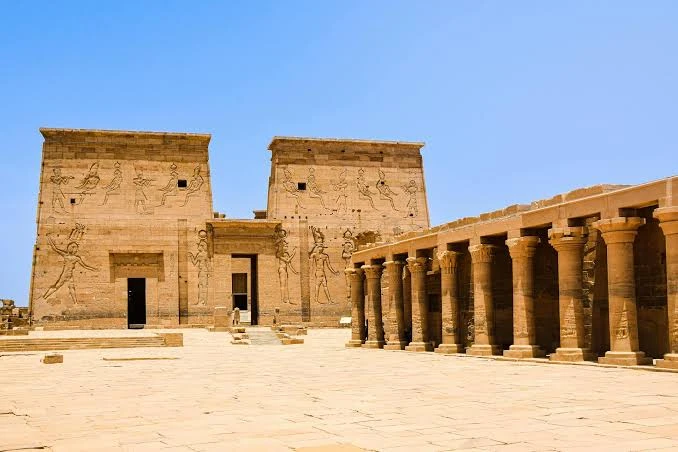
The Temple of Philae Egypt was dedicated to Isis, one of the most important goddesses in the Egyptian pantheon. Isis was the goddess of magic, motherhood, fertility, and healing — a protector of the weak and a powerful magician who brought her husband Osiris back to life.
The temple was built on Philae Island, which the ancient Egyptians believed was one of the burial places of Osiris. According to myth, Isis found Osiris's heart there, making the island sacred. The temple became a major pilgrimage site, attracting worshippers from across Egypt and the Mediterranean world.
One of the most remarkable facts about the Temple of Philae Aswan is that it remained active long after most other Egyptian temples had been closed. The temple island of Philae was the last functioning temple of the ancient Egyptian religion.
Isis-worship persisted here well into the Christian era — records suggest as late as the 9th century CE. The temple was finally closed in the 6th century AD by order of the Byzantine Emperor Justinian, who converted the main temple into a church dedicated to the Virgin Mary. Traces of Christian iconography can still be seen alongside the ancient Egyptian carvings.
The story of the Philae Temple took a dramatic turn in the 20th century. With the construction of the Aswan Low Dam in 1902 and later the Aswan High Dam, the original Philae Island was progressively submerged. The Temple of Philae Egypt spent much of each year partially underwater, its foundations deteriorating.
In 1959, UNESCO launched an international campaign to save the Nubian monuments. The rescue of the Philae Temple Aswan became one of the most extraordinary archaeological operations in history. Between 1972 and 1980, the entire temple complex was dismantled — block by block — and relocated to the nearby island of Agilkia, 20 metres higher. The operation was described as "the greatest archaeological rescue campaign of all time".
Today, the Temple of Philae Aswan stands on Agilkia Island, looking almost exactly as it did on its original site. It was inscribed as a UNESCO World Heritage site in 1979 as part of the "Nubian Monuments from Abu Simbel to Philae".
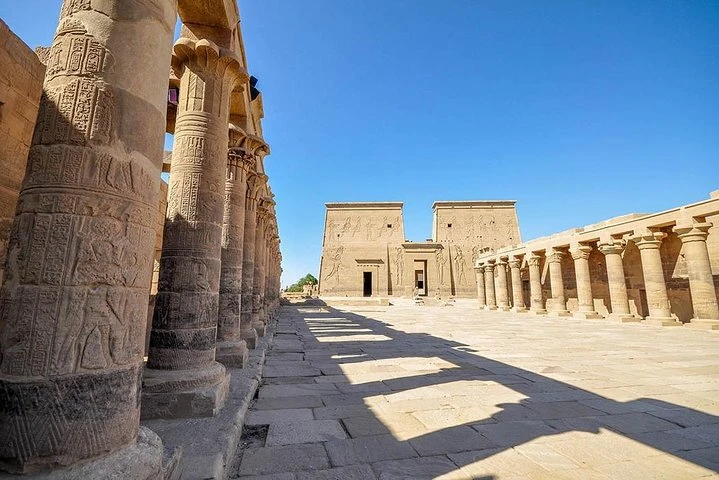
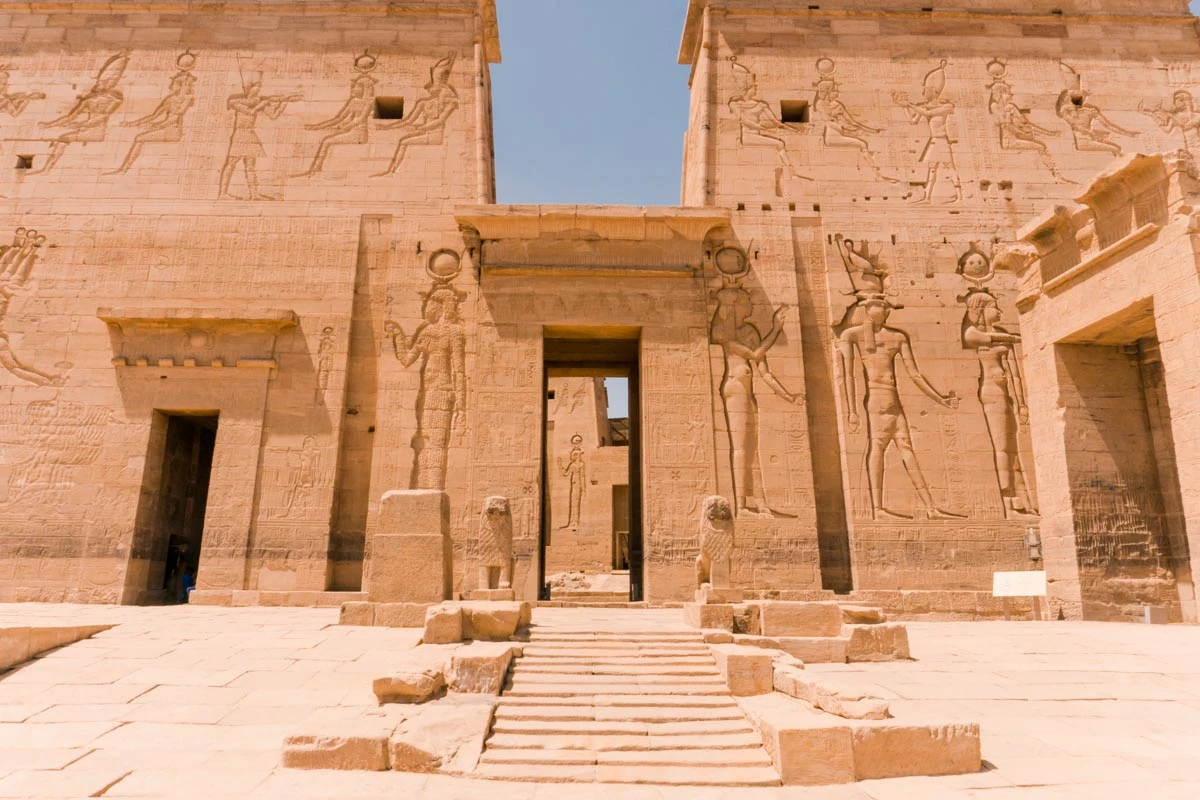
The Temple of Philae Egypt is a masterpiece of Ptolemaic architecture. The main temple complex is approached through a monumental first pylon, which stands 18 metres tall and is adorned with reliefs depicting Ptolemy XII Neos Dionysos smiting his enemies before Isis, Horus, and Hathor.
Beyond the pylon lies a courtyard flanked by colonnades, leading to the second pylon, which is decorated with scenes of Ptolemy XII offering gifts to the gods. Inside, the hypostyle hall features ten towering columns with beautifully carved floral capitals.
The inner sanctuary (naos) once housed the cult statue of Isis. The walls are covered with intricate reliefs depicting the goddess and her rituals. The temple also includes smaller chapels dedicated to other deities, including Hathor, Osiris, and Horus.
One of the most striking features of the Philae Temple Agypt is the traces of Christian iconography — crosses carved into the ancient reliefs, evidence of the temple's later conversion into a church. The juxtaposition of Egyptian, Greek, Roman, and Christian elements makes the Temple of Philae Aswan a unique archaeological treasure.
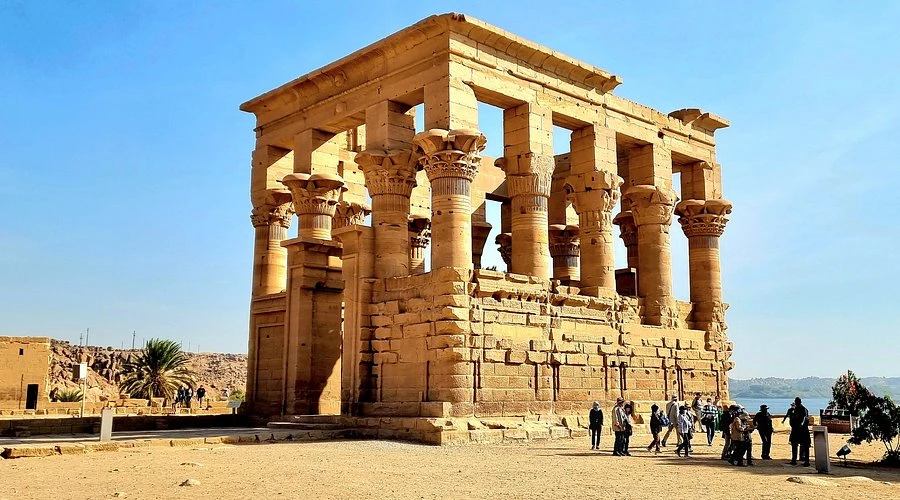
The Philae Temple Aswan is located on Agilkia Island in the Nile, approximately 12 kilometres south of Aswan city centre. The temple is accessible only by motorboat.
Getting there:
Ticket Prices (2026):
| Ticket Type | Price (EGP) |
| Foreign Adult | 550 EGP |
| Student (with valid ID) | 275 EGP |
Prices are subject to change. Tickets must be purchased at the entrance — credit cards are accepted, but cash (Egyptian pounds) is recommended.
Important: The boat fare is paid separately to the boatmen and is not included in the ticket price. Expect to pay 300–500 EGP for a round-trip boat transfer.
Opening Hours:
Recommended visit duration: 2 to 2.5 hours.
The boat ride to the Temple of Philae Aswan is one of the most memorable parts of the visit. As you cross the tranquil waters of the Nile, the temple gradually emerges from the island, its pylons rising against the desert sky.
What to expect:
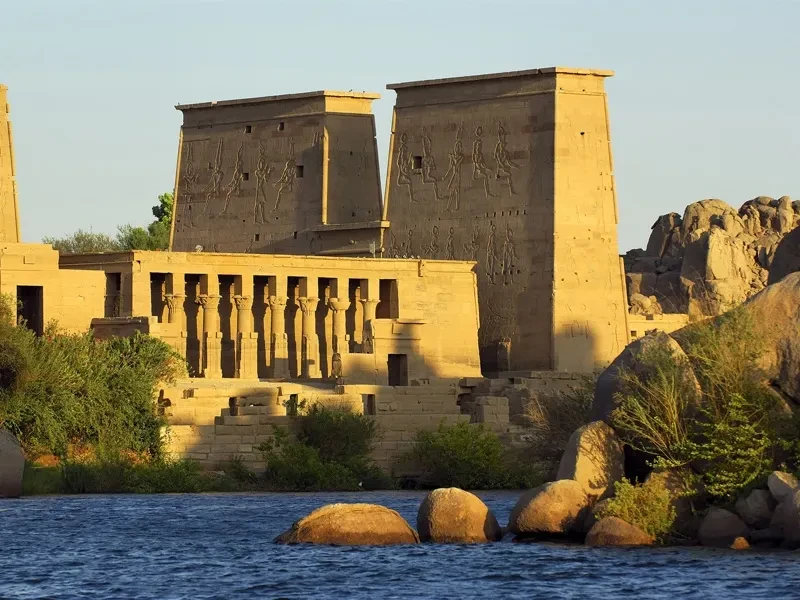
One of the most magical ways to experience the Philae Temple Aswan is through the Sound and Light Show. As night falls, the floodlit temple is silhouetted against the volcanic rocks and surrounding water, creating a truly enchanting atmosphere.
What to expect:
Best for: History lovers, couples, and anyone seeking a unique nighttime experience in Aswan.
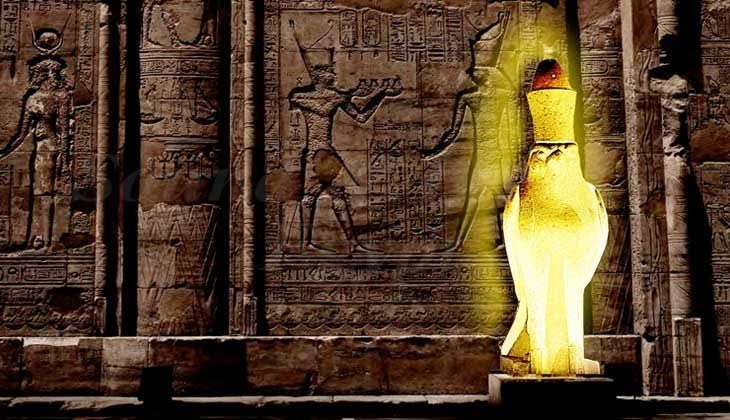
The best time to visit Philae Temple Aswan depends on your preferences:
Best months: October to February offer the coolest temperatures. Summer months (June–August) can be extremely hot — the site has very little shade.
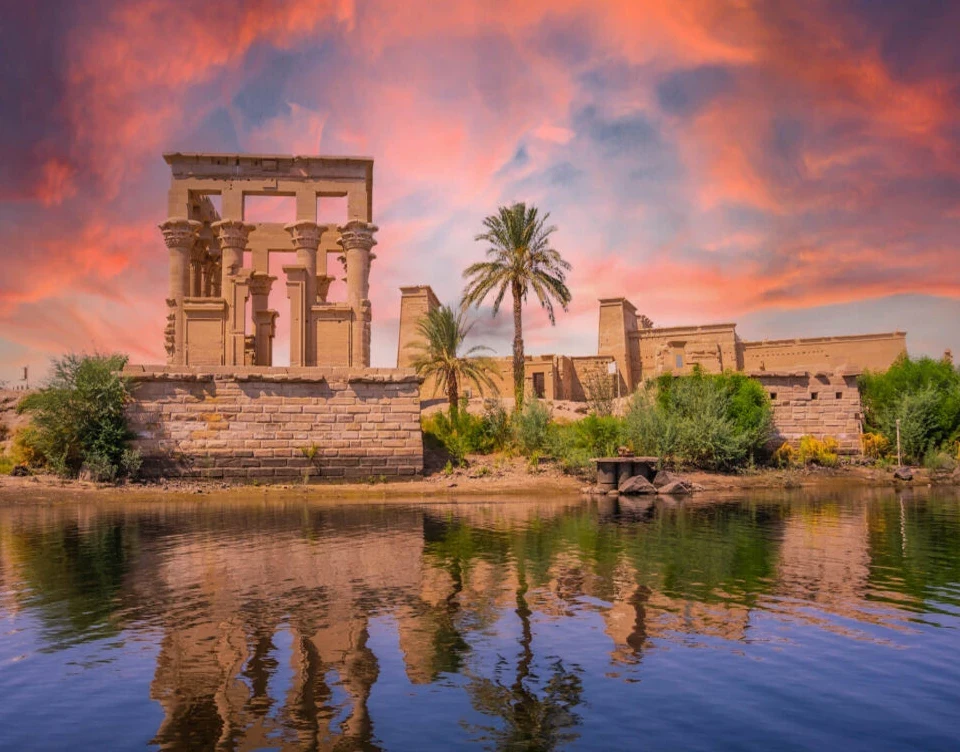
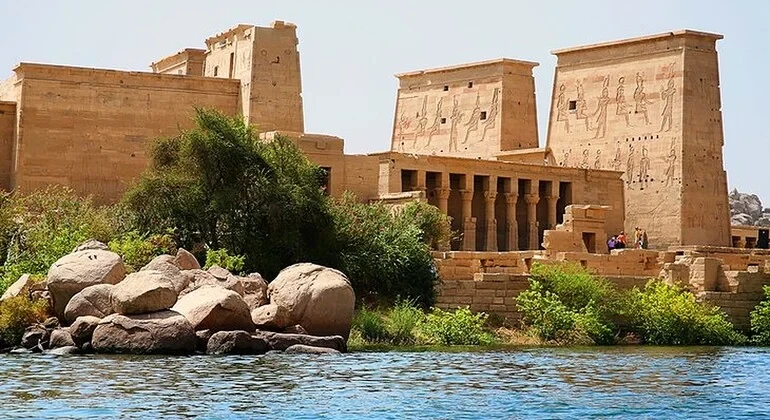
The Philae Temple Aswan is one of the most extraordinary ancient sites in Egypt — an island sanctuary that has survived millennia of worship, flood, and a legendary rescue. Standing before the towering pylons of the Temple of Philae Egypt, you feel the weight of its history: the devotion of the goddess Isis, the last flicker of ancient Egyptian religion, and the determination of UNESCO to save it from the waters.
But the Temple of Philae Aswan can be overwhelming. The boat ride, the ticket system, the heat, and the layers of history — Egyptian, Ptolemaic, Roman, Christian — all demand context. That's where having the right local partner makes all the difference.
Tour Guides Egypt connects you with trusted local professionals who know the Philae Temple Agypt inside out. Our Local Tour Guides are licensed Egyptologists who bring the temple to life — decoding the hieroglyphs, explaining the symbolism of Isis and Osiris, and sharing the stories that most visitors never hear. Our Tour Representatives handle logistics — tickets, boat transfers, and timing — so you can focus on the experience. And when you need to move between the temple, the High Dam, and other Aswan attractions , our Private Drivers provide comfortable, reliable transportation.
For travelers who want to combine the Temple of Philae Aswan with a felucca ride on the Nile , a visit to Abu Simbel , or a comprehensive Aswan itinerary, we can help you design a seamless experience. You can also plan a tailor-made Egypt trip that includes the Philae Temple along with Cairo, Luxor, and the Nile.
Ready to explore Philae Temple? Reach out to us on [WhatsApp] for instant support — our team is ready to answer your questions about the Temple of Philae Aswan, customize your itinerary, and turn your Egyptian dream into reality. The island sanctuary of Isis is waiting — and we're here to help you discover it.
Q: What is Philae Temple?
A: The Philae Temple Aswan is an ancient Egyptian temple complex dedicated to the goddess Isis. Located on Agilkia Island in the Nile near Aswan, it is one of Egypt's most beautiful and best-preserved temples. The Temple of Philae Egypt is also known as the Temple of Isis.
Q: Where is Philae Temple located?
A: The Philae Temple is located on Agilkia Island in the Nile, approximately 12 kilometres south of Aswan city centre. It is accessible only by motorboat.
Q: How much does it cost to visit Philae Temple?
A: Entry to the Philae Temple Aswan costs 550 EGP for foreign adults and 275 EGP for students with valid ID. The boat fare is paid separately — expect to pay 300–500 EGP for a round trip.
Q: What are the opening hours of Philae Temple?
A: The Temple of Philae Egypt is typically open from 7:00 AM to 5:00 PM (summer) and 7:00 AM to 4:00 PM (winter). Hours may vary — check current times before your visit.
Q: How do I get to Philae Temple?
A: You take a motorboat from the Philae Temple dock, about a 10–15 minute ride. Most tours include the boat transfer. For a hassle-free experience, book through Tour Guides Egypt with Private Drivers .
Q: What is the Philae Temple Sound and Light Show?
A: The Sound and Light Show is an evening experience where the Temple of Philae Aswan is illuminated with dramatic lighting while a narrated story tells the legends of Isis and Osiris. The show lasts about 1 hour.
Q: What is the best time to visit Philae Temple?
A: The best time to visit the Temple of Philae Aswan is early morning at 7:00 AM for cooler temperatures and fewer crowds. The best months are October to February.
Q: Is Philae Temple worth visiting?
A: Absolutely. The Philae Temple Aswan is one of Egypt's most beautiful and historically significant sites. Its island setting, rich history, and stunning architecture make it a must-visit on any Aswan itinerary.
Q: What is the history of Philae Temple?
A: The Temple of Philae Egypt was built over centuries, with the main temple dating to the Ptolemaic period. It was the last functioning temple of the ancient Egyptian religion. In the 1960s–70s, it was relocated block by block to Agilkia Island in a UNESCO rescue operation to save it from flooding.
Q: How long do I need to visit Philae Temple?
A: Allow 2 to 2.5 hours for the temple itself. If you're combining it with other Aswan sites, plan for a half-day tour.
Q: Do I need a guide to visit Philae Temple?
A: While it's possible to visit independently, a licensed Egyptologist guide transforms the experience. The Temple of Philae Aswan is layered with meaning that is invisible without explanation. For more on guide costs, check out Aswan tour guide prices .
Q: Is Philae Temple safe for tourists?
A: Yes. The Philae Temple Aswan is a well-established tourist destination with a strong security presence. As with any travel destination, exercise standard precautions.

Pompey's Pillar Alexandria 2026 — history, ticket prices, opening hours, and visitor tips. Complete guide ...

Edfu Temple Egypt 2026 — history, tickets, and visitor tips for the Temple of Horus at Edfu. Complete gui ...

Egypt in September 2026 — transition to autumn, Red Sea escapes, and cultural events. Discover whether vi ...
Get Updates & More
@ Copy 2026 Tour Guides Egypt , All rights reserved