
Aswan Tour Guide Tips | How to Hire the Right Guide in Aswan in 2026
Learn how to hire the right Aswan Tour Guide. Compare prices, verify licenses, and book a private guide A ...

Hidden in the winding alleyways of Old Cairo, the Abu Serga Church Cairo is one of the oldest Christian places of worship in Egypt. This complete guide covers the Abu Serga Church history, its sacred connection to the Holy Family, the underground crypt, visitor information, and practical tips for exploring this Abu Serga church old Cairo treasure. Whether you're a history enthusiast or a pilgrim tracing the footsteps of Mary and Joseph, this guide helps you discover one of Coptic Cairo's most significant spiritual landmarks.
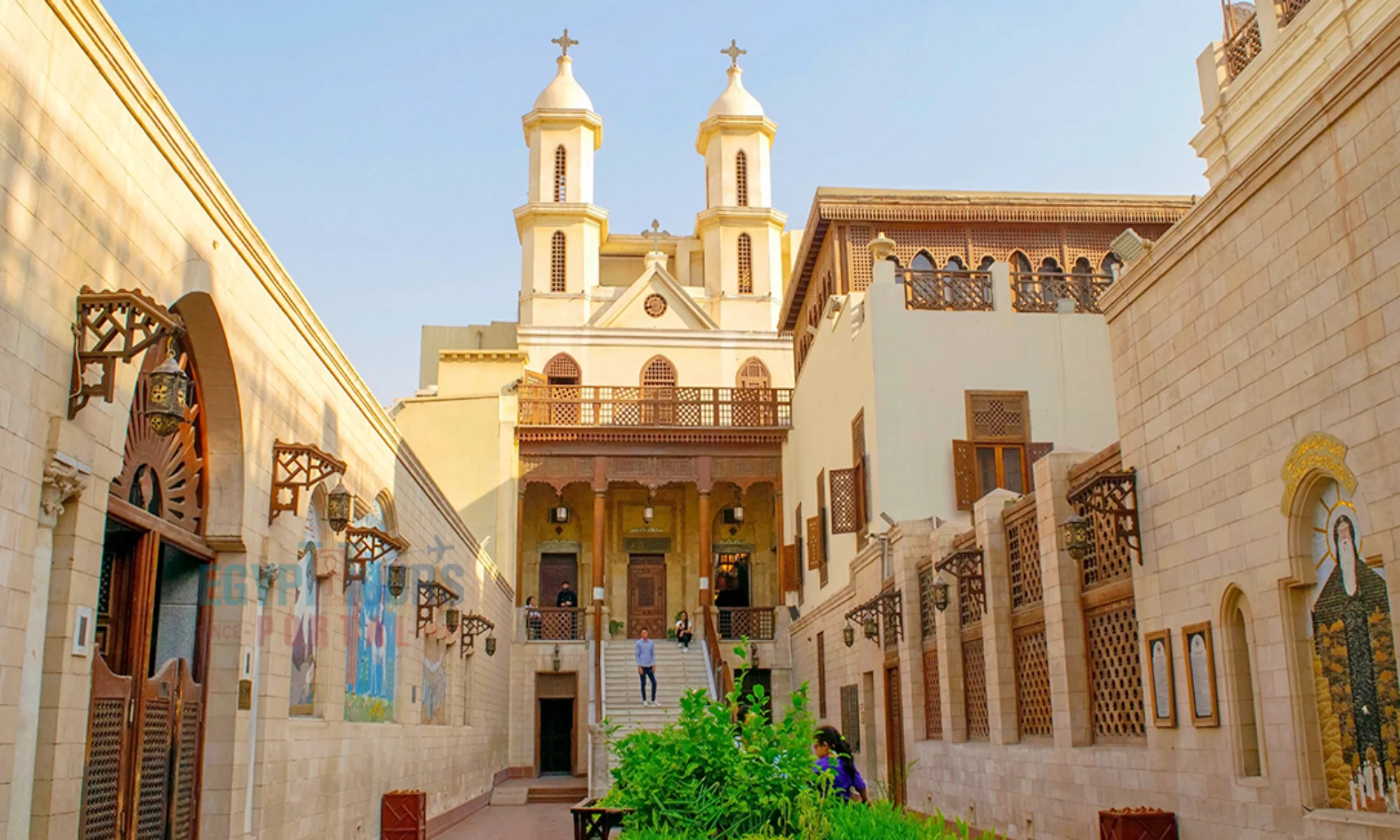
The Abu Serga Church Cairo — known officially as the Church of Saints Sergius and Bacchus — is one of the oldest surviving Christian churches in Egypt. Nestled in the heart of Coptic Cairo (also known as Old Cairo or Masr al-Qadima), this unassuming stone building holds layers of history that span nearly two millennia.
The Abu Serga Church is not just an architectural relic; it is a living place of worship with an active congregation and a deeply sacred significance for Coptic Christians worldwide. It is believed to be built on the very spot where the Holy Family — Mary, Joseph, and the infant Jesus — rested during their flight into Egypt, making it one of the most important pilgrimage sites in the country.
For travellers exploring Cairo, the Abu Serga church old Cairo is an essential stop — a place where history, faith, and architecture converge in a quiet corner of the bustling capital. It is considered the second most important Coptic church in Cairo, after the nearby Hanging Church.
The exact age of the Abu Serga Church is a matter of scholarly debate. Some experts believe it dates back to the late fourth to early fifth centuries AD, making it one of the oldest churches in Egypt. Others argue it was built much later, approximately in the 17th century AD.
What is certain is that the church has been destroyed and rebuilt several times over the centuries, with a significant restoration during the Fatimid era. The present building dates largely to the 8th century, incorporating elements from earlier structures.
The church is dedicated to Saints Sergius and Bacchus, two Roman soldier-saints who were martyred in Syria during the reign of Emperor Maximian in the 4th century AD. Both men were Christian officers in the Roman army who refused to renounce their faith and were executed.
The church's Arabic name, Abu Serga, derives from the Arabic rendering of Saint Sergius — reflecting the deep integration of Coptic Christian heritage into the fabric of Egyptian culture.
The Abu Serga Church was built on the ruins of an ancient Roman fortress, part of the fortified settlement known as Babylon-in-Egypt. This strategic location within the fortress walls provided protection and seclusion — qualities that likely made the site attractive for early Christian worship.
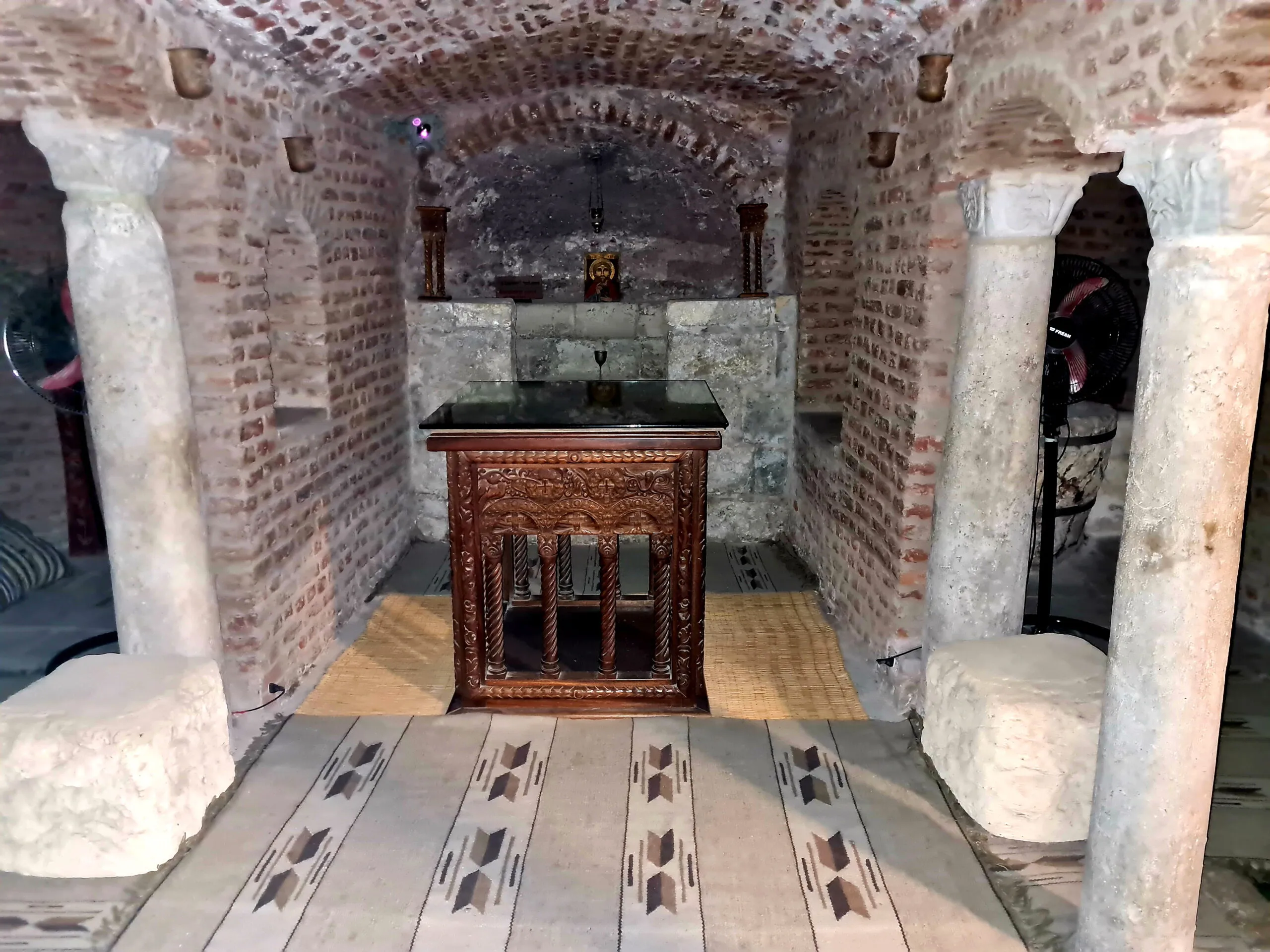
The church's foundations rest on the remains of the Roman fort, and the crypt beneath the church is partially carved into the bedrock of this ancient military installation.
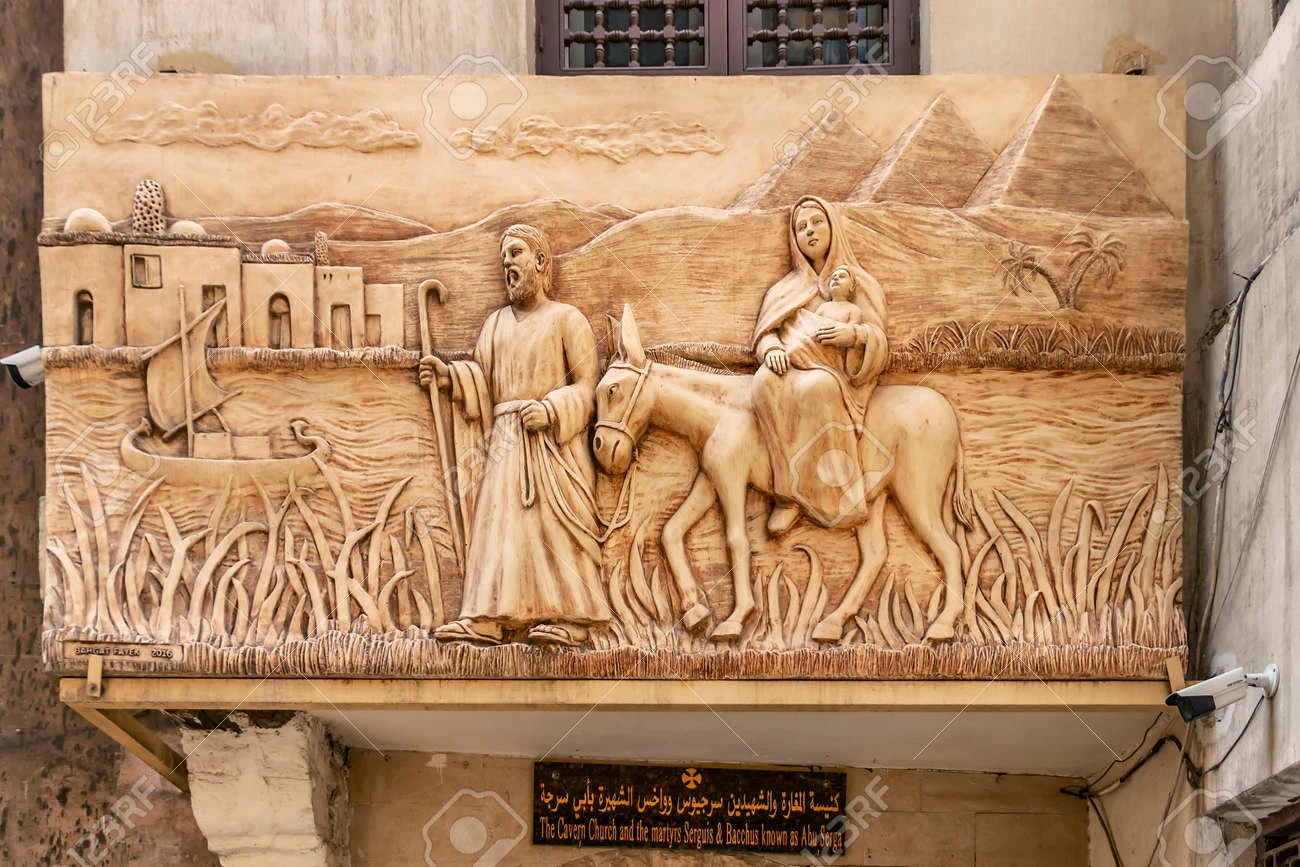
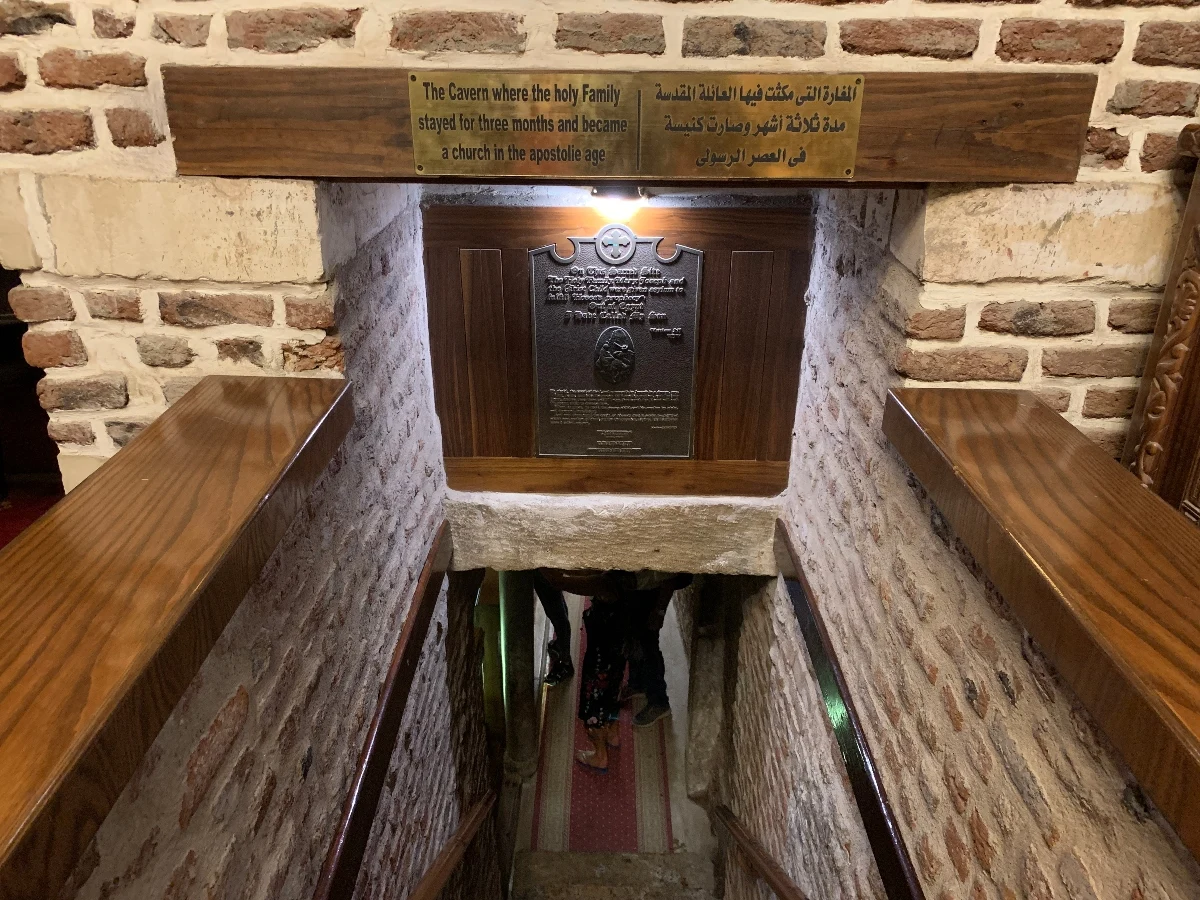
The most sacred feature of the Abu Serga Church Cairo is its underground crypt, located beneath the sanctuary. According to Coptic Christian tradition, this cavern is the very place where Mary, Joseph, and the infant Jesus took refuge for three months during their flight to Egypt.
As the biblical narrative recounts, the Holy Family fled to Egypt to escape King Herod's massacre of the innocents. Coptic tradition holds that they stayed in the vicinity of the Roman fortress, where Joseph worked as a carpenter. The crypt at Abu Serga is venerated as the physical memorial of this part of Jesus' birth narrative — a tangible reminder that the Holy Family survived because they found refuge in a foreign land.
Each year, on June 1, a special mass is held at the church to commemorate the arrival of the Holy Family in Egypt.
Recent geophysical surveys have revealed that the present crypt at Abu Serga may not be the original holy crypt. Using ground-penetrating radar and electrical resistivity tomography, researchers detected an anomalous reflector at a depth of about 5 metres below the sanctuary floor — possibly the buried ceiling of the original crypt.
The current crypt is believed to be a smaller subterranean church dating to the 2nd century AD, with evidence of possible ancient walls and tunnels concealed beneath the church floor. These discoveries suggest that the site's significance may predate even the earliest church structures.
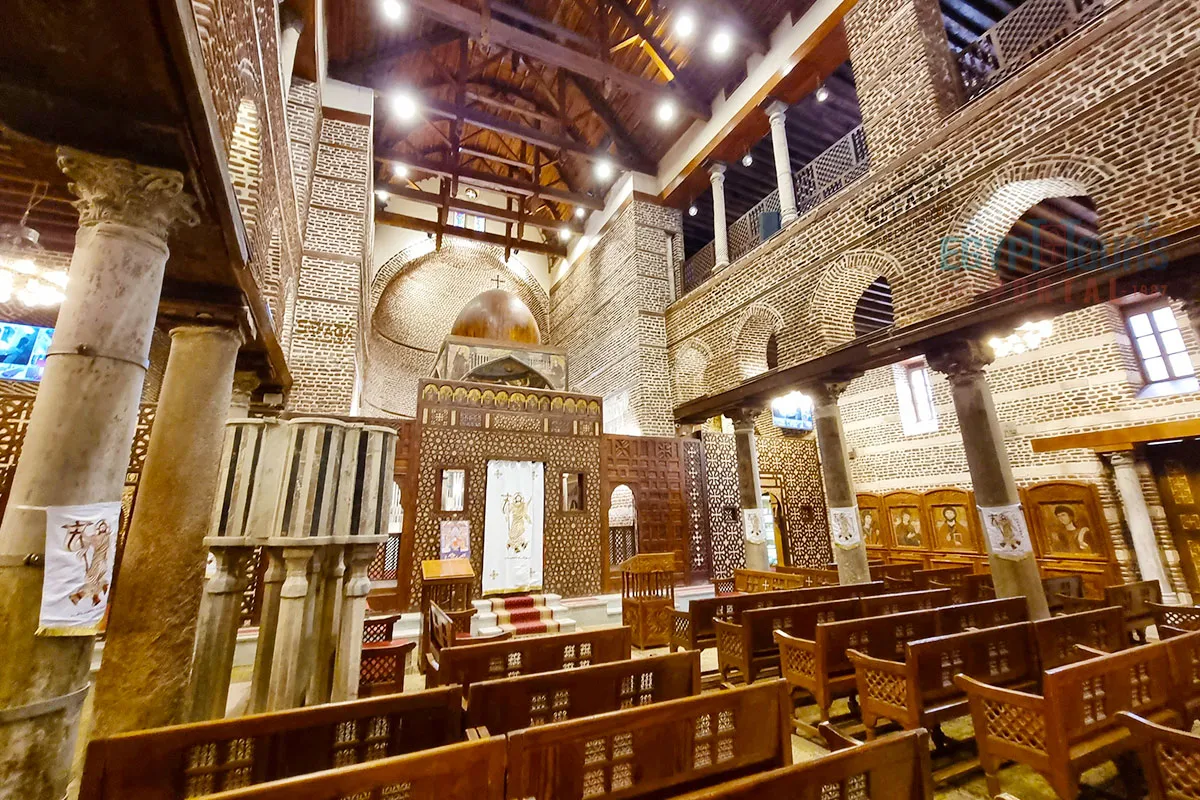
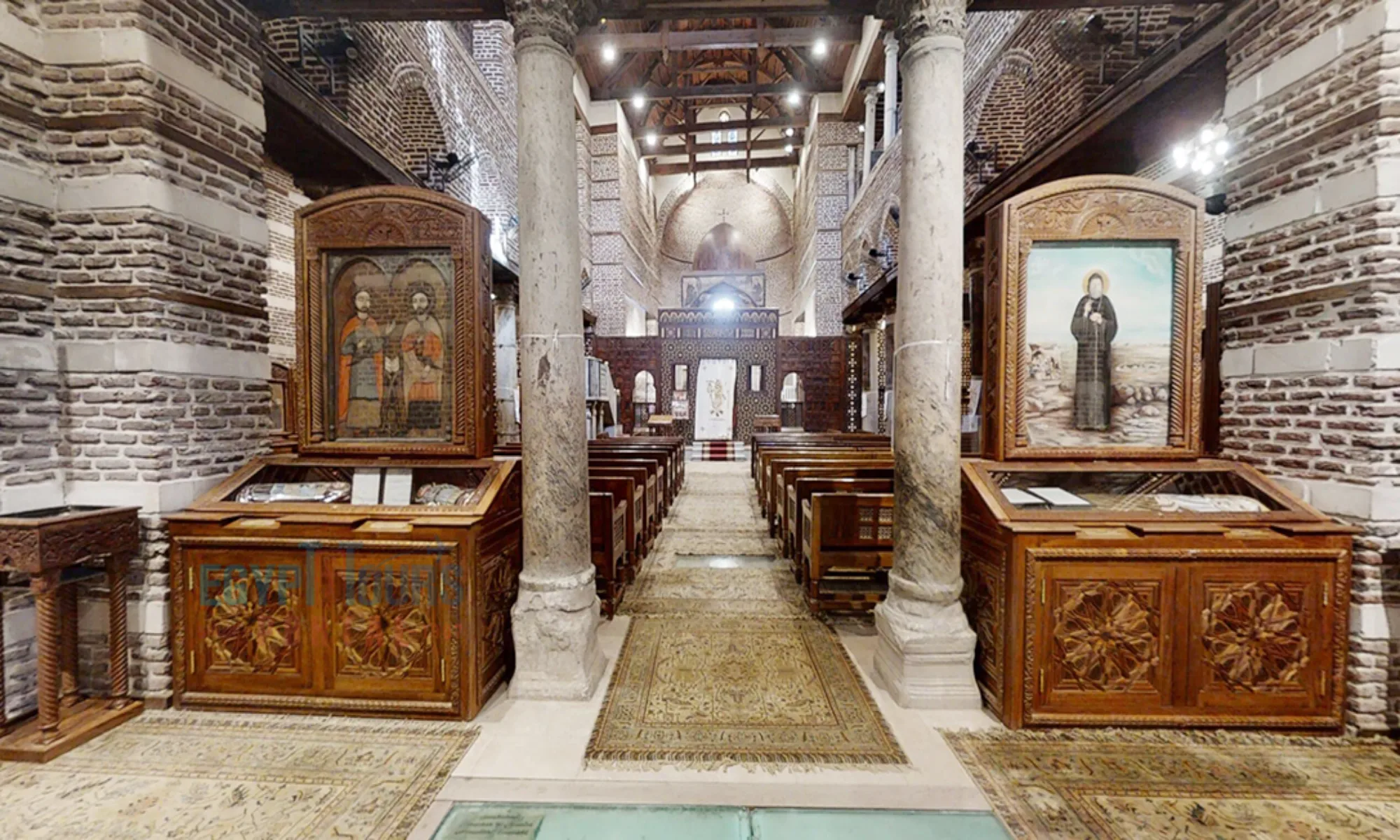
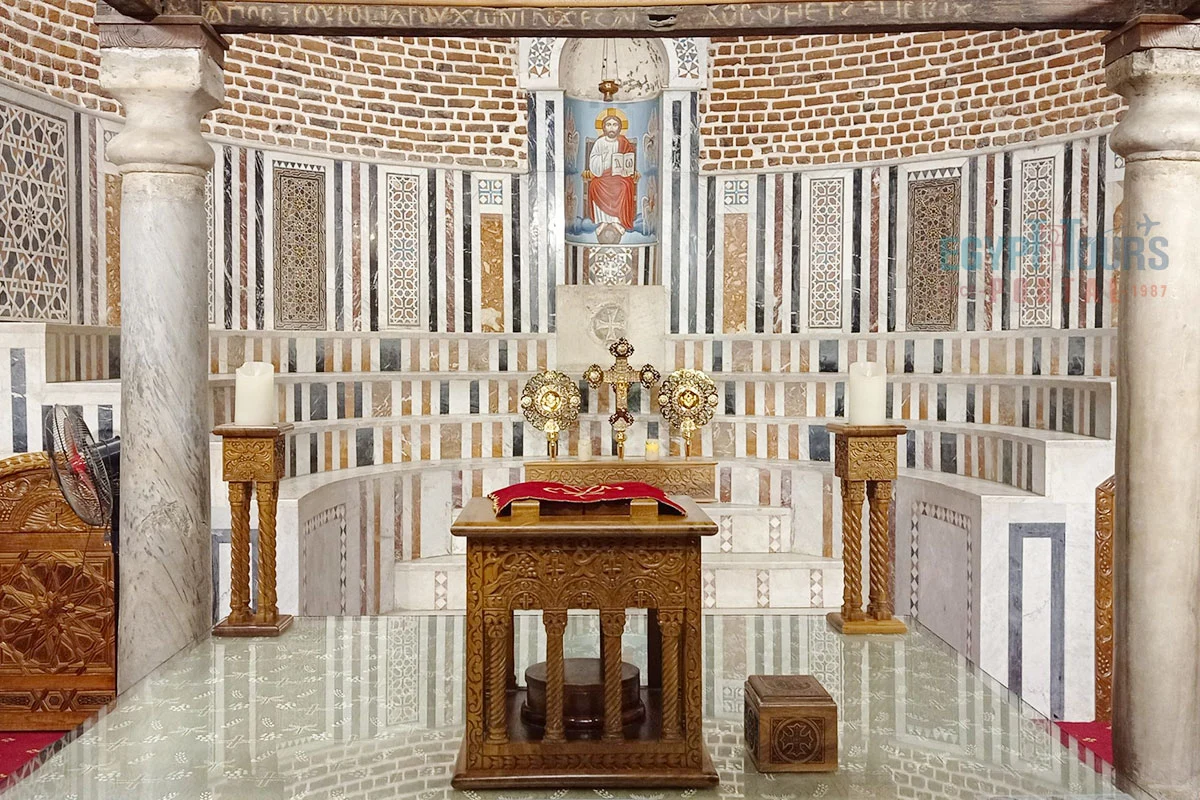
The Abu Serga Church is a traditional basilican structure — a design that reflects the influence of early Christian architecture in Rome and Constantinople. The church consists of three main parts: the narthex (entrance hall), the nave (central hall), and the sanctuary (where the altar is located). The crypt lies beneath the sanctuary, creating a layered sacred space.
The nave is flanked by two side aisles, separated by rows of columns. The church's layout is reminiscent of other early Coptic churches, including the nearby Hanging Church.
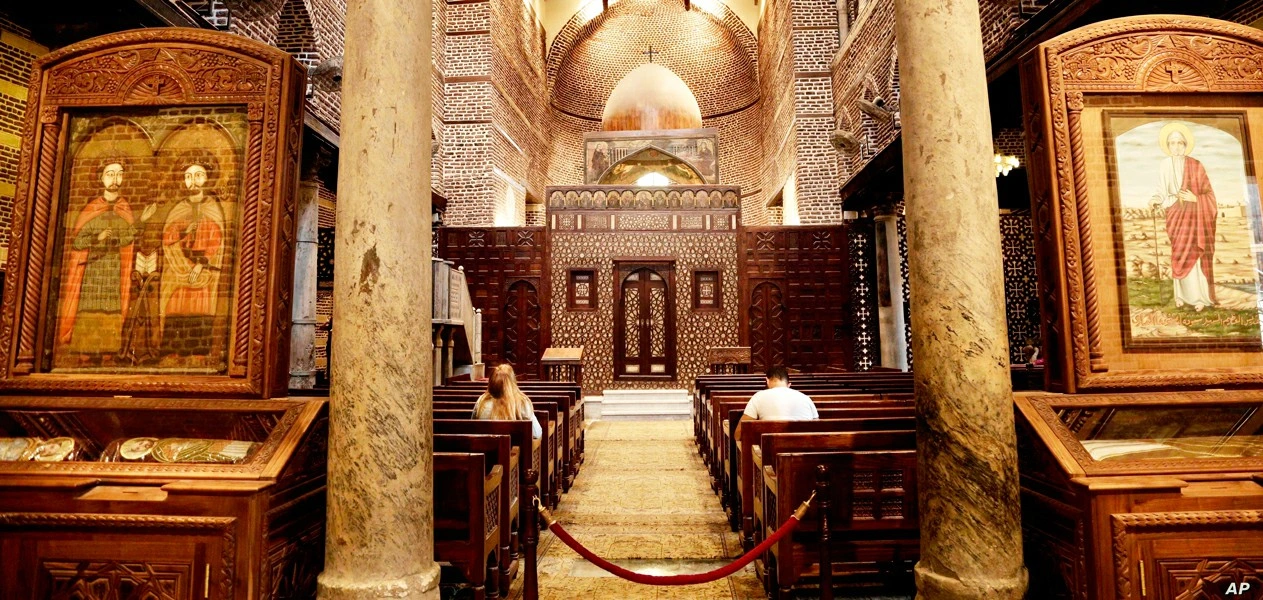
One of the most striking features of the Abu Serga Church is its twelve grand columns that divide the nave from the aisles. Eleven of these columns are made of white marble, while the twelfth is crafted from red granite — a deliberate contrast that adds visual interest and symbolic depth.
The columns are decorated with paintings of the twelve Apostles, making them not just structural supports but also a gallery of sacred art.
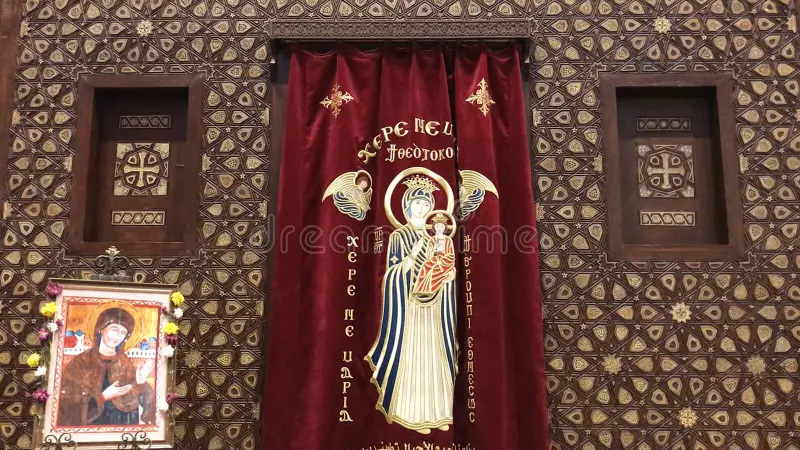
The central sanctuary features a 13th-century wooden screen, known as an iconostasis, with ebony panels inlaid with ivory. This intricate work is one of the finest examples of Coptic woodworking in Egypt.
The church also houses a pulpit, a baptismal font, and a wooden iconostasis decorated with religious paintings and scenes. The frieze and icons date back to the 15th and 16th centuries, and the church's domes and columns are adorned with depictions of saints and apostles.
The unique artistic elements reflect the spirit of Coptic church architecture and the rich visual traditions of early Christianity in Egypt.
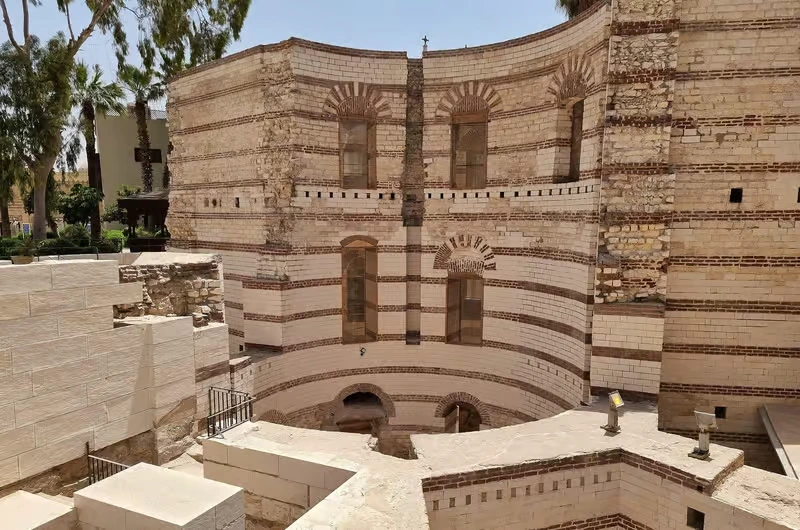
The Abu Serga Church Cairo is located in Coptic Cairo (Old Cairo), in the neighbourhood known as Mari Gerges, Kom Ghorab.
Getting there:
The Abu Serga Church is typically open:
Entrance Fee: There is no official entrance fee, but donations are welcome.
Note: The church is an active place of worship, so opening hours may vary during religious holidays and services. It is recommended to check in advance before visiting.
Dress Code: Modest clothing is required — both men and women should cover their legs, arms, shoulders, belly, and chest. As a functioning church, respectful attire is essential.
Photography: Photography is generally permitted and free. However, be respectful during services and avoid using flash inside the crypt or near the altar.
Abu Serga Church is not suitable for travellers using wheelchairs due to a short flight of steps leading down from the main entrance. The crypt is also accessed via narrow, steep stairs.
The best time to visit the Abu Serga Church Cairo is early morning (9:00 AM – 10:00 AM) or late afternoon (3:00 PM – 4:00 PM).
Why early morning:
Why late afternoon:
Best months: October to April offers the most comfortable temperatures for exploring Coptic Cairo.
For more on timing your Cairo visit, check out our guide to the best time to visit Egypt .
The Abu Serga Church is just one of many treasures in Coptic Cairo. Nearby attractions include:
For more ideas, check out our guide to things to do and see in Cairo .
The Abu Serga Church Cairo is one of those rare places where history, faith, and architecture converge in a way that feels almost tangible. Standing in the crypt where the Holy Family is said to have rested, you feel a connection to a story that has resonated for over 2,000 years. It is a place of quiet reflection, of deep faith, and of extraordinary historical continuity — a hidden gem in the heart of Old Cairo that rewards every visitor who makes the journey.
But the Abu Serga Church is just one part of the rich tapestry of Coptic Cairo. The neighbourhood is home to the Hanging Church, the Coptic Museum, the Ben Ezra Synagogue, and the Mosque of Amr Ibn Al-As — a remarkable concentration of sacred sites that reflects Cairo's history as a crossroads of faiths. Exploring this area without a guide means missing the layers of meaning embedded in every stone.
That's where having the right local partner makes all the difference. Tour Guides Egypt connects you with trusted local professionals who know Coptic Cairo inside out. Our Local Tour Guides are experts in the history of the Abu Serga Church — explaining its connection to the Holy Family, decoding the symbolism of the basilica architecture, and sharing the stories of Saints Sergius and Bacchus that most visitors never hear. Our Tour Representatives handle logistics — transport, timing, and coordination — so you can focus on the experience. And when you need to move between the church and other Cairo attractions, our Private Drivers provide comfortable, reliable transportation.
For travelers who want to combine a visit to the Abu Serga Church with other Egyptian highlights — the Pyramids of Giza , the Sphinx , the Khan al-Khalili bazaar , and the things to do and see in Cairo — we can help you design a comprehensive itinerary. You can also plan a tailor-made Egypt trip that combines the sacred sites of Cairo with Luxor, Aswan, and the Nile.
Ready to explore the Abu Serga Church? Reach out to us on [WhatsApp] for instant support — our team is ready to answer your questions about the Abu Serga Church Cairo, customize your itinerary, and turn your Egyptian journey into a pilgrimage of discovery. The sacred history of Old Cairo is waiting — and we're here to help you uncover it.
Q: What is Abu Serga Church Cairo?
A: The Abu Serga Church Cairo (also known as the Church of Saints Sergius and Bacchus) is one of the oldest Christian churches in Egypt, located in Old Cairo. It is believed to be built on the site where the Holy Family rested during their flight to Egypt.
Q: Where is the Abu Serga Church located?
A: The Abu Serga Church is located in Coptic Cairo (Old Cairo), at Mari Gerges, Kom Ghorab, Old Cairo, Cairo Governorate. It is near the Mar Girgis Metro Station.
Q: What is the history of Abu Serga Church?
A: The Abu Serga Church dates back to the 4th or 5th century AD, built over a Roman fortress. It is dedicated to Saints Sergius and Bacchus, Roman soldier-martyrs. The church is sacred because it is believed to be the resting place of the Holy Family.
Q: Is there a crypt at Abu Serga Church?
A: Yes. The Abu Serga Church has an underground crypt where, according to Coptic tradition, Mary, Joseph, and the infant Jesus took refuge for three months during their flight to Egypt.
Q: What are the opening hours of Abu Serga Church?
A: The Abu Serga Church is typically open daily from 8:00 AM to 4:00 PM. Some sources report 9:00 AM to 4:30 PM. It's best to check in advance.
Q: Is there an entrance fee for Abu Serga Church?
A: No, there is no official entrance fee for the Abu Serga Church, but donations are welcome.
Q: What should I wear to Abu Serga Church?
A: Modest clothing is required — cover legs, arms, shoulders, belly, and chest. This applies to both men and women.
Q: Can I take photos inside Abu Serga Church?
A: Yes, photography is generally permitted and free. However, avoid using flash inside the crypt or near the altar, and be respectful during services.
Q: Is Abu Serga Church accessible for wheelchair users?
A: No, the Abu Serga Church is not suitable for wheelchair users due to stairs leading down from the main entrance and narrow steps to the crypt.
Q: What is the best time to visit Abu Serga Church?
A: The best time to visit the Abu Serga Church is early morning (9:00 AM – 10:00 AM) or late afternoon for fewer crowds and cooler temperatures.
Q: What is the significance of Abu Serga Church?
A: The Abu Serga Church is one of the most important Coptic Christian sites in Egypt. It is revered as the place where the Holy Family rested during their flight to Egypt, making it a major pilgrimage site.
Q: What else can I see near Abu Serga Church?
A: Nearby attractions include the Hanging Church, the Coptic Museum, the Ben Ezra Synagogue, the Mosque of Amr Ibn Al-As, the Nilometer, and the Manasterly Palace.
Q: Do I need a guide for Abu Serga Church?
A: While you can visit independently, a licensed guide can explain the church's history, its connection to the Holy Family, and the symbolism of the architecture. For more on guide costs, check out our guide to Egypt tour guide price .
Q: What is the best currency to take to Egypt?
A: The best currency to take to Egypt is US dollars or euros, which are widely accepted. The Egyptian pound (EGP) is used for daily expenses.
Q: Is it safe to visit Abu Serga Church?
A: Yes. Egypt is safe for tourists who follow standard precautions. Coptic Cairo is a well-established tourist destination with a strong security presence.
Q: Do I need a visa to visit Egypt?
A: Most nationalities require a visa. Check the Egypt visa on arrival countries list to see if you qualify. US citizens can obtain an Egypt visa on arrival or apply for an e-Visa.

Learn how to hire the right Aswan Tour Guide. Compare prices, verify licenses, and book a private guide A ...

Luxor Egypt tour guides 2026 — English guides from $70/day, other languages from $100/day. How to choose ...

Pompey's Pillar Alexandria 2026 — history, ticket prices, opening hours, and visitor tips. Complete guide ...
Get Updates & More
@ Copy 2026 Tour Guides Egypt , All rights reserved