Hurghada Tour Guide | 7 Checks Before You Book (From $70/Day)
Hire a Hurghada tour guide from $70/day. A private guide in Hurghada for city tours, Luxor, Cairo and des ...

Towering over Luxor's West Bank for over 3,400 years, the Colossi of Memnon are among Egypt's most iconic ancient monuments. This complete guide covers the Colossi of Memnon Luxor history, the legendary singing statues, recent restoration, visitor information, and tips for making the most of your visit to these silent guardians of Amenhotep III's mortuary temple.
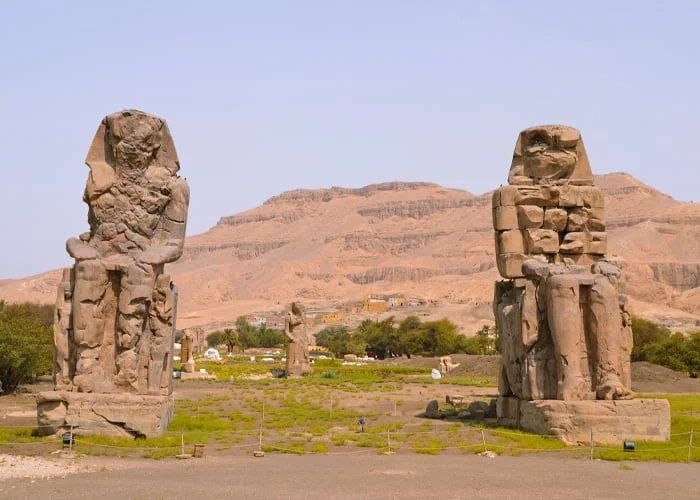
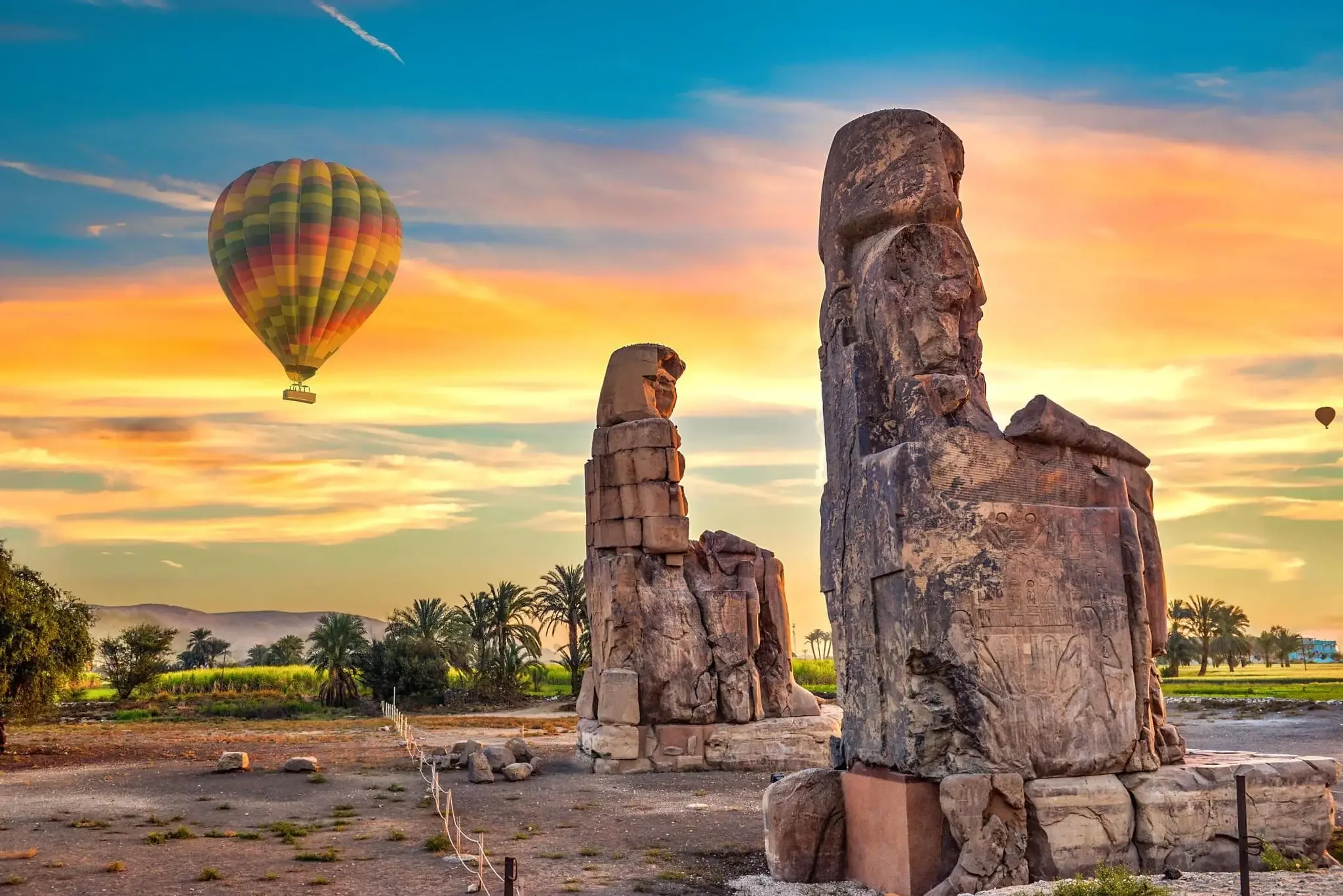
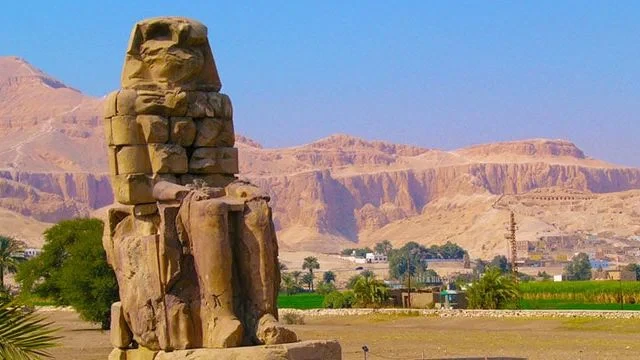
The Colossi of Memnon are two massive stone statues of the Pharaoh Amenhotep III, standing sentinel on the West Bank of the Nile near Luxor, Egypt. For over 3,400 years, these towering figures have guarded the entrance to what was once the largest and richest temple complex in Egypt — Amenhotep III's mortuary temple. Each statue stands approximately 18 metres (59 feet) tall and weighs around 1,000 tonnes, carved from single blocks of quartzite sandstone.
The Colossi of Memnon depict Amenhotep III seated with his hands resting on his thighs, facing eastward toward the Nile and the rising sun. Both wear the nemes headdress topped with the double crown and a pleated royal kilt, symbolising divine rule.
The name "Colossi of Memnon" is actually a misnomer — the statues were mistakenly identified by ancient Greeks as depicting the Trojan hero Memnon, who was said to have been killed by Achilles during the Trojan War. Despite the misattribution, the name has endured for over two millennia and remains the most widely recognised name for these iconic figures.
Today, the Colossi of Memnon Luxor are among the most photographed and visited monuments on the West Bank, serving as a dramatic introduction to the ancient Theban necropolis. They are a powerful reminder of the scale and ambition of ancient Egyptian civilisation — and of one pharaoh's determination to be remembered for eternity.
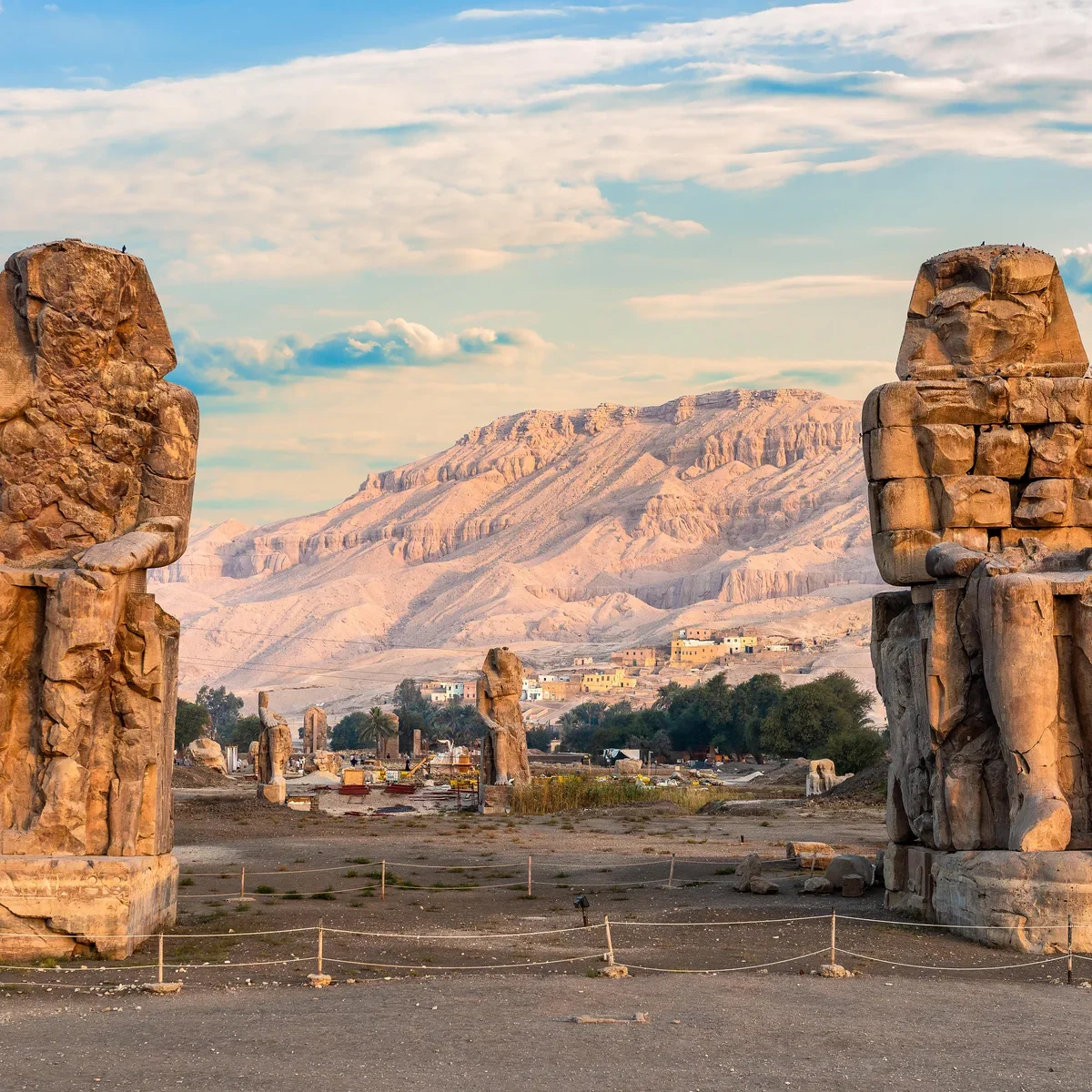
The Colossi of Memnon were originally part of the mortuary temple of Amenhotep III — a vast complex that once covered approximately 350,000 square metres, making it the largest religious structure ever built in Egypt. Amenhotep III, who ruled during the 18th Dynasty (c.1386–1353 BC), constructed his mortuary temple on the West Bank of the Nile, intending it to be a monument to his power and divine status that would endure for eternity.
The temple complex was designed to be grander than anything that had come before — larger even than the Karnak Temple complex across the river. It featured colossal statues, extensive courtyards, pylons, and shrines. But over the centuries, the temple was largely destroyed by earthquakes and later pharaohs who reused its stones for their own building projects.
Today, the Colossi of Memnon are the last standing remnants of this once-magnificent complex, having outlasted the temple they once guarded.
One of the most fascinating aspects of the Colossi of Memnon is the legend of the "singing statues". According to ancient Greek and Roman writers, the northern statue would emit a haunting sound at dawn — described as a high-pitched cry or a melodic note — as the morning sun's rays warmed the stone.
The phenomenon was attributed to the statue's identification with the mythological hero Memnon, who was killed by Achilles. According to legend, the sound was Memnon's mother, the goddess Eos (Dawn), weeping for her son as the sun rose. The sound was said to be particularly clear and beautiful, attracting visitors from across the ancient world who came to witness this remarkable acoustic phenomenon.
The "singing" likely continued for several centuries, with Roman emperors and dignitaries visiting the site to hear the sound. However, after a restoration attempt by the Roman Emperor Septimius Severus in the 3rd century AD, the sound ceased — possibly because the repairs altered the stone's acoustic properties or blocked the path of the morning sun.
The Colossi of Memnon suffered severe damage over the centuries. A powerful earthquake around 1200 BC toppled the statues and destroyed much of Amenhotep III's funerary temple. The statues were later repaired and reassembled, though one colossus sustained significant damage and was rebuilt with stone blocks, creating the distinctive cracks visible today.
The statues were repaired again in antiquity, including during the Roman period, when Emperor Septimius Severus ordered restoration work. These ancient repairs are still visible on the statues today, adding to their historical significance.
In 2025, Egypt completed a 20-year restoration project to reassemble the colossi and surrounding structures, ensuring that the Colossi of Memnon would stand tall for future generations.
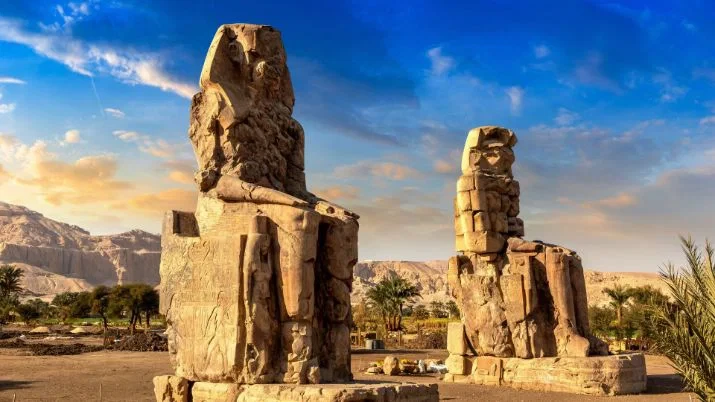
In December 2025, Egypt unveiled the fully restored Colossi of Memnon after a renovation project that lasted about two decades. The restoration project — one of the largest and most complex archaeological conservation efforts in modern Egyptian history — involved painstakingly reassembling the giant alabaster statues from hundreds of fragments that had been scattered over the centuries.
The project included:
The restored Colossi of Memnon now stand at approximately 18 metres tall at their original positions, with Amenhotep III shown seated upright, hands placed neatly on his thighs, wearing royal garb including the nemes headdress and a pleated kilt. The statues face east toward the Nile and the rising sun, just as they have for over three millennia.
This restoration ensures that the Colossi of Memnon Luxor will continue to captivate visitors for generations to come.
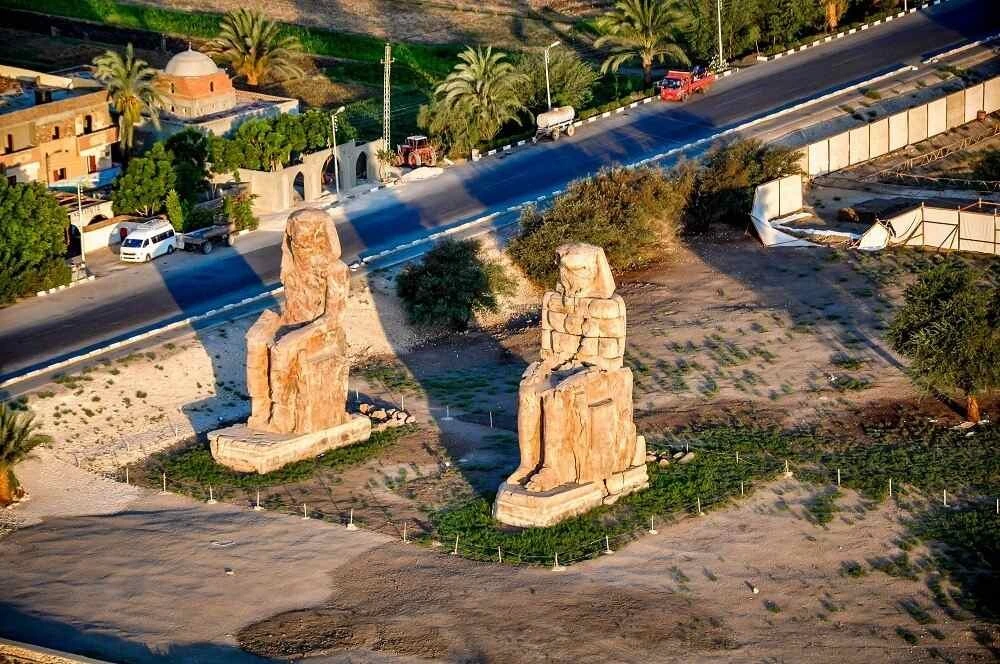
The Colossi of Memnon are located on the West Bank of the Nile in Luxor, Egypt. They stand in an area called Kom el-Hettan, near the location of the ancient city of Thebes. The statues are approximately 2 kilometres (1.2 miles) from the Nile ferry landing.
Getting there:
The Colossi of Memnon are an open-air site located beside the main road:
Note: Opening hours can vary seasonally, and site procedures may change on holidays or during busy periods. Since the statues stand in an open area beside the road, you can also view and photograph them outside official hours.
The best time to visit the Colossi of Memnon is early morning (6:00 AM – 9:00 AM) or late afternoon (closer to sunset).
Why early morning:
Why late afternoon:
Best months: October to April offer the most comfortable temperatures for visiting the West Bank.
For more on timing your Luxor visit, check out our guide to the best time to visit Egypt .
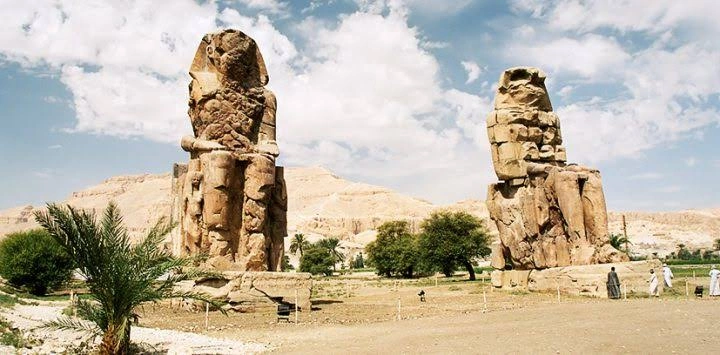
The Colossi of Memnon are a quick but unforgettable stop on any West Bank tour. Here's what you can expect:
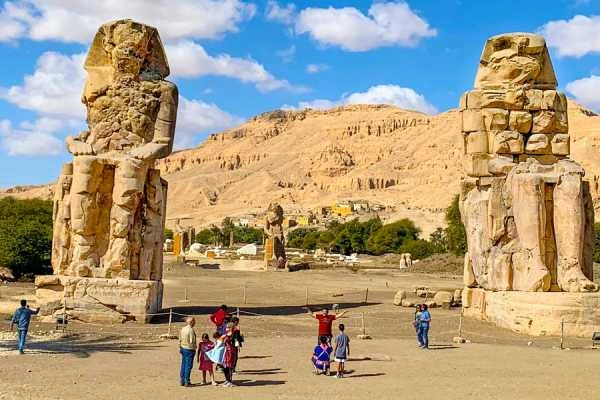
The Colossi of Memnon are a photographer's dream. Here's how to capture the best images:
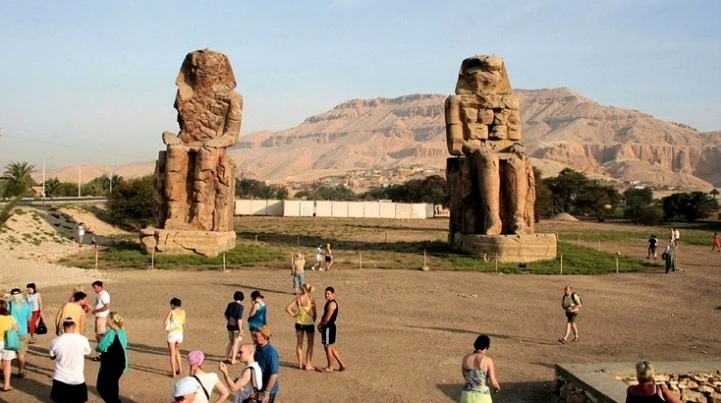
The Colossi of Memnon are ideally combined with other West Bank attractions. Here's a suggested West Bank itinerary:
Morning:
Alternative Half-Day Option:
For more ideas, check out our guides to Luxor attractions and the best tombs to visit in the Valley of the Kings .
The Colossi of Memnon are more than just two statues — they are the last standing witnesses to the ambition and power of one of Egypt's greatest pharaohs. For over 3,400 years, these silent guardians have watched the sun rise over the Nile, outlasting the temple they once guarded, the earthquakes that shattered them, and the empires that rose and fell around them. Standing before the Colossi of Memnon Luxor, you feel the weight of history — the scale of ancient ambition, the skill of ancient craftsmen, and the enduring power of stone.
But the Colossi of Memnon are just the beginning. They are the perfect introduction to the wonders of Luxor's West Bank — the Valley of the Kings , the Temple of Hatshepsut, the Ramesseum, and Medinet Habu. Exploring this landscape without a guide means missing the layers of meaning embedded in every stone — the stories of pharaohs, the symbolism of the hieroglyphs, the legends that have echoed through the ages.
That's where having the right local partner makes all the difference. Tour Guides Egypt connects you with trusted local professionals who know the West Bank inside out. Our Local Tour Guides are licensed Egyptologists who bring the Colossi of Memnon and the surrounding sites to life — decoding the symbols, sharing the stories of Amenhotep III, and explaining the legend of the singing statues that has fascinated visitors for over two millennia. Our Tour Representatives handle logistics — transport, timing, and coordination — so you can focus on the experience. And when you need to move between the West Bank and the East Bank, our Private Drivers provide comfortable, reliable transportation.
For travelers who want to combine the Colossi of Memnon with other Luxor highlights — the Karnak Temple Complex , the Valley of the Kings , and a hot air balloon ride over Luxor — we can help you design a comprehensive itinerary. You can also plan a tailor-made Egypt trip that combines Luxor with Cairo, Aswan, and the Nile.
For more inspiration, check out our guides to the best hotels in Luxor , Luxor attractions , and felucca ride Luxor prices .
Ready to stand before the Colossi of Memnon? Reach out to us on [WhatsApp] for instant support — our team is ready to answer your questions about the Colossi of Memnon Luxor, customize your itinerary, and turn your Egyptian dream into reality. The silent guardians of the West Bank are waiting — and we're here to help you discover their secrets.
Q: What are the Colossi of Memnon?
A: The Colossi of Memnon are two massive stone statues of Pharaoh Amenhotep III, standing 18 metres tall on the West Bank of the Nile in Luxor. They are the last remnants of Amenhotep III's mortuary temple, once the largest temple complex in Egypt.
Q: Where are the Colossi of Memnon located?
A: The Colossi of Memnon are located on the West Bank of the Nile in Luxor, Egypt, in an area called Kom el-Hettan, near the ancient city of Thebes. They are approximately 2 kilometres from the Nile ferry landing.
Q: How tall are the Colossi of Memnon?
A: Each Colossus of Memnon stands approximately 18 metres (59 feet) tall.
Q: Who built the Colossi of Memnon?
A: The Colossi of Memnon were built by Pharaoh Amenhotep III, who ruled Egypt during the 18th Dynasty (c.1386–1353 BC). They were part of his vast mortuary temple complex on the West Bank.
Q: What is the legend of the singing statues?
A: According to ancient legend, the northern Colossus of Memnon would emit a haunting sound at dawn, described as a high-pitched cry or melodic note. The sound was attributed to Memnon's mother, the goddess Eos, weeping for her son. The sound ceased after restoration work in the Roman period.
Q: How much does it cost to visit the Colossi of Memnon?
A: There is no entrance fee to visit the Colossi of Memnon. The statues are an open-air site located beside the main road.
Q: What are the opening hours of the Colossi of Memnon?
A: The Colossi of Memnon are open daily from 6:00 AM to 5:00 PM. Since the statues are in an open area, you can also view and photograph them outside official hours.
Q: How long should I spend at the Colossi of Memnon?
A: Most visitors spend 15–30 minutes at the Colossi of Memnon — enough time to take photos, appreciate the scale, and learn about the history.
Q: What is the best time to visit the Colossi of Memnon?
A: The best time to visit the Colossi of Memnon is early morning (6:00–9:00 AM) or late afternoon for cooler temperatures and the best light for photography.
Q: Are the Colossi of Memnon accessible for wheelchair users?
A: The Colossi of Memnon are located in an open field beside the road, with relatively flat ground. However, the terrain can be uneven. It's best to check current accessibility before your visit.
Q: Can I climb the Colossi of Memnon?
A: No. The Colossi of Memnon are a protected archaeological site. Visitors are not permitted to climb or touch the statues. Stay within the designated visitor areas.
Q: What is the best way to get to the Colossi of Memnon?
A: The best way to get to the Colossi of Memnon is by taxi, private driver, or as part of a West Bank tour that includes the Valley of the Kings and Hatshepsut's Temple.
Q: What should I wear to visit the Colossi of Memnon?
A: Wear comfortable, breathable clothing suitable for warm weather. Sun protection — a hat, sunglasses, and sunscreen — is essential as the site has little shade. Comfortable walking shoes are recommended.
Q: What else can I see near the Colossi of Memnon?
A: Nearby attractions include the Valley of the Kings , the Temple of Hatshepsut, the Ramesseum, and Medinet Habu. The Colossi of Memnon are ideally combined with these sites for a full West Bank tour.
Q: Do I need a guide to visit the Colossi of Memnon?
A: While you can visit independently, a licensed Egyptologist guide can explain the history, the legend of the singing statues, and the significance of the Colossi within Amenhotep III's mortuary temple. For more on guide costs, check out our guide to Luxor tour guide prices .
Q: What is the best currency to take to Egypt?
A: The best currency to take to Egypt is US dollars or euros, which are widely accepted. The Egyptian pound (EGP) is used for daily expenses.
Q: Is it safe to visit the Colossi of Memnon?
A: Yes. Egypt is safe for tourists who follow standard precautions. The Colossi of Memnon are a well-established tourist destination with a strong security presence.
Q: Do I need a visa to visit Egypt?
A: Most nationalities require a visa. Check the Egypt visa on arrival countries list to see if you qualify. US citizens can obtain an Egypt visa on arrival or apply for an e-Visa.

Hire a Hurghada tour guide from $70/day. A private guide in Hurghada for city tours, Luxor, Cairo and des ...

Book a Marsa Alam tour guide from $70/day. Private guide in Marsa Alam for Luxor, Edfu, Wadi el Gemal and ...

Hire a Giza tour guide from $70/day. Book a licensed private guide in Giza for the Pyramids, Sphinx and G ...
Get Updates & More
@ Copy 2026 Tour Guides Egypt , All rights reserved