
Orange Bay or Paradise Island? Choose by What You Want the Day to Feel Like
Orange Bay or Paradise Island? Compare beaches, crowds, snorkeling, boat time, price and who each suits t ...

Kalabsha Temple is the largest free-standing temple in Egyptian Nubia, moved stone by stone above the Aswan High Dam. This guide explains the history of the Temple of Kalabsha, what to see on the island and how to visit Kalabsha Temple from Aswan.
Kalabsha Temple is one of the least visited great temples in Egypt, and one of the most interesting. It sits on a small island in Lake Nasser, just above the Aswan High Dam, and it exists in its current form only because a rescue operation took it apart and rebuilt it on higher ground in the 1960s.
Most Aswan itineraries stop at Philae and Abu Simbel. This guide explains why the Temple of Kalabsha is worth adding, what to see on the island, and how to get there.
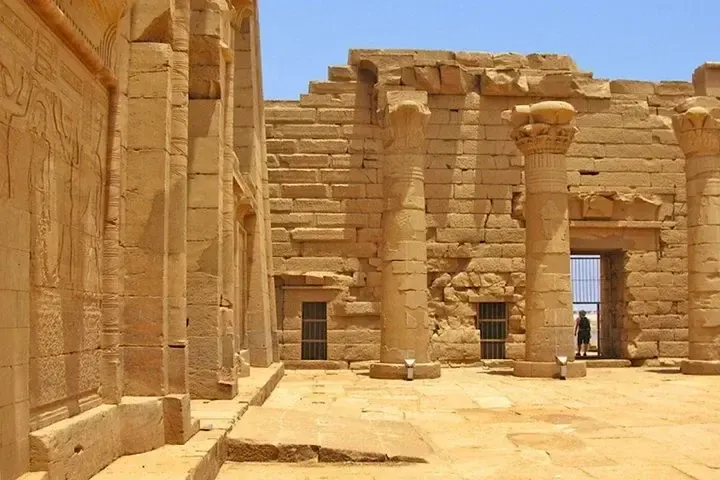
| Detail | Information |
| Also known as | Temple of Kalabsha, Temple of Mandulis, New Kalabsha |
| Location | Island in Lake Nasser, just south of the Aswan High Dam |
| Distance from Aswan | About 16–20 km, roughly 30 minutes by road plus a short boat ride |
| Dedicated to | Mandulis, a Nubian sun god linked to Horus |
| Period | Roman, from the reign of Augustus |
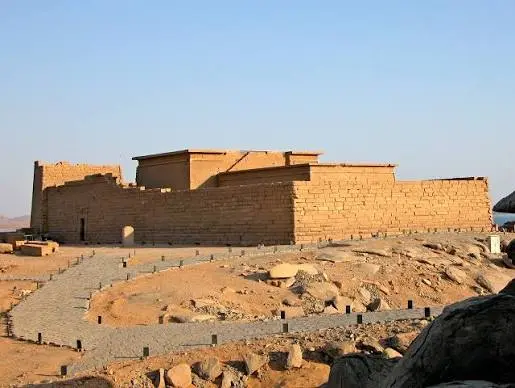
| Size | Roughly 76 m long and 22 m wide |
| Significance | The largest free-standing temple of Egyptian Nubia |
| Also on the island | Beit el-Wali, Kiosk of Qertassi |
| Time on site | About 1–2 hours |
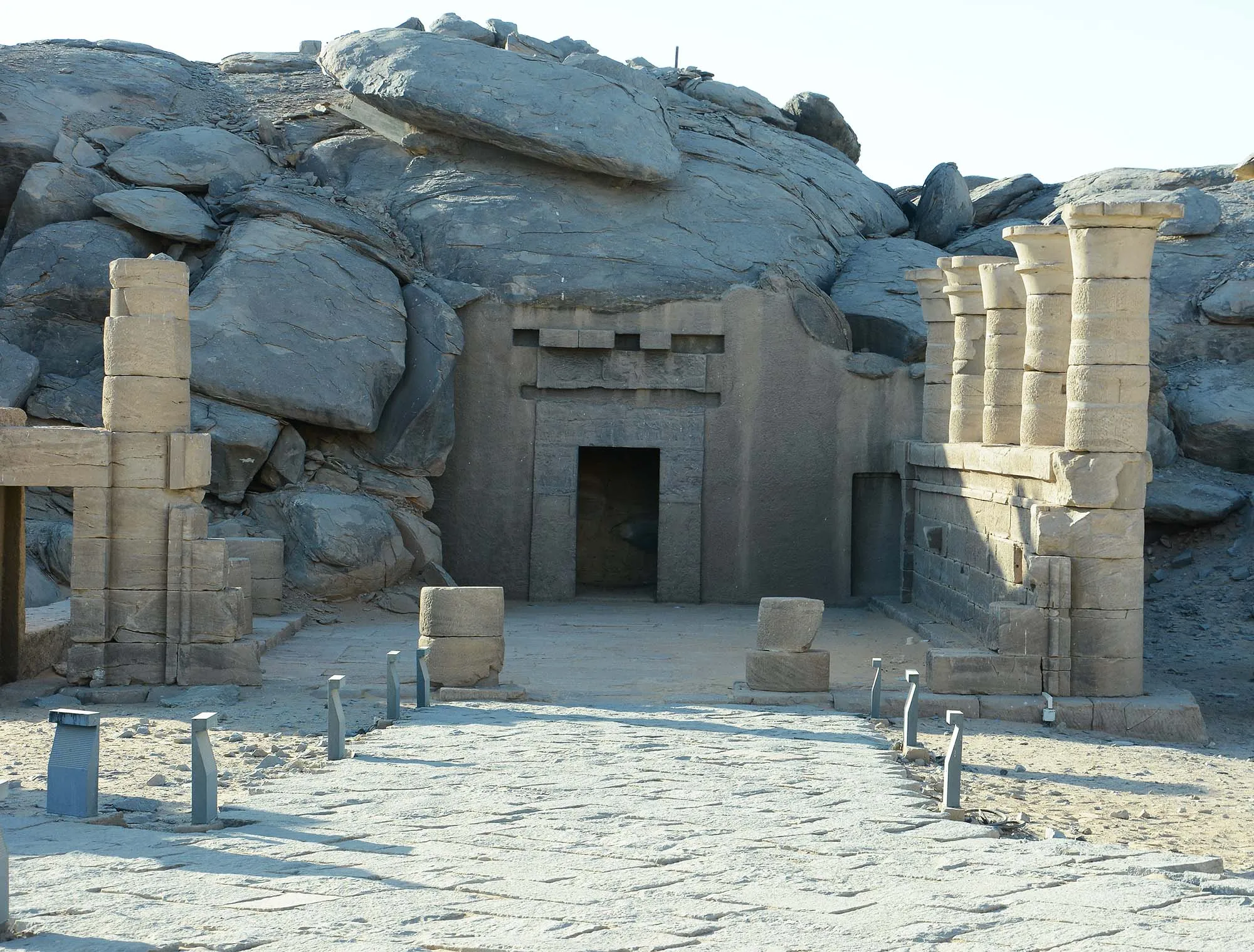
Kalabsha originally stood about 50 km south of Aswan. When the Aswan High Dam was built in the 1960s, the rising waters of Lake Nasser threatened to submerge much of Egyptian Nubia, including this temple. An international rescue campaign led by UNESCO moved several monuments to higher ground. Kalabsha was dismantled, transported and rebuilt on the west bank of the lake, just south of the dam.
The same effort moved Abu Simbel and Philae, which are better known. Kalabsha is the quieter one. It is also a reminder of the human side of the project: up to 90,000 Nubians were relocated from their homeland when the lake filled.
The relocation left some traces. A decorated gate from the temple was given to Germany and is now in the Egyptian Museum in Berlin.
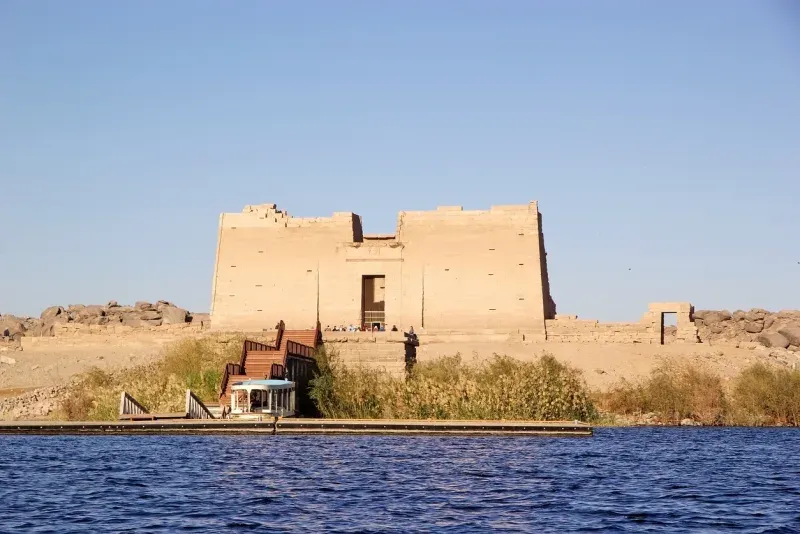
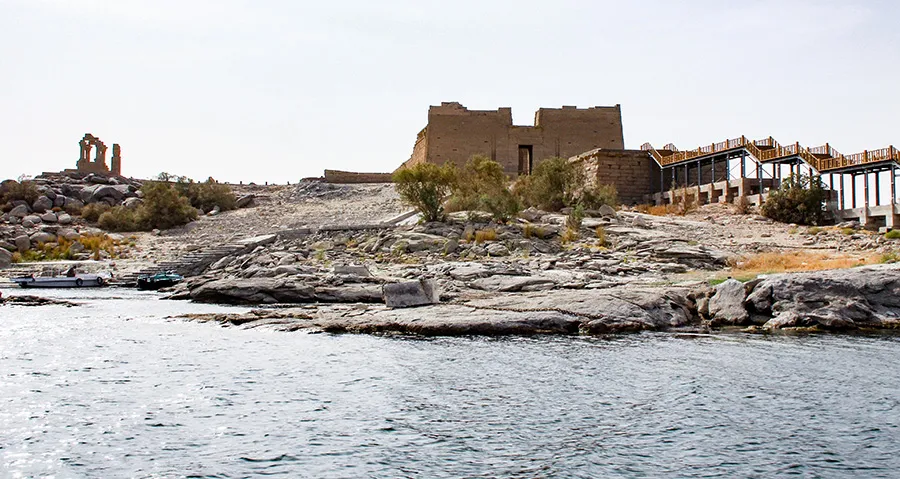
You arrive by boat from the harbor behind the High Dam. The first view is of the temple's stone quay and the pylon rising above the water. The setting, with the lake on all sides, is a large part of the appeal.
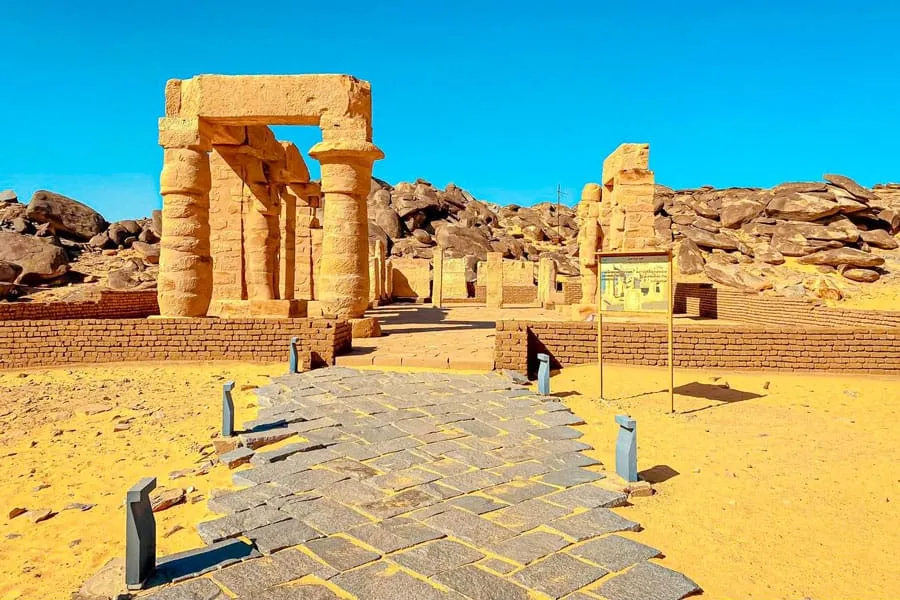
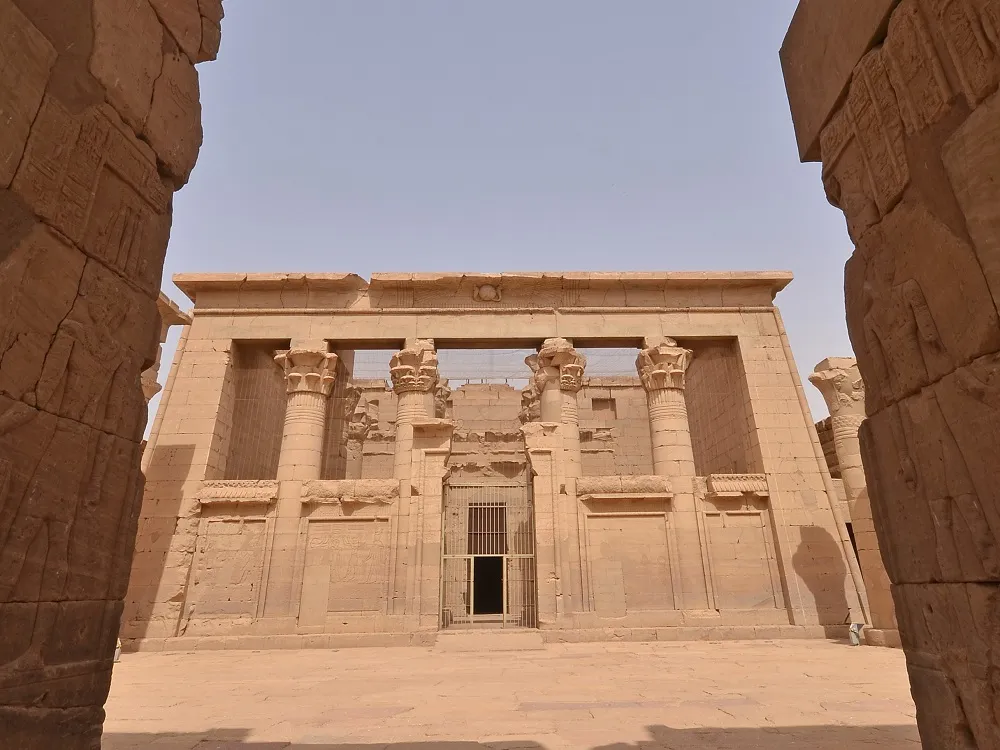
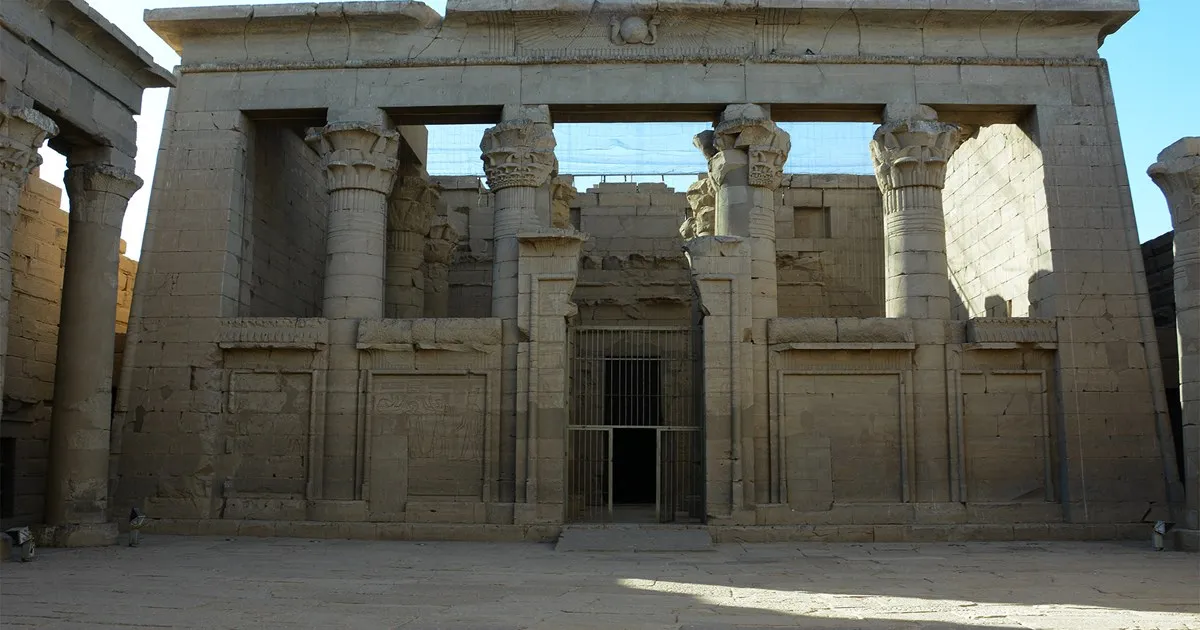
A broad processional way leads from the quay to the pylon. Beyond it lies an open forecourt with columns around three sides. This layout is similar to Philae's, and it was typical of Ptolemaic and Roman temples in Nubia.
Past the forecourt, the temple narrows into a columned hall and then the sanctuary rooms. Capitals carved with plant motifs, reliefs of offerings and traces of later reuse are all visible. Parts of the temple were converted into a church in later centuries, and you can see how the building changed with the faiths that used it.
Stairs inside the temple lead to the roof. The view from the top is one of the best features of the visit: the whole island, Lake Nasser and the High Dam spread out around you. If the stairs are open, take them.
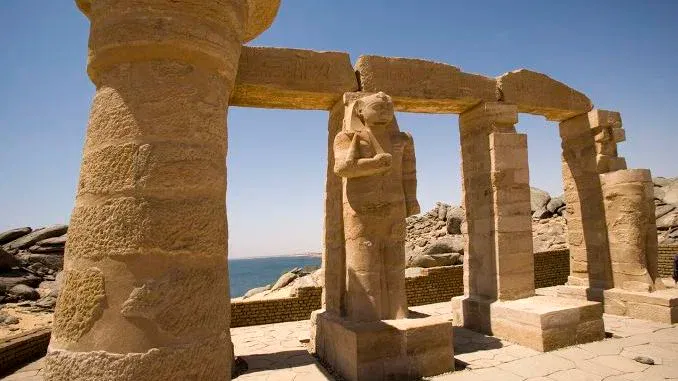
Guides can explain the scenes, but a few details are worth knowing in advance.
A local guide helps here, because the carved scenes are easy to pass without noticing. See our Aswan tour guide page to plan one.
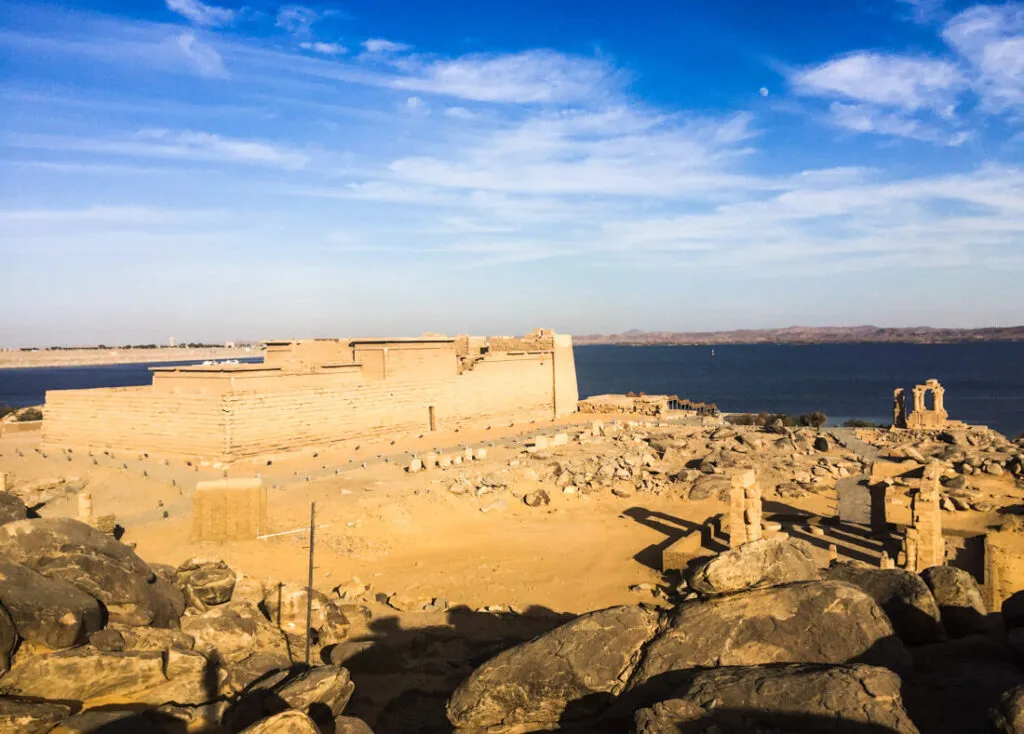
Most visits include two smaller monuments on the same island.
Beit el-Wali. A small rock-cut temple built by Ramesses II, fronted by a mud-brick pylon. It is the first and northernmost in a series of temples he built in Nubia. Its walls show scenes from his military campaigns, and the colors are better preserved than at many larger temples, partly thanks to restoration work by a Polish team.
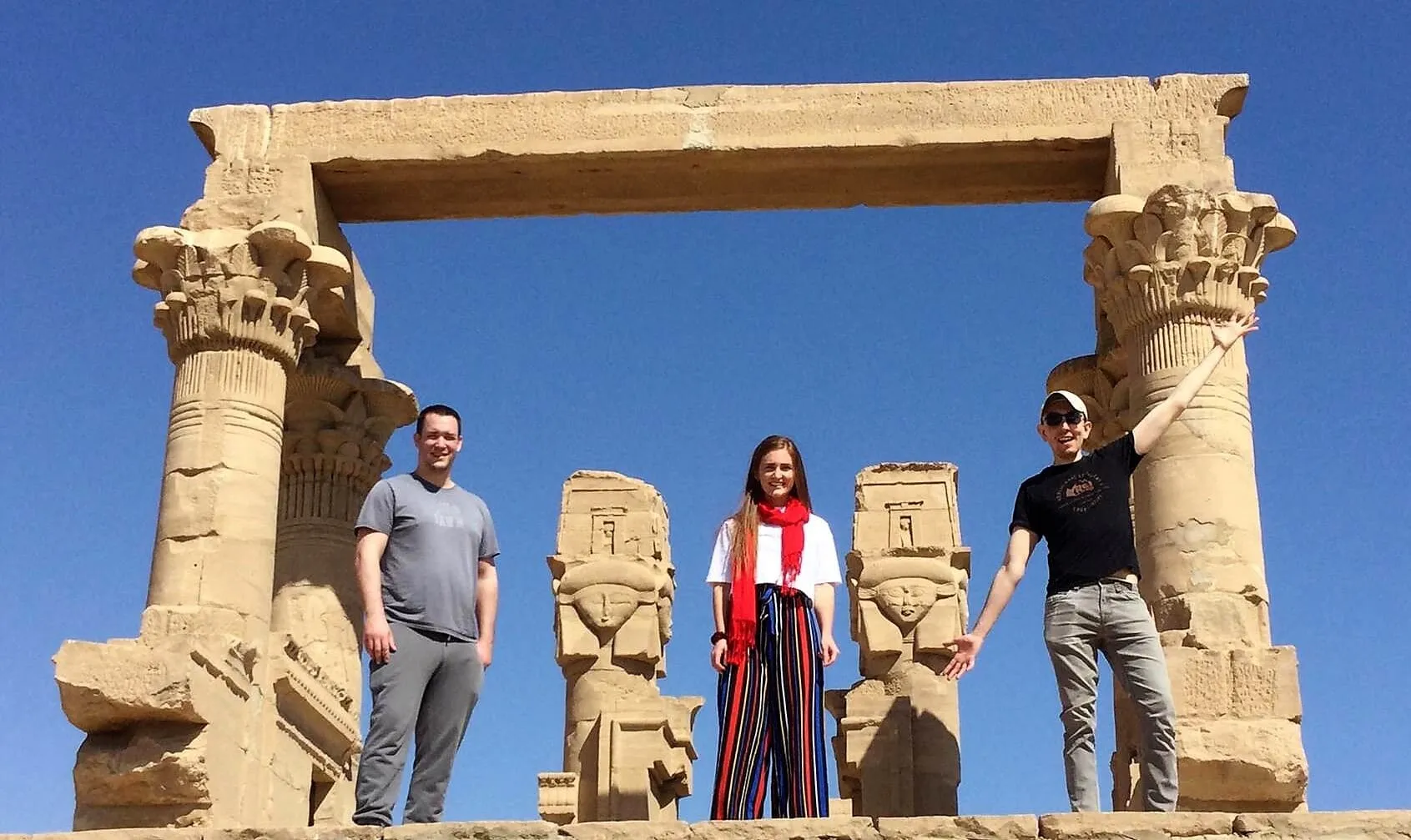
Kiosk of Qertassi. A small, elegant Roman kiosk with Hathor-headed columns and a massive architrave. Only a few parts remain, but the proportions and the setting by the water make it photogenic.
Together with Kalabsha, they make a compact group of Nubian monuments that takes one to two hours to see.
| Temple | Best for | Crowds | Effort |
| Kalabsha | Quiet visit, roof views, Nubian history | Low | Medium (road and boat) |
| Philae | Island setting, Isis cult | Medium to high | Low |
| Edfu | Best-preserved Ptolemaic temple | Medium | Medium |
| Abu Simbel | Colossal statues of Ramesses II | High | High (long drive) |
Kalabsha does not match the scale of Abu Simbel or the fame of Philae. What it offers is space and quiet. You may have much of it to yourself, and the roof and the lake view are a reward for the extra step of the boat.
The easiest option is a half-day tour from Aswan. A typical program takes about four hours: a drive of about 30 minutes to the dock behind the High Dam, a motorboat ride of about 15 minutes to the island, and roughly an hour on site with a guide. Life jackets are provided on the boat. Tickets and transport are often included, but check what your tour covers.
A private trip gives you control of timing. A driver takes you to the dock, a boat crosses to the island, and you decide how long to stay. This suits travelers who want a slower visit or who plan to combine Kalabsha with other stops. You can arrange the road leg through private drivers.
Kalabsha is the first stop on many Lake Nasser cruises between Aswan and Abu Simbel, which visit relocated Nubian monuments along the lake. These cruises are separate from the classic Luxor to Aswan route, so ask what each itinerary includes.
It is possible to visit on your own, but it is complicated. It involves local microbuses to the High Dam, buying a tourist ticket to cross the dam, finding transport on the other side and negotiating a boat with a local operator. For most visitors, a tour or a private driver is easier and more reliable. Arrangements change, so confirm the current process before you rely on any independent route.
Kalabsha sits near other Aswan sights, so it combines well:
For more planning ideas, see Aswan attractions and is Aswan worth visiting. If you are also considering a river trip, read about cruise price ranges.
October to April is the most comfortable period. Aswan is hot in summer, and the island offers little shade, so a midday visit is tiring. Go in the morning, and bring a hat and water. See best time to visit Egypt for the full calendar, and the pages for Egypt in November, Egypt in December, Egypt in January and Egypt in February for what to expect in the main season.
Wind on the lake can affect boat crossings, so keep your plan flexible.
Visit if you:
Skip or shorten if you:
Tour Guides Egypt connects travelers with local tour guides, tour representatives and private drivers across Egypt. In Aswan, an Aswan tour guide can arrange the road transfer and boat, and explain the walls and the relocation story. To plan your budget, read Aswan tour guide prices and Egypt tour guide price.
If you are visiting other regions, Luxor Egypt tour guides can help, and Abydos is another lesser-visited temple worth knowing. For help deciding on support, see do you need a tour guide in Egypt and hiring a private guide in Egypt.
You can ask questions or book through WhatsApp, or plan a tailor-made Egypt trip that includes Aswan and Lake Nasser.
Kalabsha Temple, also called the Temple of Mandulis, is a Roman-era temple on an island in Lake Nasser near the Aswan High Dam. It is the largest free-standing temple in Egyptian Nubia.
It sits on the west bank of Lake Nasser, just south of the High Dam, about 16–20 km from Aswan. You reach it by a short boat ride from the dam's harbor.
The High Dam's reservoir, Lake Nasser, threatened to flood its original site about 50 km south of Aswan. It was dismantled and rebuilt on higher ground as part of an international rescue campaign.
It dates from the Roman period, in the reign of Augustus, and was dedicated to the Nubian god Mandulis. It stands on the site of earlier shrines.
By a half-day tour or private driver from Aswan, followed by a motorboat across the lake. Many Lake Nasser cruises also stop there.
Plan about one to two hours on the island, plus 30 minutes' drive from Aswan and a 15-minute boat ride each way. A half-day tour takes about four hours.
It is possible but complicated, with microbuses, a dam ticket and a negotiated boat. A tour or private driver is easier and more reliable.
Beit el-Wali, a rock-cut temple of Ramesses II with colorful battle scenes, and the Kiosk of Qertassi, a small Roman kiosk with Hathor columns.
Yes, if you want a quiet temple with a lake view and an interesting story. It is smaller than Abu Simbel, but it is much less crowded.
A good Aswan day, like a good meal, has a balance. Do not stack three mains. Here is a menu you can adapt.
If you want a bigger meal, replace the starter with Philae in the early morning. If you want a lighter one, skip the museum and take a long lunch. Whichever you choose, avoid adding Abu Simbel to the same day, as it needs a pre-dawn start of its own.
If you want this menu planned around your dates, send Tour Guides Egypt a WhatsApp message with your Aswan dates and hotel, and we will reply with a guide, a driver and a boat plan for the morning.

Orange Bay or Paradise Island? Compare beaches, crowds, snorkeling, boat time, price and who each suits t ...

The Citadel of Saladin guide: history, Muhammad Ali Mosque, museums, views, opening hours, dress rules an ...

Is it safe to see the pyramids in Egypt? A step-by-step safety guide: security, scams, camels, heat, solo ...
Get Updates & More
@ Copy 2026 Tour Guides Egypt , All rights reserved