
Aswan Tour Guide Tips | How to Hire the Right Guide in Aswan in 2026
Learn how to hire the right Aswan Tour Guide. Compare prices, verify licenses, and book a private guide A ...
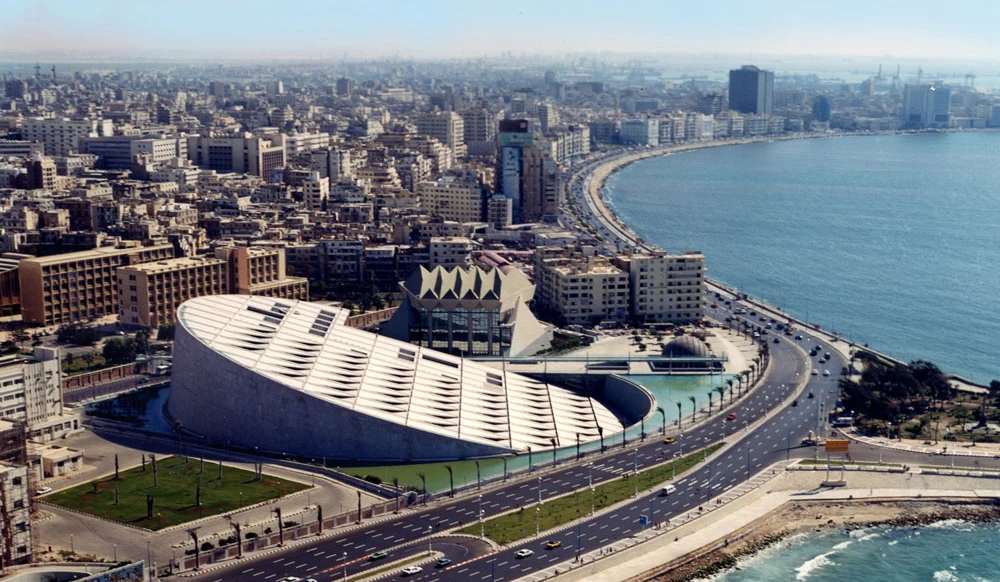
A pilgrimage to the Bibliotheca Alexandrina is a journey into the heart of human knowledge — a stunning modern tribute to the legendary Library of Alexandria. This complete guide covers the Bibliotheca Alexandrina's history, architecture, ticket prices, opening hours, and practical tips for making the most of your visit to this extraordinary cultural landmark.
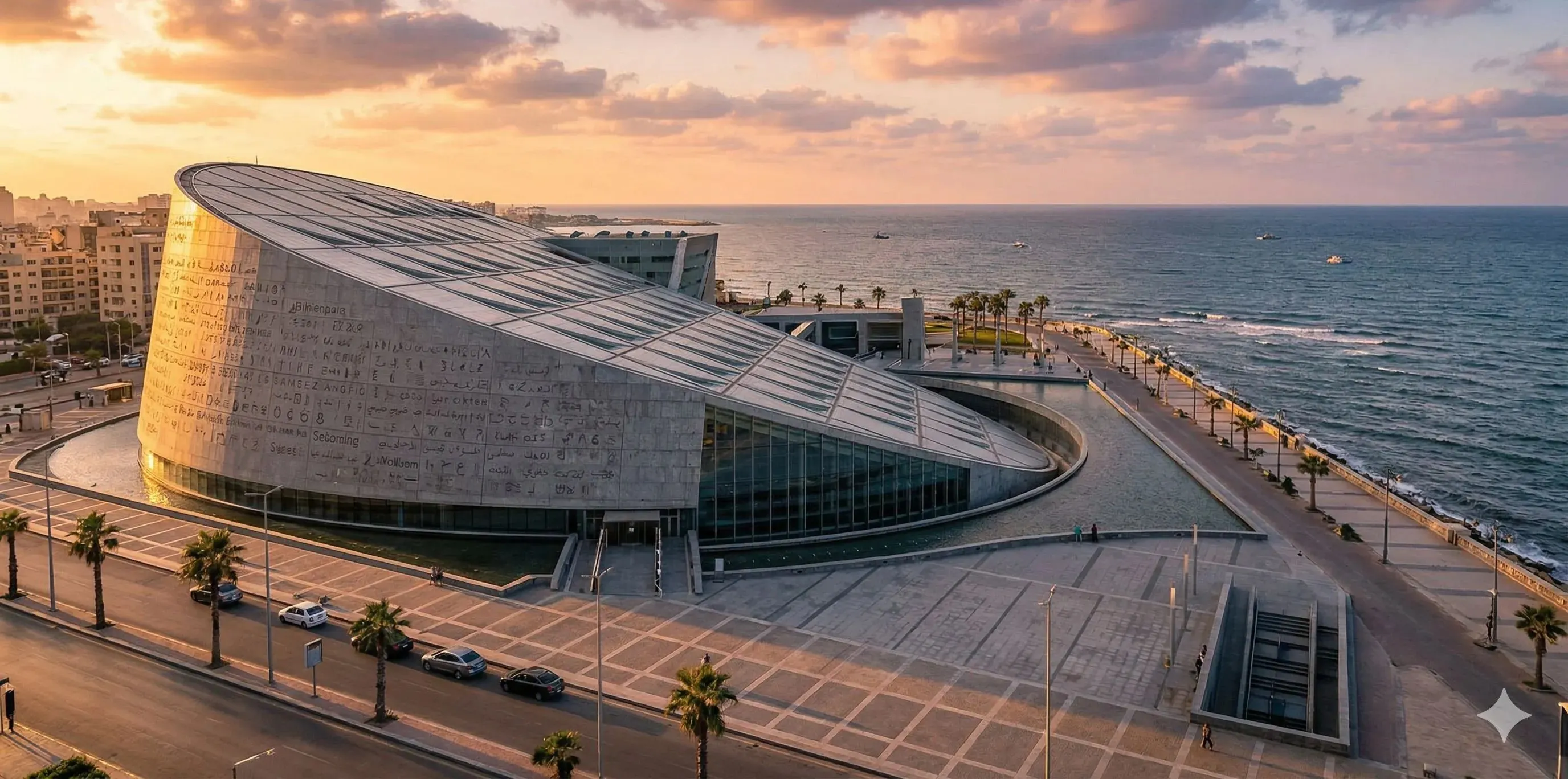
The Bibliotheca Alexandrina (Latin for "Library of Alexandria") is a major library and cultural center on the shore of the Mediterranean Sea in Alexandria, Egypt. Officially inaugurated on October 16, 2002, it is a commemoration and revival of the legendary Library of Alexandria that was lost in antiquity.
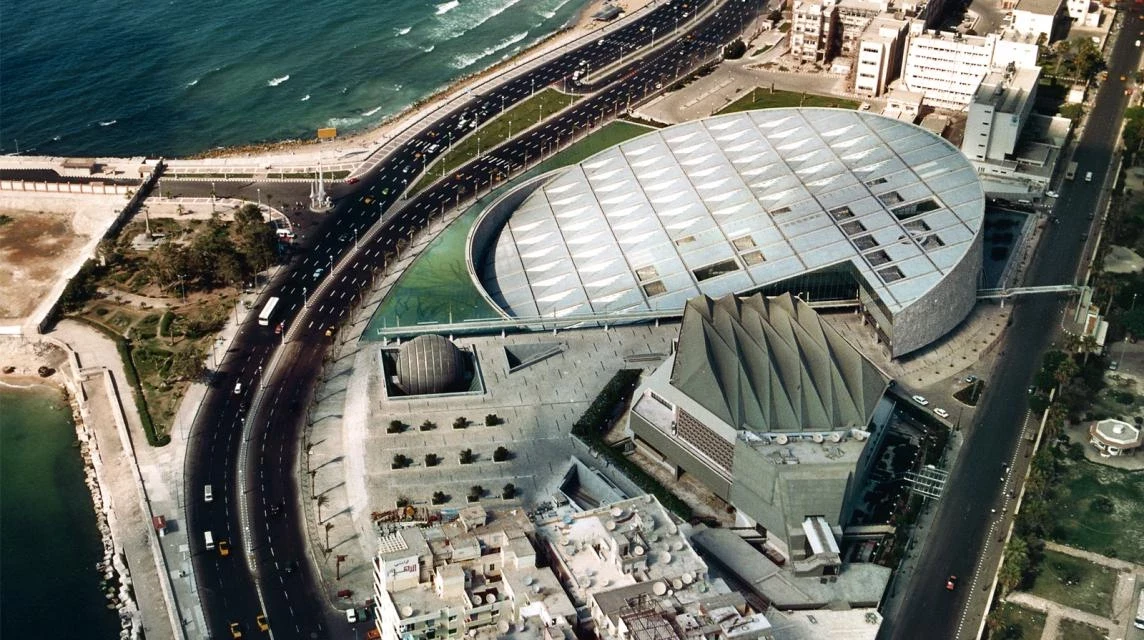
But the Bibliotheca Alexandrina is far more than a library. It is a vast cultural complex housing a main reading room with shelf space for eight million books, several specialized libraries, four major museums, a planetarium, a conference center, art galleries, and a manuscript restoration laboratory. At the time of its construction, the reading room was the largest in the world.
For visitors to Alexandria, the Bibliotheca Alexandrina is an essential stop — a place where the spirit of one of history's greatest centers of knowledge has been reborn in a stunning piece of modern architecture. As one of Egypt's major cultural venues, it has become a stage for international performers and a symbol of Egypt's commitment to education, culture, and intellectual exchange.
The original Library of Alexandria was founded in the 3rd century BCE under the Ptolemaic dynasty, during the reign of either Ptolemy I Soter (323–283 BC) or Ptolemy II Philadelphus. It was part of the Mouseion — a temple to the Muses that functioned as an academy, research center, and library.
The library was envisioned as more than a mere collection of scrolls. It was the world's first universal library, with a mission to collect all human knowledge. Its collection — estimated between 400,000 and 700,000 papyrus scrolls — included works on philosophy, mathematics, science, and literature. It drew scholars such as Euclid (the father of geometry), Archimedes (the greatest mathematician of antiquity), and Eratosthenes (who calculated the Earth's circumference with remarkable accuracy).
The library's aggressive acquisition policies were legendary. Ships docking in Alexandria were searched for scrolls, which were copied and returned — the originals kept for the library. This ensured the collection's extraordinary breadth and diversity.
Tragically, the ancient Library of Alexandria was lost to history through a series of fires and political turmoil, most notably during Julius Caesar's siege in 48 BCE. Its destruction is considered one of history's greatest cultural losses — a symbol of the fragility of knowledge.
But the idea of the library never truly died. For centuries, the Library of Alexandria has stood as a symbol of human aspiration, intellectual pursuit, and cultural exchange. Its spirit lives on today in the Bibliotheca Alexandrina, a stunning modern tribute to the ancient dream of gathering all knowledge in one place.
In the late 20th century, the Egyptian government decided to build a new library in Alexandria — a commemoration of the ancient Library of Alexandria that would return the city to its former status as a center for learning and exchange. The project was supported by UNESCO and received contributions from governments and institutions around the world.
The Bibliotheca Alexandrina was officially inaugurated on October 16, 2002. It stands near the site of the original ancient library, on the Mediterranean coast in Alexandria's Al-Shatby district.
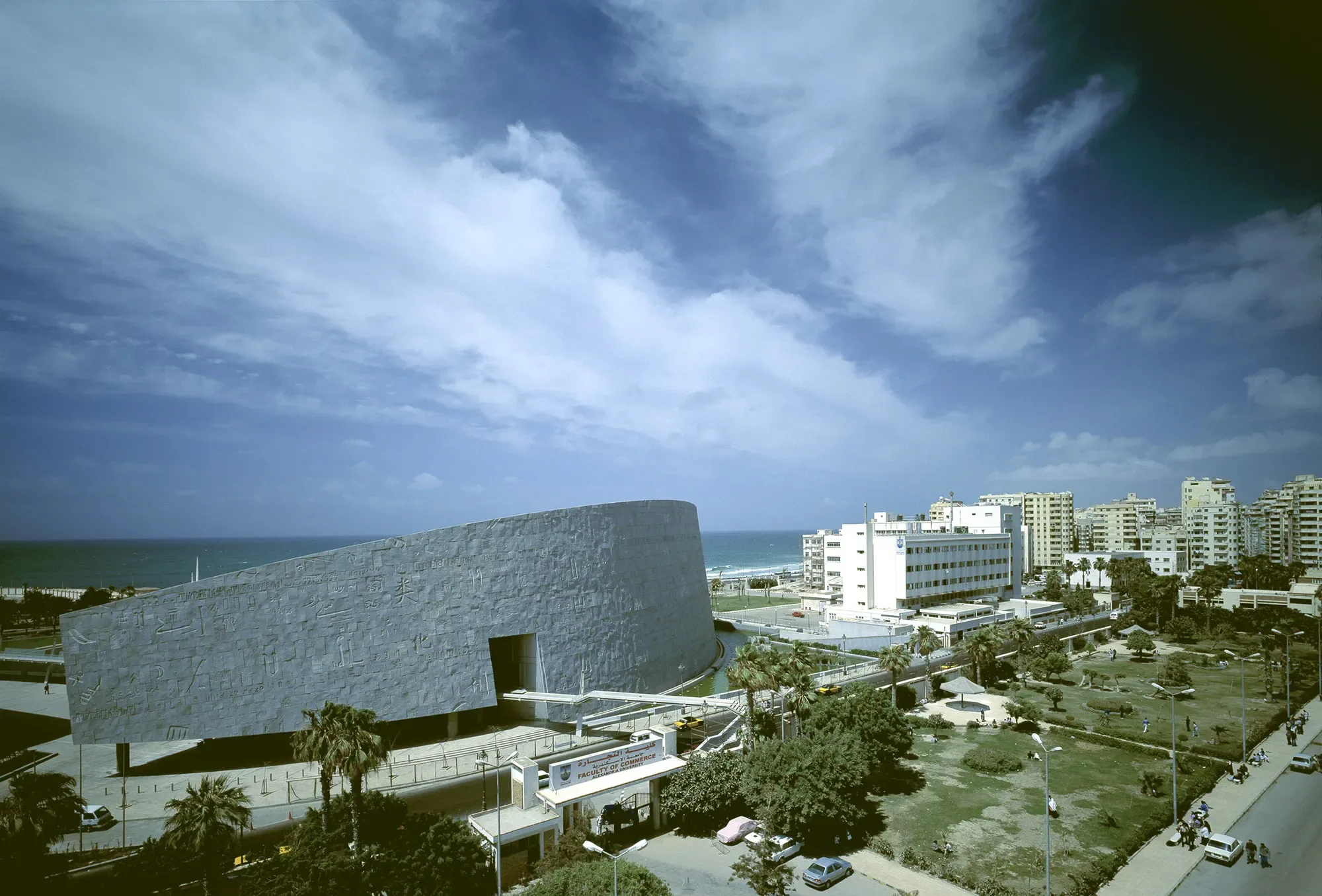
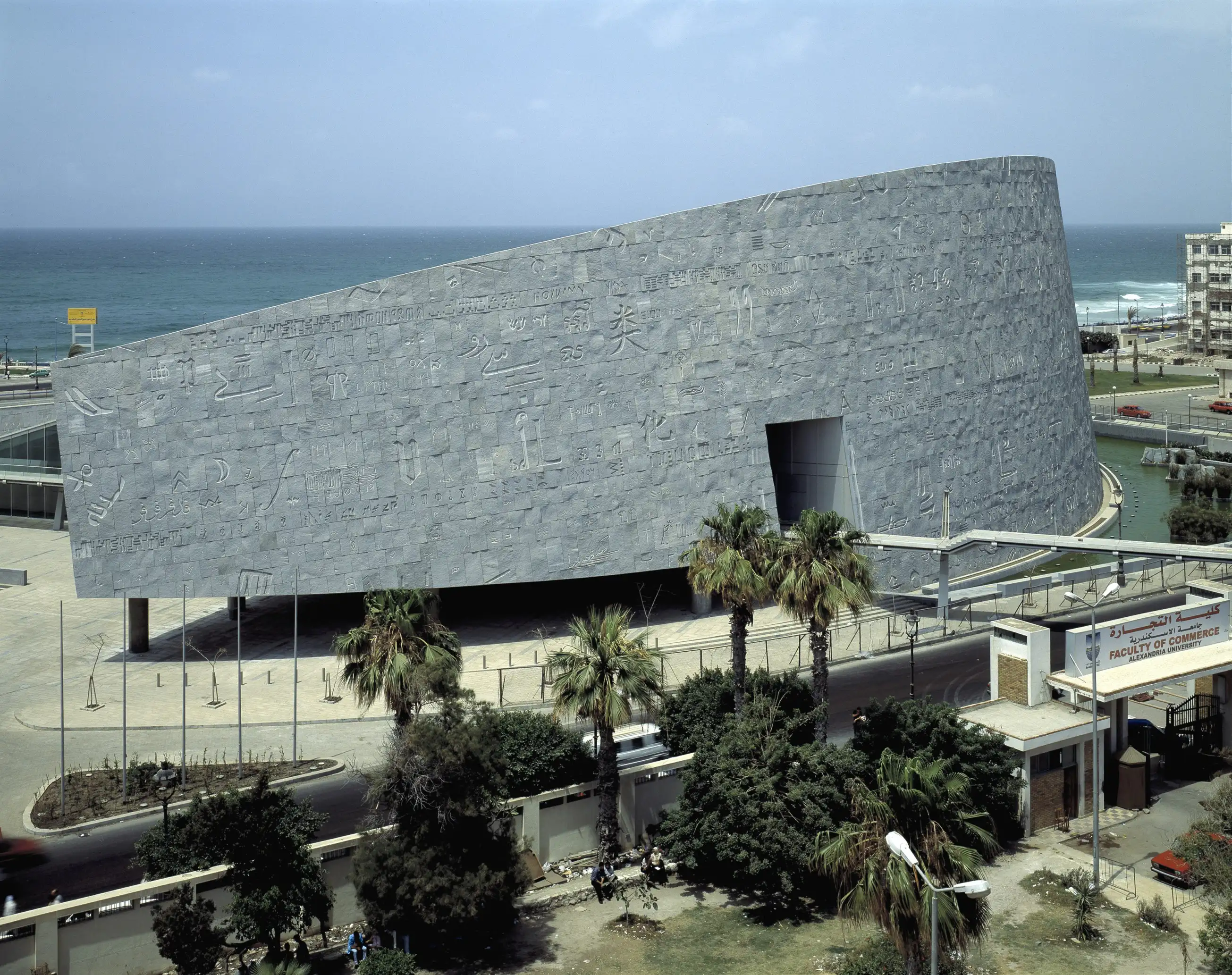
The Bibliotheca Alexandrina was designed by the Norwegian architectural firm Snøhetta. The building takes the form of a gigantic angled discus embedded in the ground, evoking a second sun rising out of the Mediterranean.
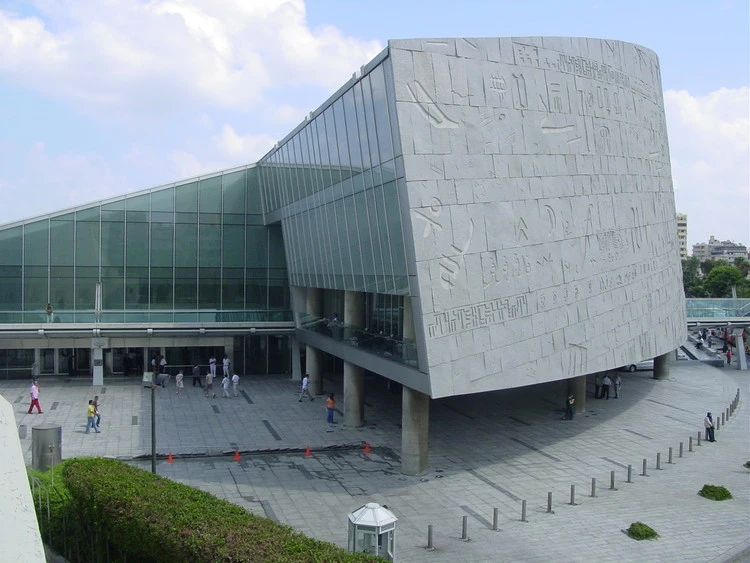
The granite exterior walls are carved with letters, pictograms, hieroglyphs, and symbols from more than 120 different human scripts — a powerful symbol of the universality of knowledge.
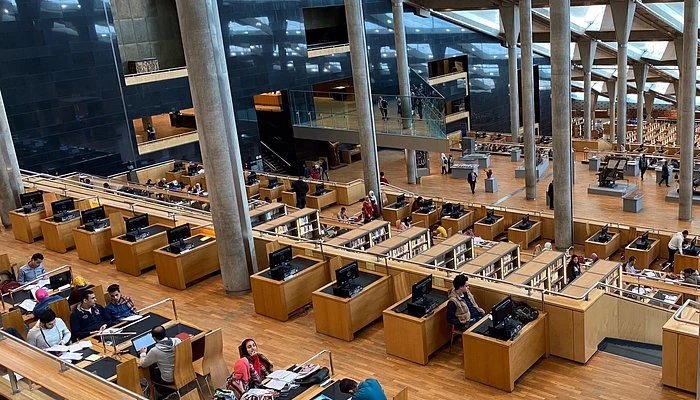
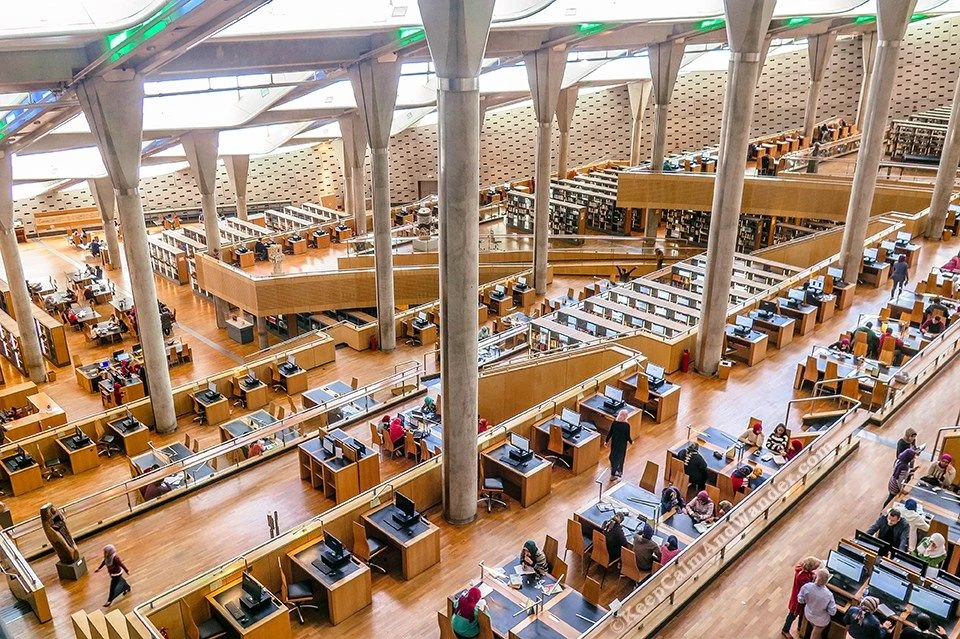
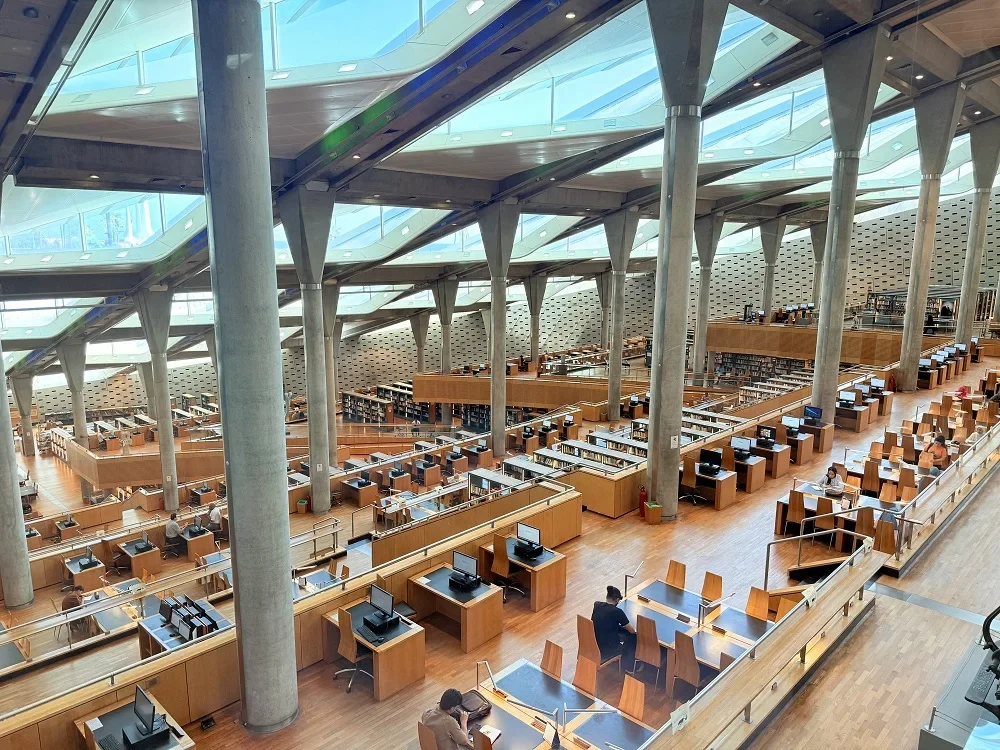
Inside, the main reading room is a jaw-dropping space that can accommodate eight million books and 2,500 readers under its sloping roof. The windows are specially designed to let sunlight flood in while keeping out rays that might harm the collection. The result is a space that feels open, light, and inspiring — a cathedral of books.
The main reading room is the heart of the Bibliotheca Alexandrina and the single most impressive space in the entire complex. It can accommodate eight million books and 2,500 readers under its sloping roof. The tiered shelving is designed so that the oldest materials occupy the lowest level, forming a metaphoric foundation for later works.
Whether you're a book lover or simply an admirer of extraordinary architecture, the main reading room is breathtaking — a space that truly feels like a temple to knowledge.
The Bibliotheca Alexandrina houses four permanent museums:
The Planetarium Science Center is a futuristic neon-lit sphere that looms on the plaza in front of the library like a "mini Death Star". It offers a diversity of fascinating scientific shows that are both entertaining and informative, covering a wide range of age groups.
The Bibliotheca Alexandrina also houses fourteen permanent exhibitions covering different fields of art — from painting to ceramic, sculpture, calligraphy, heritage, set design, costume design, cinematography, art printing, and artist's books. There are also temporary exhibitions showcasing the work of contemporary Arabic artists and a fascinating heritage collection with gorgeously displayed textiles, folk art, and Arabic science equipment from the medieval period.
In addition to the main library, the Bibliotheca Alexandrina comprises six specialized libraries: the Arts and Multimedia Library, the Taha Hussein Library for the visually impaired, the Children's Library, the Young People's Library, the Exchange and Archive Section, and the Rare Books Section. Another library, the Francophone Library, was founded after receiving a massive book donation from the Bibliothèque nationale de France (BnF).
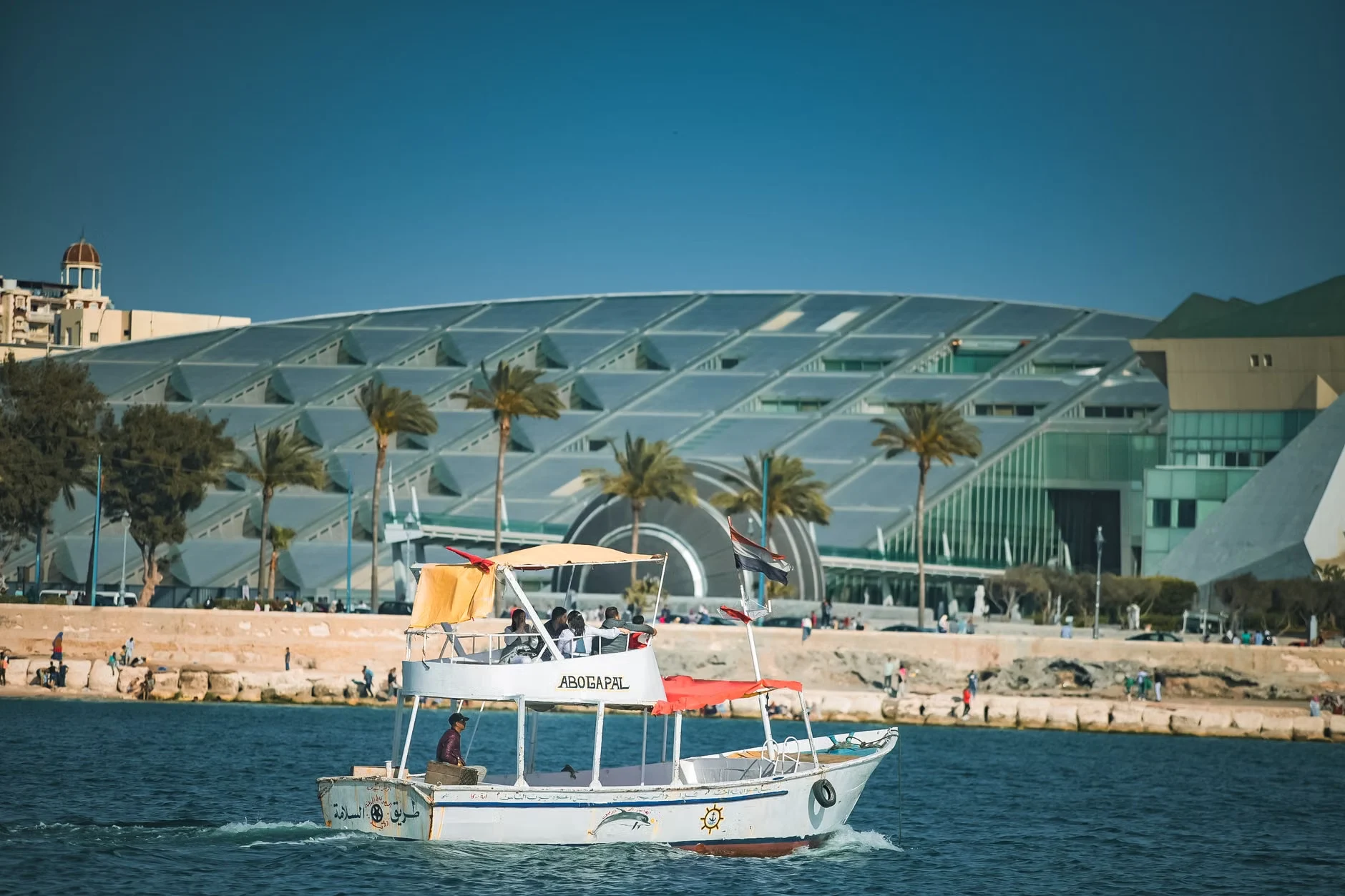
The Bibliotheca Alexandrina is located on the Mediterranean coast in Alexandria's Al-Shatby district, along the scenic Corniche.
Getting there:
The Bibliotheca Alexandrina has different opening hours depending on the area you wish to visit:
Hours may vary on public holidays. Always check the official website before your visit.
Ticket options vary depending on access to the library, museums, the planetarium, and special exhibitions. Guided tours are available and can be booked on arrival.
Note: All bags must be checked at the entrance, though you can bring your camera and wallet inside. Two of the museums inside have individual entrance tickets; these are bought within the building, next to the museums themselves.
Guided tours of the Bibliotheca Alexandrina are available in multiple languages, including Arabic, English, French, Italian, and Spanish. A traditional library tour begins in the lobby with a multilingual guide. You do not need to book a tour in advance.
The best time to visit the Bibliotheca Alexandrina is early morning (9:30–10:30 AM) or late afternoon (3:00–5:00 PM).
Why early morning:
Why late afternoon:
To fully explore the Bibliotheca Alexandrina, you should allow half a day. To just see the main reading room and do a tour, you'll need an hour or so.
Best months: October to April offers the most comfortable temperatures for exploring Alexandria. For more on visiting the city, check out our guide to is Alexandria worth visiting .
The Bibliotheca Alexandrina stands as one of the most extraordinary cultural landmarks in Egypt — a stunning modern tribute to the ancient Library of Alexandria that embodies the human spirit's unending quest for knowledge. Standing in the main reading room, surrounded by eight million books and bathed in natural light, you feel the weight of history and the promise of the future. It is a place that inspires, educates, and connects you to one of humanity's greatest intellectual traditions.
But the Bibliotheca Alexandrina is just one part of Alexandria's rich story. The city offers a wealth of experiences — from the historic Citadel of Qaitbay to the Catacombs of Kom El Shoqafa, from the Mediterranean Corniche to the lively seafood restaurants of the Eastern Harbour. For travelers wondering is Alexandria worth visiting , the answer is a resounding yes — and the library is the crown jewel of any Alexandria itinerary.
That's where having the right local partner makes all the difference. Tour Guides Egypt connects you with trusted local professionals who know Alexandria inside out. Our Local Tour Guides are licensed Egyptologists who bring the history of the Bibliotheca Alexandrina and the ancient Library of Alexandria to life — explaining the architectural symbolism, decoding the inscriptions on the granite façade, and sharing the stories of the scholars who once walked the city's streets. Our Tour Representatives handle logistics — airport transfers, hotel coordination, and the countless details that make a trip stress-free. And when you need to move between the library, the Citadel, and other Alexandria attractions, our Private Drivers provide comfortable, reliable transportation.
For travelers who want to combine a visit to the Bibliotheca Alexandrina with other Egyptian highlights — the Pyramids of Giza , the Karnak Temple Complex , and the Valley of the Kings — we can help you design a comprehensive itinerary. You can also plan a tailor-made Egypt trip that combines Alexandria with Cairo, Luxor, and Aswan.
Ready to explore the Bibliotheca Alexandrina? Reach out to us on [WhatsApp] for instant support — our team is ready to answer your questions about the Library of Alexandria, customize your itinerary, and turn your Egyptian dream into reality. The library of the future is waiting — and we're here to help you discover it.
Q: What is the Bibliotheca Alexandrina?
A: The Bibliotheca Alexandrina (Latin for "Library of Alexandria") is a major library and cultural center on the Mediterranean coast in Alexandria, Egypt. Opened in 2002, it is a commemoration and revival of the legendary ancient Library of Alexandria that was lost in antiquity.
Q: When was the Bibliotheca Alexandrina built?
A: The Bibliotheca Alexandrina was officially inaugurated on October 16, 2002.
Q: Who designed the Bibliotheca Alexandrina?
A: The Bibliotheca Alexandrina was designed by the Norwegian architectural firm Snøhetta.
Q: What can I see inside the Bibliotheca Alexandrina?
A: Inside the Bibliotheca Alexandrina, you can see the main reading room, four permanent museums (Antiquities, Manuscripts, Sadat, and History of Science), a planetarium, fourteen permanent art exhibitions, temporary exhibitions, and six specialized libraries.
Q: What are the opening hours of the Bibliotheca Alexandrina?
A: The main reading area is open Sunday–Thursday 10:00 AM–7:00 PM, Saturday 10:00 AM–2:00 PM, and closed on Friday. Museums and the planetarium are open Sunday–Thursday 9:30 AM–5:00 PM, Saturday 10:00 AM–2:00 PM.
Q: How much do Bibliotheca Alexandrina tickets cost?
A: Ticket options vary depending on access to the library, museums, the planetarium, and special exhibitions. Two of the museums have individual entrance tickets.
Q: Are guided tours available at the Bibliotheca Alexandrina?
A: Yes. Guided tours are available in multiple languages, including Arabic, English, French, Italian, and Spanish. You do not need to book in advance.
Q: Is the Bibliotheca Alexandrina worth visiting?
A: Absolutely. The Bibliotheca Alexandrina is one of Egypt's most extraordinary modern landmarks and a must-visit on any Alexandria itinerary. Its architecture, collections, and cultural significance make it an unforgettable experience.
Q: How long do I need to visit the Bibliotheca Alexandrina?
A: Allow half a day to explore the library fully. For a quick visit to the main reading room and a tour, you'll need about an hour.
Q: Is the Bibliotheca Alexandrina closed on any day?
A: Yes. The Bibliotheca Alexandrina is closed on Fridays.
Q: Can I take photos inside the Bibliotheca Alexandrina?
A: Yes. Photography is allowed in most areas of the library (though flash may be restricted). You can bring your camera inside.
Q: What is the best time to visit the Bibliotheca Alexandrina?
A: The best time to visit is early morning (9:30–10:30 AM) or late afternoon (3:00–5:00 PM) for fewer crowds and better light.
Q: Do I need a visa for Egypt?
A: Most nationalities require a visa. Check the Egypt visa on arrival countries list to see if you qualify. US citizens can obtain an Egypt visa on arrival or apply for an e-Visa.
Q: What is the best currency to take to Egypt?
A: The best currency to take to Egypt is US dollars or euros, which are widely accepted and easy to exchange. The Egyptian pound (EGP) is used for daily expenses.
Q: Is it safe to travel to Alexandria right now?
A: Yes. Egypt is safe for tourists who follow standard precautions. The Egyptian government maintains a strong security presence at all major tourist sites.

Learn how to hire the right Aswan Tour Guide. Compare prices, verify licenses, and book a private guide A ...

Luxor Egypt tour guides 2026 — English guides from $70/day, other languages from $100/day. How to choose ...

Pompey's Pillar Alexandria 2026 — history, ticket prices, opening hours, and visitor tips. Complete guide ...
Get Updates & More
@ Copy 2026 Tour Guides Egypt , All rights reserved