
Orange Bay or Paradise Island? Choose by What You Want the Day to Feel Like
Orange Bay or Paradise Island? Compare beaches, crowds, snorkeling, boat time, price and who each suits t ...

The Mosque of Muhammad Ali crowns Cairo's Citadel. Use this Mosque of Muhammad Ali guide to the Alabaster Mosque for history, tickets, dress code and visiting tips.
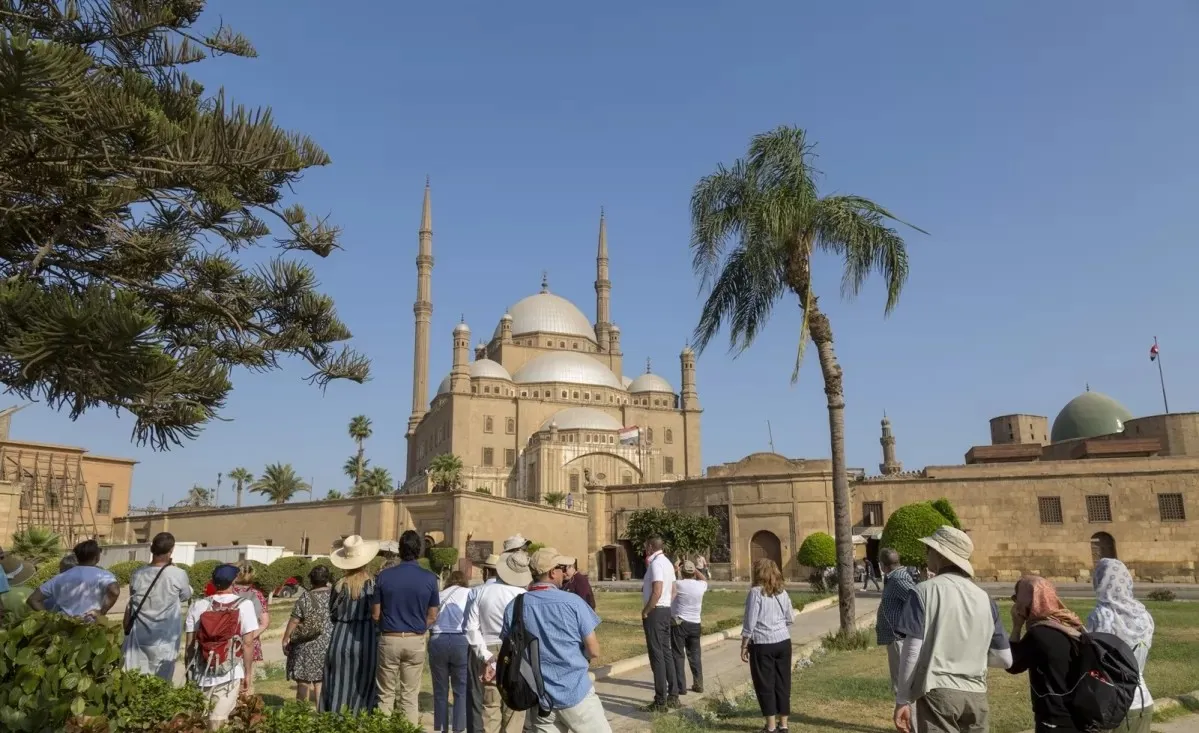
The Mosque of Muhammad Ali is the building that defines Cairo's skyline from the east. Perched on the Citadel hill, the Alabaster Mosque has twin minarets, a cascade of domes and a courtyard clad in pale stone, plus the best city view you can reach without a hotel terrace.
This guide covers what's inside, how the mosque got here, what a ticket costs, how to dress, and how long to allow. Where sources disagree on prices and hours, I'll say so. If you'd like a licensed guide for the day, Tour Guides Egypt can arrange one.
| Detail | Answer |
| What is it? | An Ottoman-style mosque built by Muhammad Ali Pasha |
| Where? | Inside the Citadel of Salah al-Din, Cairo |
| Built | 1830 to 1848, on the site of Mamluk palaces |
| Also called | The Alabaster Mosque, Muhammad Ali Mosque |
| Ticket | Included in Citadel admission |
| Hours | Roughly 8:00 or 9:00 to 16:00 or 17:00 |
| Dress | Modest clothing, scarf recommended for women |
| Time needed | 30 to 60 minutes inside, more for the full Citadel |
The name comes from the pale alabaster on the lower walls and across the courtyard. The stone gives the interior courtyard a soft, light glow, especially in late afternoon. Above it, the domes and minarets are slim and pointed in the Ottoman manner, so the whole building looks lighter than most Cairo mosques.
You'll hear both names. Locals and guides say Muhammad Ali Mosque, Mohamed Ali Mosque or the Great Mosque of Muhammad Ali Pasha. Visitors usually say the Alabaster Mosque. Same building.
Muhammad Ali Pasha ruled Egypt for more than four decades in the first half of the 19th century. He modernized the army, the economy and Cairo itself, and wanted a monument to match. He chose the Citadel, the 12th-century fortress that had been the seat of power for centuries.
The mosque went up on the site of older Mamluk palaces between 1830 and 1848. According to one operator source, the design came from Yusuf Bushnaq, a Turkish architect brought from Istanbul. Muhammad Ali himself is buried inside, in a marble tomb within the mosque complex.
There's a point worth keeping in mind as you look around: this isn't a medieval Cairo mosque. It's a statement of 19th-century power, built in an imported Istanbul style, on top of Egypt's older rulers' ruins.
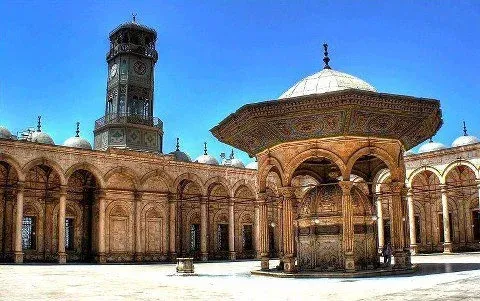
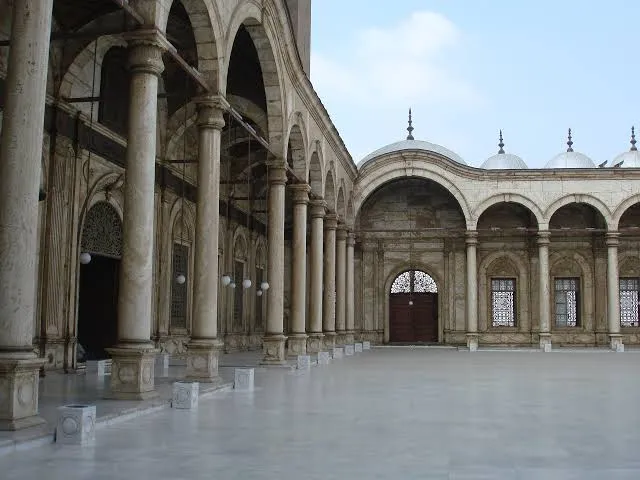
You enter a large open courtyard ringed by arcades, floored and walled in alabaster. At the center sits an ablution fountain, where worshippers wash before prayer. A clock tower stands at one corner. It was a gift from the French king, given in exchange for the Luxor obelisk in Paris, though it has famously not kept good time. Spend a few minutes here before going inside, because the proportions and the light are the best part of the visit.
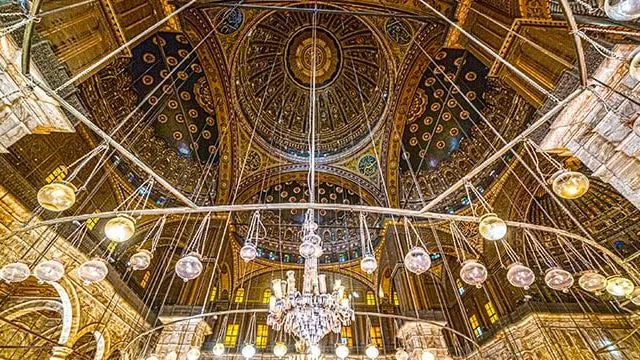
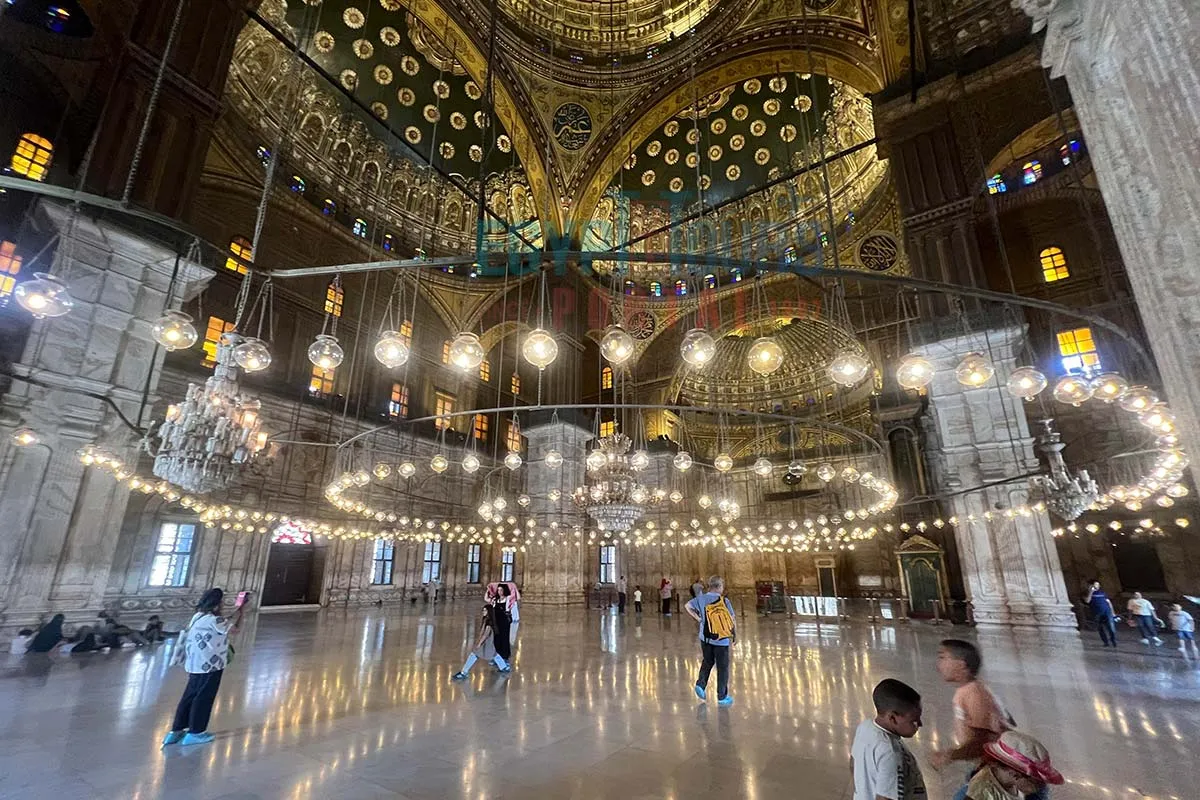
The prayer hall is a square space capped by a large central dome, with half-domes around it. Gilded and painted decoration covers the ceilings, and lamps hang low. The scale is dramatic, but the effect comes from the layering of domes rather than from any single feature. Stand under the center and look up.
Prayer times matter. When worship is in session, the interior is closed to tourists, so check timing before you queue.
A marble enclosure to one side of the prayer hall holds the tomb of Muhammad Ali. It's decorated and enclosed by a metal screen. Visitors can look but should keep voices low and remain respectful, as this is a place of prayer.
Step back outside onto the Citadel terraces for the view. On a clear day you can look across the old city to the minarets of Islamic Cairo and, if the air is clean, toward the Giza plateau. Late afternoon gives the warmest light on the alabaster. Read more about the Pyramids of Giza and the Sphinx if you want to know what you're looking toward.
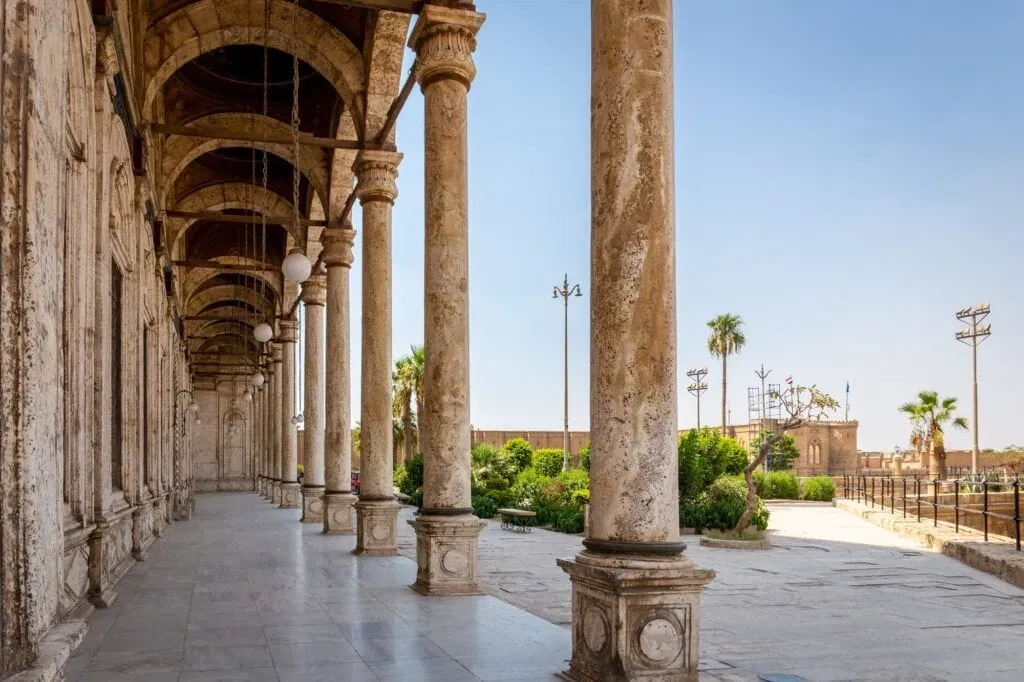
Most mosques in Cairo follow a local Mamluk tradition: stone minarets with carved balconies, courtyard layouts, stalactite-style vaulting. The Alabaster Mosque breaks from that. It follows the Ottoman imperial style associated with Istanbul: a large central dome, supporting half-domes, and slender pencil-shaped minarets.
Two takeaways help you read the building:
If you also visit Mamluk-era mosques nearby, the contrast is striking and worth a short comparison with your guide.
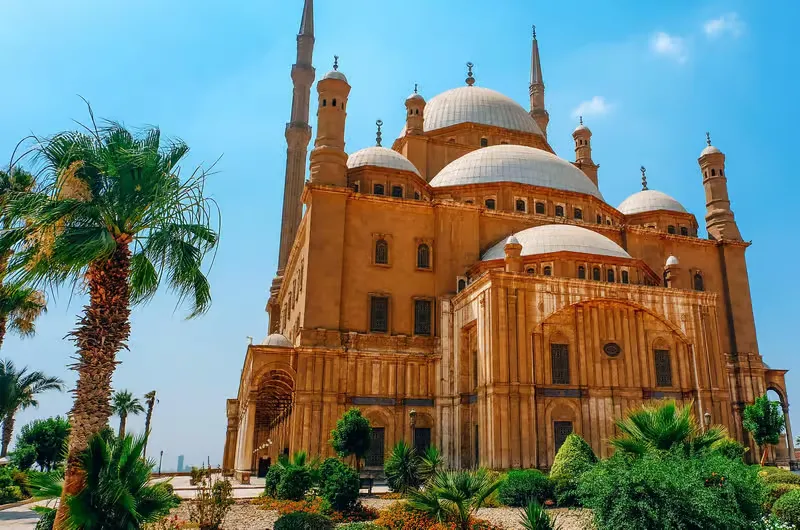
Entry to the mosque is included in the Citadel ticket, according to Egypt's monuments authority. Figures I found don't agree. One source says about 180 EGP for foreign visitors, another lists 550 EGP for adults and 275 EGP for students, with children under six free. Opening hours range from 8:00 to 16:00 in winter and 8:00 to 17:00 in summer in some sources, and 9:00 to 17:00 in others.
Two habits save time. Enter through the Citadel's main gate and buy tickets before you queue at the mosque. And check prayer times, since the interior is closed to tourists while worship is in session. For a currency reference, see our best currency to take to Egypt.
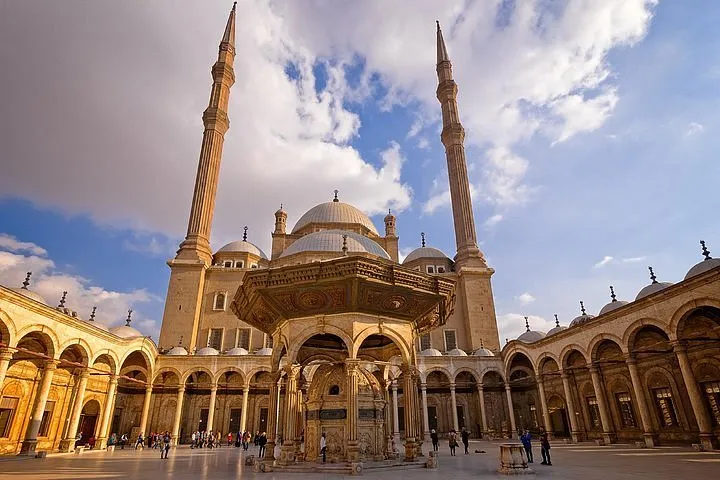
This is a working mosque. Dress and behave accordingly.
Non-Muslim visitors are welcome, as long as these simple rules are followed. For general comfort tips, our Egypt packing list includes a modest-dress section.
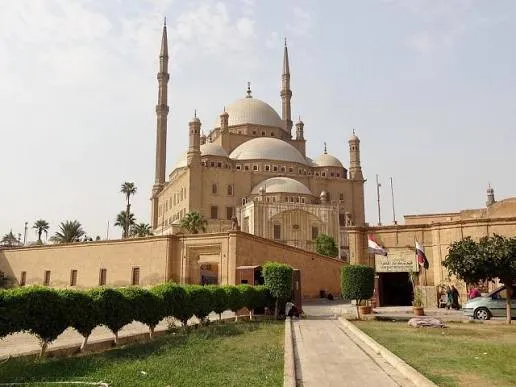
Allow 30 to 60 minutes inside the mosque, plus time for the terraces and photos. If you want to see the rest of the Citadel, plan on half a morning.
Go early for cooler air and fewer tour groups, or late afternoon for warm light on the alabaster and soft views from the terraces. Midday in summer is hot, with little shade across the courtyard. Plan the season with the best time to visit Egypt, and see month guides like Egypt in January, Egypt in September and Egypt in July.
The mosque is inside the Citadel on the Mokattam hill, southeast of central Cairo. A taxi, ride-hailing car or private driver is the easiest option. Arrange a car and driver through our Private Drivers service if you want fixed pricing and a driver who waits.
If you're arriving late or traveling with children, Tour Representatives can handle your transfers. For wider safety context in the capital, read is it safe in Cairo Egypt.
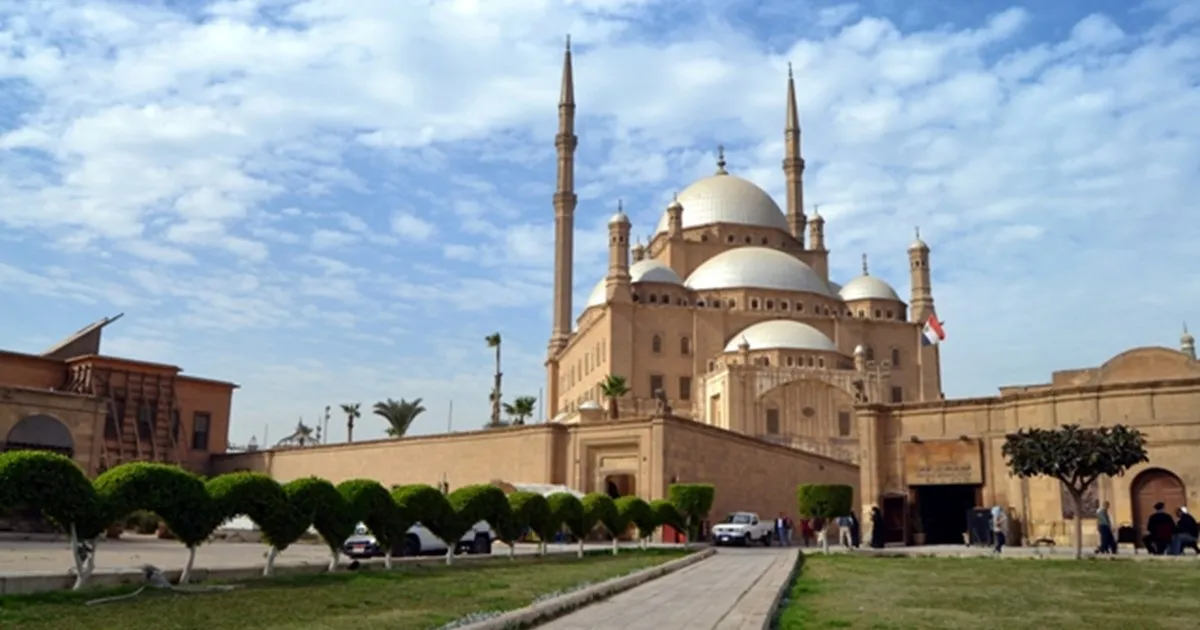
The Citadel is bigger than the mosque. Other highlights include the Al-Nasir Muhammad Mosque, a Mamluk-era mosque inside the complex, several museums, and the Citadel's viewpoints. A ticket typically covers the grounds, the Mosque of Muhammad Ali and several museums.
Just outside, the Al-Rifa'i Mosque near Citadel Square is the royal mausoleum of Muhammad Ali's family. Don't confuse this Citadel with the Citadel of Qaitbay in Alexandria. They're different forts in different cities. If you're heading north later, see the Citadel of Qaitbay and is Alexandria worth visiting.
The Citadel sits in the middle of Islamic Cairo, so it combines naturally with nearby sites.
For more ideas, see our list of things to do and see in Cairo. Pyramids and Islamic Cairo are usually separate days, since both are full.
You can visit alone. But the building rewards explanation: the Istanbul connection, the history of the Citadel, the symbolism of the tomb, the difference between Ottoman and Mamluk styles. A licensed guide also handles tickets, timing around prayer and the usual touts at the gate.
Browse Local Tour Guides or read about a Cairo tour guide and a Cairo local guide. English-speaking guides for the Pyramids start at $70 per day with Tour Guides Egypt, and other languages from $100. For the Citadel, ask for a specific quote. You can request an English-speaking guide or a guide in French, Spanish or Italian through our French-speaking, Spanish-speaking and Italian-speaking guide pages.
Prefer a female guide? See Female tour guide in Cairo. For rates, see Cairo tour guide prices, and for the general question, read do you need a tour guide in Egypt.
It's known as the Alabaster Mosque, a 19th-century Ottoman-style mosque inside Cairo's Citadel, with twin minarets, a large central dome, an alabaster courtyard and the tomb of Muhammad Ali Pasha.
Because alabaster covers the lower walls and courtyard.
Yes. Visitors are welcome if they dress modestly, remove shoes where required, and respect prayer times.
Entry is included in the Citadel ticket. Published prices vary between sources, so confirm the current rate before you go.
The Citadel generally opens in the morning and closes in the late afternoon, with hours varying by season and source. The interior is closed to tourists during prayer.
Muhammad Ali Pasha commissioned it, and construction ran from 1830 to 1848. One source credits architect Yusuf Bushnaq, from Istanbul.
Yes. His marble tomb is inside the mosque complex.
Allow 30 to 60 minutes for the mosque, and half a morning for the full Citadel.
Not required, but a guide adds context and handles logistics. English-speaking guides for the Pyramids start at $70 per day with Tour Guides Egypt, and other languages from $100.
| Time block | Do this | Skip this |
| First 30 minutes | Buy your ticket, enter, and head straight to the mosque before groups arrive | Souvenir stalls near the gate |
| Next 60 minutes | Courtyard, prayer hall, the tomb, then the terrace for photos | Rushing the prayer hall; stand under the dome and look up |
| Final 45 minutes | Al-Nasir Muhammad Mosque or a museum, then a break for water | Trying to see every museum in one visit |
Want the Citadel paired with Khan al Khalili and a driver who waits? Message us on WhatsApp with your dates, or plan a tailor-made Egypt trip and we'll fit Islamic Cairo into the right morning.

Orange Bay or Paradise Island? Compare beaches, crowds, snorkeling, boat time, price and who each suits t ...

The Citadel of Saladin guide: history, Muhammad Ali Mosque, museums, views, opening hours, dress rules an ...

Is it safe to see the pyramids in Egypt? A step-by-step safety guide: security, scams, camels, heat, solo ...
Get Updates & More
@ Copy 2026 Tour Guides Egypt , All rights reserved